Deutsch
 Français
 Türkçe
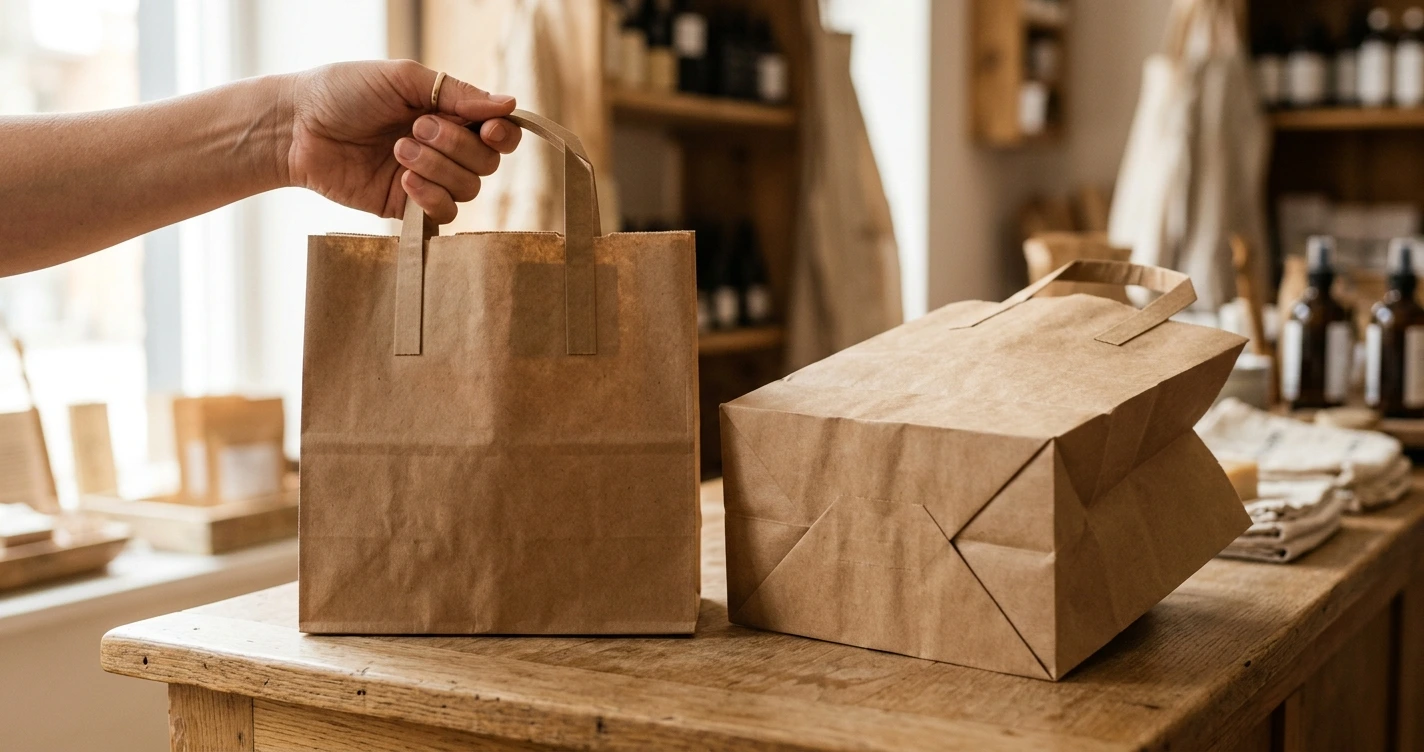
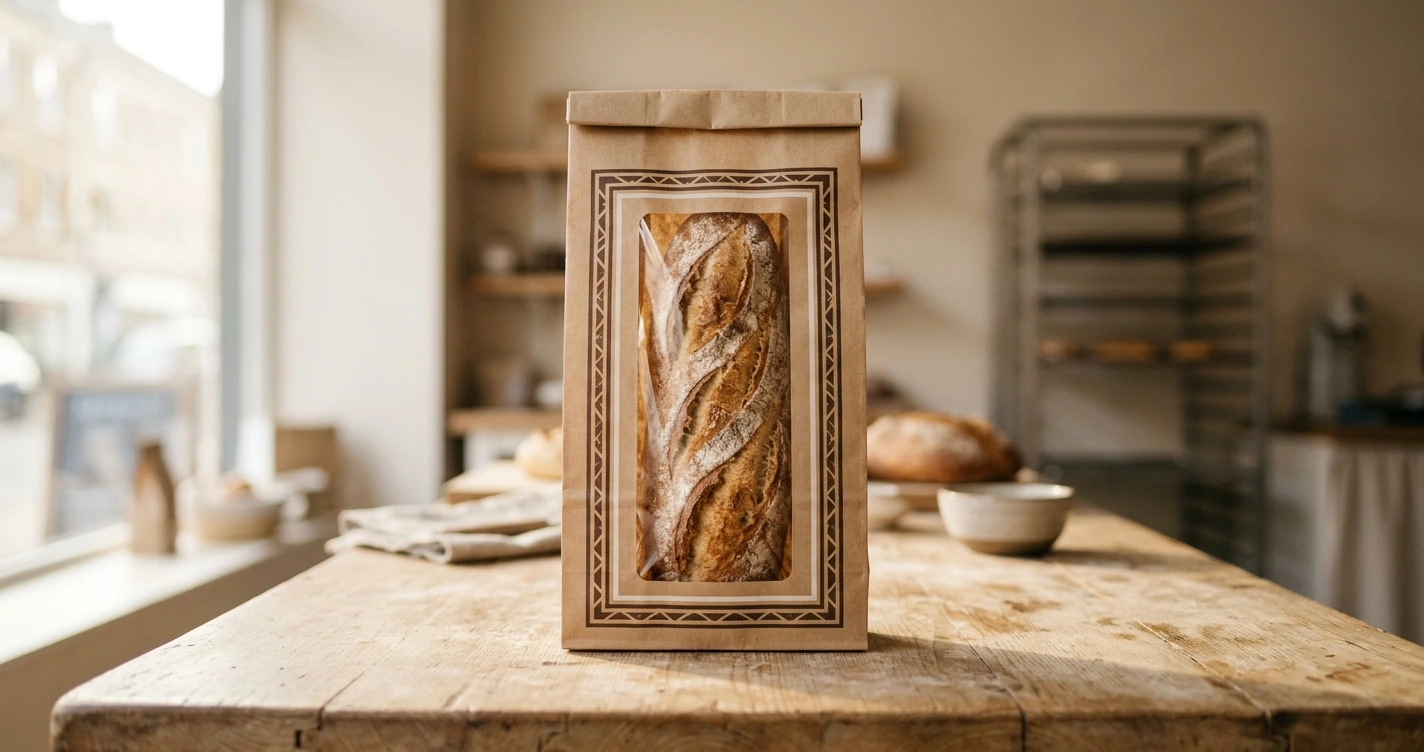
British weather runs the toughest packaging test in Europe, and it runs it for free. A carrier bag that leaves a bakery on a dry Tuesday performs like the sample did; the same bag on a wet Friday, set down at the bus stop, picked back up and hooked over a forearm, is working at a fraction of its dry strength. When the handle lets go and the sourdough hits the pavement, the bag lying next to it carries your logo. Nobody photographs a bag that worked; this one gets photographed. The unfair part is that the bag did nothing wrong. It was built for a different load, in different weather, carried a different way, and that distinction does not survive the moment.
Most carrier bags are bought on two pieces of information: how they look and a kilogram figure in a listing. That is where the trouble starts, because near-identical bags are advertised with wildly different capacities, and nobody explains the conditions behind the number. This guide walks through where paper carrier bags actually fail, the four construction factors that decide real capacity, and how to write an order so the bag matches your goods rather than a catalogue photo.
Where a carrier bag actually fails
A paper bag almost never fails across a panel. It fails at three precise points, and the order is remarkably consistent.
The handle attachment leads the list, and by a distance. Not the handle itself, but the small glued patch where it meets the bag. When a bag is carried, the entire load funnels into two modest glue areas, and every jolt, every lift from standing, every swing onto a forearm multiplies the force for a fraction of a second. When a bag gives way, it is usually here, and usually on a sudden movement rather than a steady walk. The base comes next, above all when small heavy items stand on a single edge, or when moisture has been at work. The side seam trails behind both, and it mostly only opens when a bag was overfilled and the glue line was already under tension before anyone lifted it.
That map matters because it reorders the buying decision. Choosing thicker paper reinforces the one area where bags rarely fail, and leaves untouched the points where they do.
Why weight ratings tell you so little
Compare carrier bags across two or three suppliers and something odd appears: bags that look like twins are rated completely differently, and the same construction is claimed to carry a modest load in one listing and several times that in another. Nobody is necessarily lying. The number was simply measured without context: hung statically or carried, bone dry or after rain, brand new or on its third use, load spread evenly or two bottles dragging on one edge. A capacity figure without those conditions is not a specification. It is a headline.
That does not make numbers useless. It changes the question you should ask: not how much does the bag hold, but what was it built for and how was that checked. A supplier who backs a capacity claim with grammage, handle type, attachment detail and base construction is making a statement. One who quotes a bare number is making an advert.
The four factors that actually decide
Behind every dependable bag sit four construction choices, and they work together rather than separately.
Grammage sets how stiff and resistant the panel is. It contributes, but it is not the hero of the story: heavy paper with a weak handle patch tears sooner than mid-weight paper with a clean attachment. We covered what grammage genuinely changes in our materials and barriers guide, and the rule for boxes holds for bags: thickness is no substitute for construction.
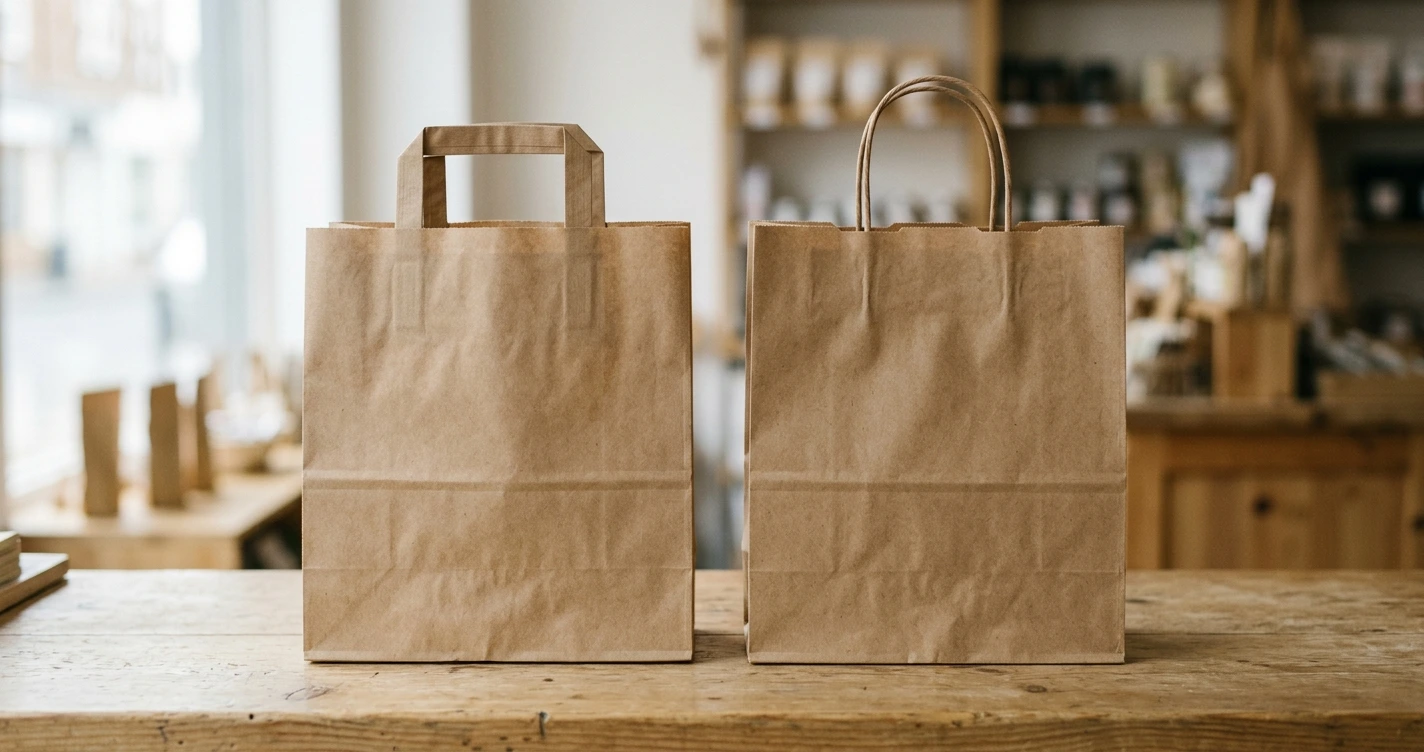
Handle type is the visible decision. Flat handles are folded paper strips glued over a broad patch; they spread load across a wider bond, pack flat in storage and are the workhorse for bakeries, takeaways and retail counters. Twisted paper handles feel rounder in the hand and look dressier, but they concentrate load onto smaller anchor points. Die-cut holes skip the handle element entirely; they carry light, flat goods perfectly well and are naturally the weakest choice for anything heavy, because fingers pull directly against a cut paper edge.
The attachment is the invisible factor and, in practice, the decisive one. What matters is the size of the glued area, whether the patch region is reinforced, and how cleanly the adhesive was applied. None of that is visible in a product photo, and all of it is visible in a sample: one firm tug on the handle of an empty bag tells you more than the entire listing.
The base decides whether load reaches the walls evenly at all. A properly folded and glued block bottom stands on its own, spreads weight across the full footprint and accepts awkward items without a single edge taking the strain. On bags without a true base fold, the load hangs in the paper itself, and every corner of a heavy product becomes a pressure point.
Flat, twisted or die-cut: the honest comparison
| Handle | Strength | Honest limit |
|---|---|---|
| Flat handle | Broad glue patch, packs flat, fast at the counter; the workhorse for bakeries, takeaways and shops | Plainer look than a twisted cord; with very heavy single items the attachment decides, not the handle |
| Twisted handle | Rounder grip, dressier feel, comfortable on longer carries; suits boutiques and gifting | Load concentrates on smaller anchor points; costs more to make |
| Die-cut hole | No separate handle element, very flat, economical; fine for light, flat goods | Fingers pull straight on a paper edge; weakest option for heavy or angular items |
The choice, in other words, is a load question with a brand component. If you hand pastries, sandwiches and light retail over a counter all day, flat handle paper bags are almost always the economical answer. If you sell heavy single items or gifts, you pay for the twisted cord for the feel of it, not the capacity, and the attachment still deserves your attention.
Getting the size right
Between handle and base sits a decision few people make deliberately: the format. An oversized bag feels generous but works against you, because goods with room to move slide on the carry, and every knock against a side panel loads seams and base. An undersized bag invites stuffing, and an overfilled bag is under tension before it leaves the counter. The workable rule: goods should stand, not swim and not wedge. If your customers buy in two or three typical volumes, two formats nearly always beat one compromise format for everything.
Size includes handle clearance. A bag that knocks against the customer's leg gets carried higher and jerked more; one with too little clearance cannot go over a shoulder and ends up hanging off two fingers, which loads the attachment at a single point. None of this appears on a datasheet, and all of it shows up two minutes into a sample test.
What bags live through in Britain
No lab test reproduces the journey between shop door and kitchen table, least of all here. A bag gets set down at the bus stop and picked back up, hooked over a pushchair handle, carried two streets through drizzle and reused twice at home. Moisture is the quiet factor in all of it: paper loses a meaningful share of its strength when damp, and it loses it first at the glued joints. A bag that shrugs off a load dry can fail under the same load five minutes into rain. If your customers walk, that fact belongs in your order, not in your complaints folder.
Time matters too. Second and third uses of a good bag are normal now, and every use leaves creases that weaken the structure. That is not an argument against paper. A bag sturdy enough to be reused carries your logo through town repeatedly, which is more than most advertising manages at the price. It is an argument for specifying the bag for real life rather than the ideal case.
What we see from the production side
In the complaints customers describe to us, one pattern repeats: the bag was almost never weak across the board, one property simply did not match the goods. The bakery whose cords cut into hands under loaf cakes did not need a heavier bag, it needed a different handle. The deli whose bases gave way under jars did not need thicker board, it needed a proper base fold. And the shop whose bags failed each winter had a moisture problem, not a material problem. The cheapest route to a dependable bag is not the strongest specification. It is the right one.
The bag that advertises must first survive
For many independents the carrier bag is the cheapest advertising they will ever run: it walks through town, rides the bus, hangs off bike handles and gets reused at home. Which is exactly why the order of operations matters. Construction and format first, print second, because a handsome logo on a failing bag advertises the opposite of what you intended. The print side, from vector files to proofing on brown kraft, is covered in our guide to getting packaging artwork right, and every word of it applies to carrier bags. One bag-specific note: the biggest advertising surface is the panel that faces outward on the carry. A calm, clear mark reads from twenty metres; a fully flooded print reads on the counter and rarely on the street.
One habit at the counter saves more bags than any upgrade
The sturdiest bag still fails when it is packed badly, and packing can be taught in a minute. Heavy items go low and central, fragile ones on top, bottles upright and wedged between softer goods rather than leaning on a side panel. A second of attention to distribution at the till prevents more failures than any material upgrade, and it costs nothing. It is worth a quick word with the team, especially on casual-staff days, because bags are almost always overloaded exactly where service is fastest.
How to order a bag that matches your goods
A good enquiry describes the load, not the bag. Five details let a manufacturer propose the right construction:
- What is actually carried, meaning the heaviest realistic basket rather than the average one
- What the goods are like: angular, cold, damp, greasy or fragile
- How far and how long a typical carry runs, and whether it happens outdoors
- Whether the bag should survive reuse as a visible brand carrier
- What role looks play: everyday bag, gift bag or both
With those five points, a capacity question becomes a construction decision. And the sample rule is the same as for any packaging: test with your real goods, not whatever is lying around. Pack the heaviest realistic scenario, walk it through the shop, lift it sharply a few times, then repeat the whole thing with a bag that has been briefly dampened. Twenty minutes, and you know more than any listing could tell you.
The honest limit of paper
Some loads are the wrong job for a single paper bag, and a serious manufacturer says so before you order. Very heavy single items, a full load of bottles, or sharp-edged goods in rain call for a different construction, a second bag or a different format altogether. That limit is not a weakness of the material; paper carries remarkably well when the construction fits. But the limit exists, and it is far better drawn in a quote conversation than on the pavement outside your shop. The bag that survives the bus stop with one bottle too many inside is not the one with the biggest number in the listing. It is the one someone specified against your actual goods, and that conversation costs nothing.
Frequently Asked Questions
- How much weight can a paper carrier bag actually hold?
- An honest answer depends on four things: grammage, handle type, the quality of the handle attachment and the base construction, plus moisture and how long the carry is. A kilogram figure without those conditions is a headline, not a specification. Describe your heaviest realistic basket and ask for the construction to match.
- Why do handles tear first?
- Because the whole load funnels into two small glued patches, and every jolt multiplies the force for a moment. The handle material matters less than the size and workmanship of the attachment holding it, which is why a firm tug on a sample tells you more than any listing.
- Are flat handles weaker than twisted handles?
- No, that is a common misconception. Flat handles spread load across a broader glue area, while twisted cords concentrate it on smaller anchor points. The cord wins on feel and looks, not automatically on capacity; the attachment decides in the end.
- What does rain do to a paper bag?
- Damp paper loses a meaningful share of its strength, and the glued joints go first. A bag that holds a load reliably when dry can fail under the same load after a few minutes of drizzle. If your customers walk, say so in your enquiry.
- What should I test on a sample before ordering?
- Pack your heaviest realistic shop, carry it around, lift it sharply several times, and repeat with a briefly dampened bag. Quantities and printing vary by format and design, so give your goods and weekly volumes in the enquiry and let a sensible first run be proposed.
Related Articles
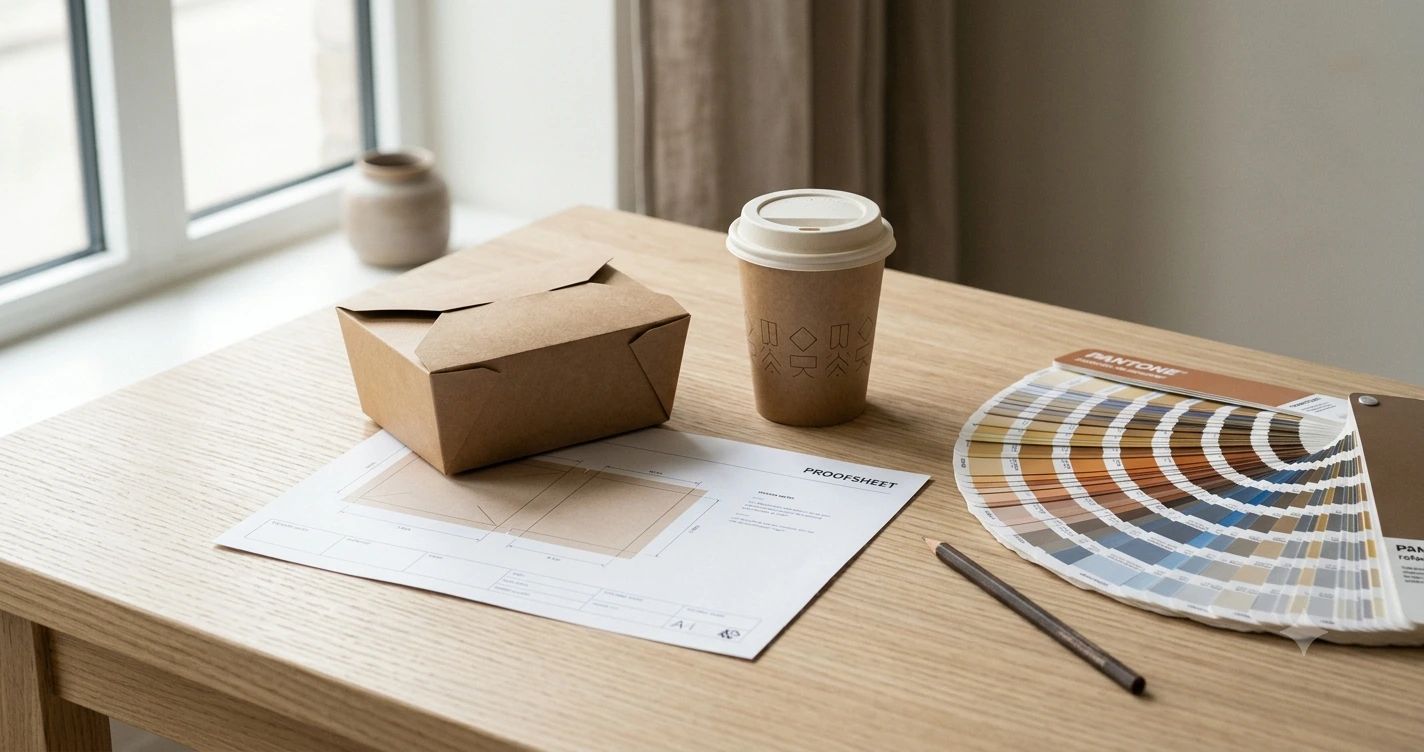
Custom Printed Food Packaging: Getting the Artwork Right
Before a print run starts, a good supplier asks three questions most buyers cannot answer. What they mean, why brown board changes your colours, what stays off the food-contact side, and how finishes quietly add cost.
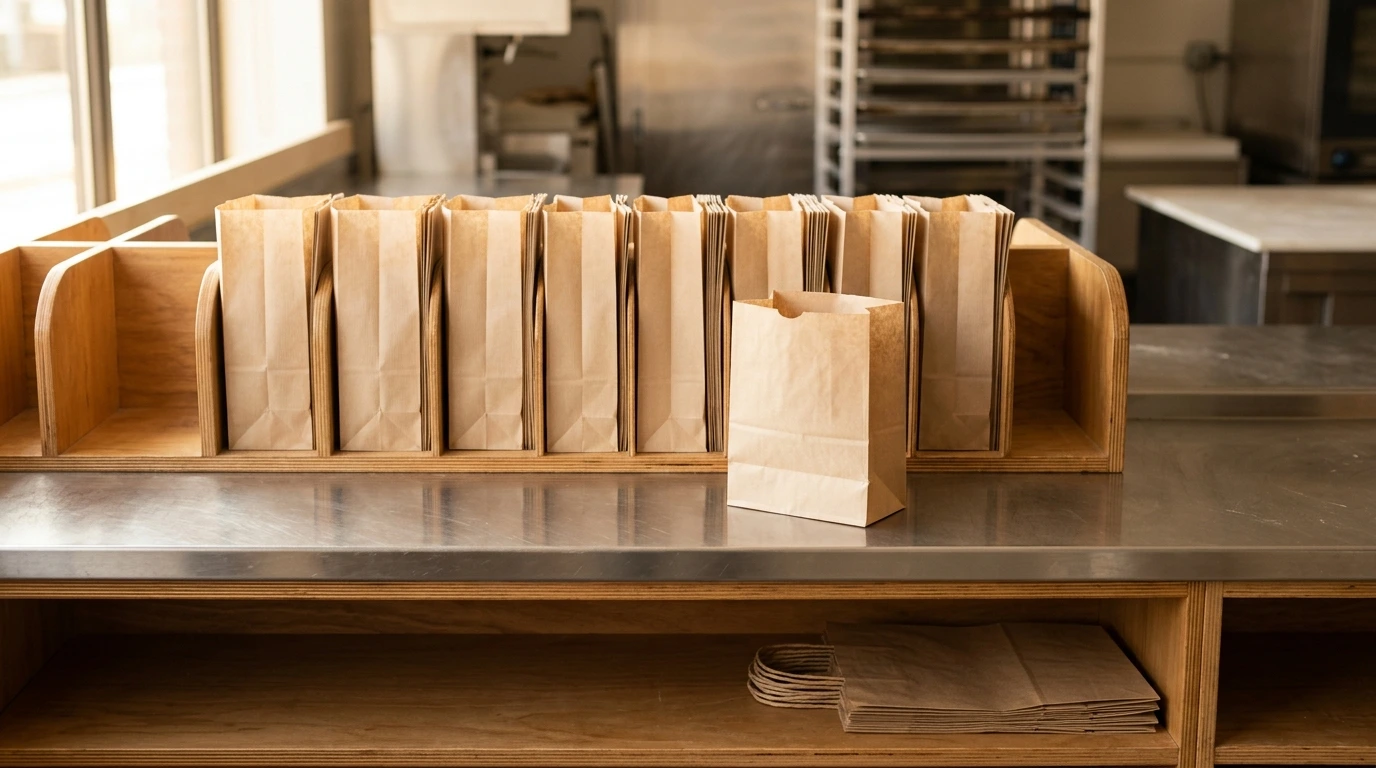
How Packaging Slows a Counter Down
Packaging gets discussed as protection and appearance. Behind a counter it is also a unit of time, and a bag that will not open one-handed costs more in a morning rush than any costing sheet ever shows.
Paper, Grammage and Barriers: Which Material for Which Food
The same box holds a burger perfectly and fails under a curry. The difference is not the board, it is the layer on it. What grammage actually changes, which barrier suits which dish, and how to test material with your own food before you commit.

Printed Twisted Handle Paper Bags: Small Run or 10,000
A twisted handle paper bag ordered in a small run and one ordered in tens of thousands are two different bags. One is bought finished and printed afterwards; the other is printed before it has been folded into a bag at all.
Opening a Takeaway: The Packaging Checklist That Saves You Money
New operators buy packaging from a catalogue, end up with too many sizes and a year of the wrong box. This checklist works from your menu instead, covers how much to order, and ends with the seven lines that get you a real quote.