Deutsch
 Français
 Türkçe
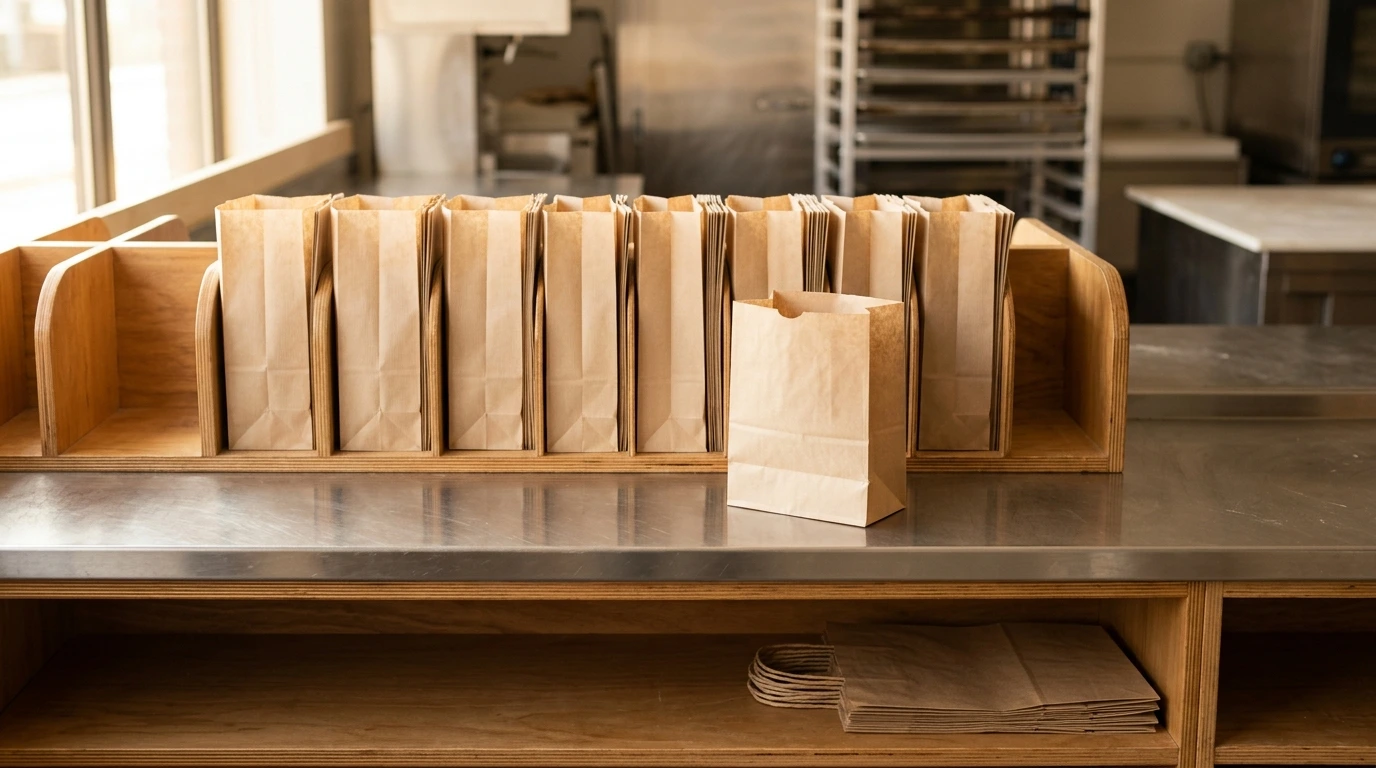
Short answer: behind a counter, packaging is more than protection and appearance. It is also a unit of time. A bag that will not open with one hand costs a few seconds per sale, and across three hundred customers in a morning that adds up to a figure no costing sheet carries and everyone on the floor can feel.
Remarkably little gets written about this. Search for counter workflow and you find shop fitting, till-zone layouts and eventually industrial packing machines. About the item itself, the one a server picks up two hundred times a day, there is almost nothing.
Meanwhile staffing is the pressure that bakery operators name most often, and it bites harder on the shop floor than in the bakehouse. When a shift runs short, every second at the counter turns into a resourcing question. Which is precisely why it is worth looking at packaging once as part of the workflow rather than as a line on the materials order.
Where the time actually goes
Stand beside a counter with a stopwatch and one thing becomes obvious quickly. The time is not lost picking up the product. It is lost in the packing, and in three specific places.
- Opening. A bag pressed flat sticks to itself. It wants rubbing open, sometimes twice, and that takes both hands.
- Holding it open. Until the bag stands on its own, one hand holds it and only one hand fills.
- Looking. With eight lines behind the counter, a small decision happens before every reach. It does not take long. It happens on every single sale.
None of those three appears in a packaging specification. All three are settled there, though: in the construction, in the size choice, and in how many lines you carry.
There is something else that gets overlooked. The person on the counter usually reorders the material as well. Packaging stock control is part of the counter job in a great many businesses, so a cluttered list of lines costs time twice, once at the point of sale and again at the end of the month.
Spend a morning behind a counter watching the hands rather than the goods and the same pattern shows up everywhere. Picking, slicing, taking payment: all of it flows. The rhythm only breaks when a bag refuses to open. It is never dramatic. It is half a second. But it repeats on every sale, and at peak there is a queue behind it carrying that half second along.
The bag that stands up by itself
The single biggest saving sits in the construction, and it could not be simpler: a bag that stands upright can be filled with one hand.
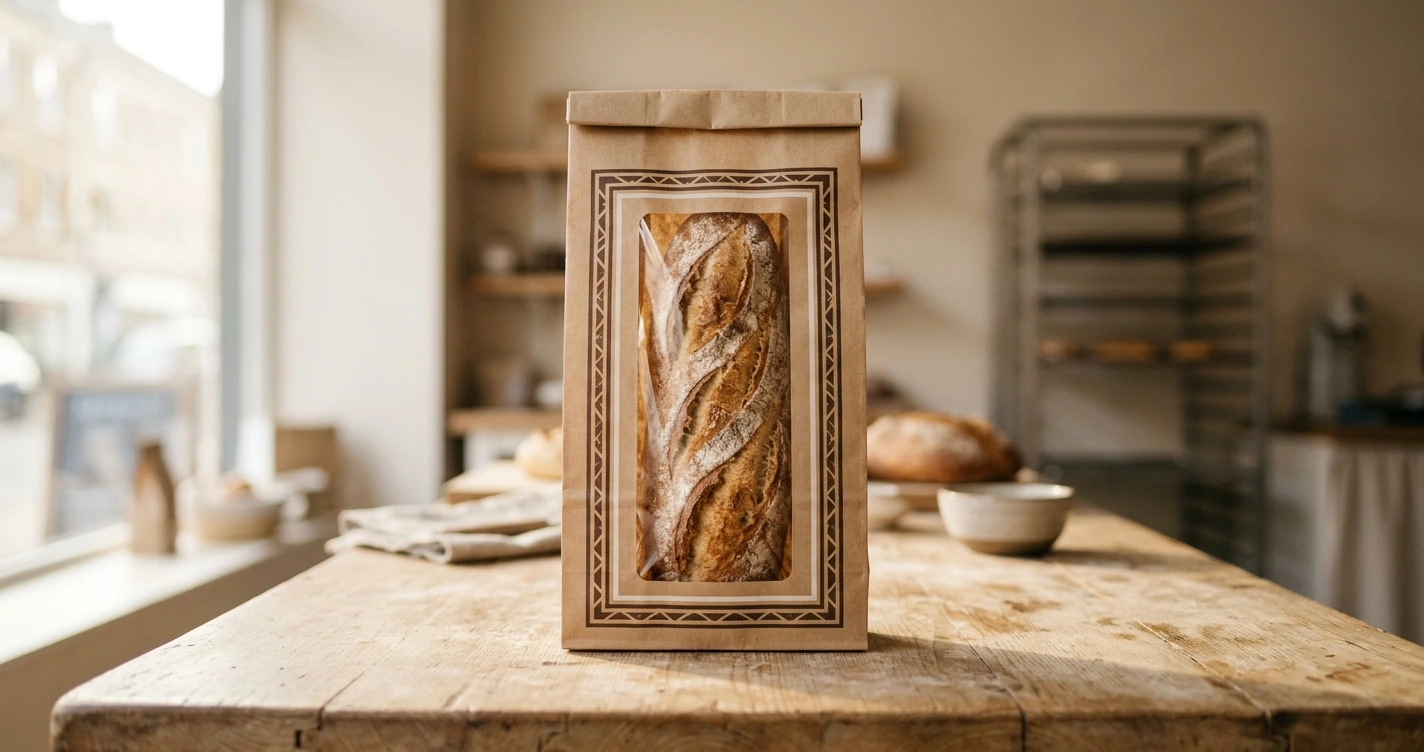
Block bottom paper bags are built for exactly that. The construction is handleless, with side gussets and a flat square base that stands on its own. You set it down, reach for the product with your free hand and fill. The other hand stays available for the tongs, for the till, for the next movement.
A flat bag works differently. It gets rubbed open, held with one hand and filled with the other. For a single roll that is no trouble at all and is actually quicker, because there is no setting down. As soon as anything is weighed, as soon as several items go in, or as soon as the customer adds one more thing, the advantage flips.
The dividing line sits roughly here: anything that goes in with one movement belongs in the flat bag. Anything weighed, counted or topped up belongs in the standing one. Operators who carry both and settle the mapping once run noticeably calmer than those who force everything into a single construction.
A side effect turns up after about a week. A standing bag can be pre-filled. Where standard quantities sell, twenty can be made ready in the quiet hour and only need folding shut at peak. A flat bag will not do this, because with nothing inside it does not stand.
Nine sizes, one height
Now a detail no catalogue explains, though it works directly on the counter. Look at the standard sizes on natural kraft bakery bags in the middle and large bands: 70×40×155, 80×55×155, 100×55×155, 110×50×155, 120×60×155, then 140×50×155, 150×80×155, 160×70×155 and 180×55×155.
Nine sizes. All at the same height of 155 millimetres.
That is not an accident, and it has a solid consequence. Bags of one height sit tidily side by side in the same slot. Edges line up, nothing tips forward, and the hand finds the stack without the eye needing to follow. Build your range inside that height and you get an orderly back wall for free.
There is a trap here as well, and it hides nicely. For the middle and large bands there are additional height options: 175, 195, 235, 275, 325, 365, 410 and 480 millimetres. Those exist for good reason, when a longer item has to go in. Every one of them breaks the uniformity, though. A single line at 235 instead of 155 and the slot no longer sits flush.
The recommendation is unglamorous and saves handling every day: stay on one height as long as you can and vary width and gusset instead. Depart from it only where the product genuinely forces you to, and when you do, know that you are planning a slot of its own for it.
How many lines a counter can carry
The third source of time is the number of lines, and it is almost always underestimated because it does not feel like a problem. Every extra line is one more decision taken before the reach.
What inflates a range is rarely carelessness. It is decisions that accumulated: a special size opened for a promotion that then stayed. A second line because the first ran short once. A bag a previous supplier threw in that nobody has questioned since.
Taking stock costs half an hour and nearly always pays. Lay every line out on a table and ask two questions of each: which product goes only in here, and what happens if I put it in the one next to it? On two or three of them the honest answer is usually nothing.
The goal is not the shortest possible list. An operator who forces everything into one bag packs small items in oversized bags and is annoyed in a different way instead. The goal is that every line has a job no other line can take. Get there and you notice it less in purchasing than in how quickly a new starter becomes confident.
One last point on line count, and it is about calm rather than the clock. The clearer the mapping, the fewer questions get asked. In businesses with a short, unambiguous list you almost never hear anyone ask which bag something goes in; in businesses with eight lines it comes up several times a shift, and every time it interrupts two people at once. That never appears in a time study and still separates a calm morning from a frantic one.
The handle decides the handover
At the end of any larger purchase comes the carrier bag, and the last loss of time happens there. A bag that opens badly holds the queue up at precisely the moment the customer is already leaving.
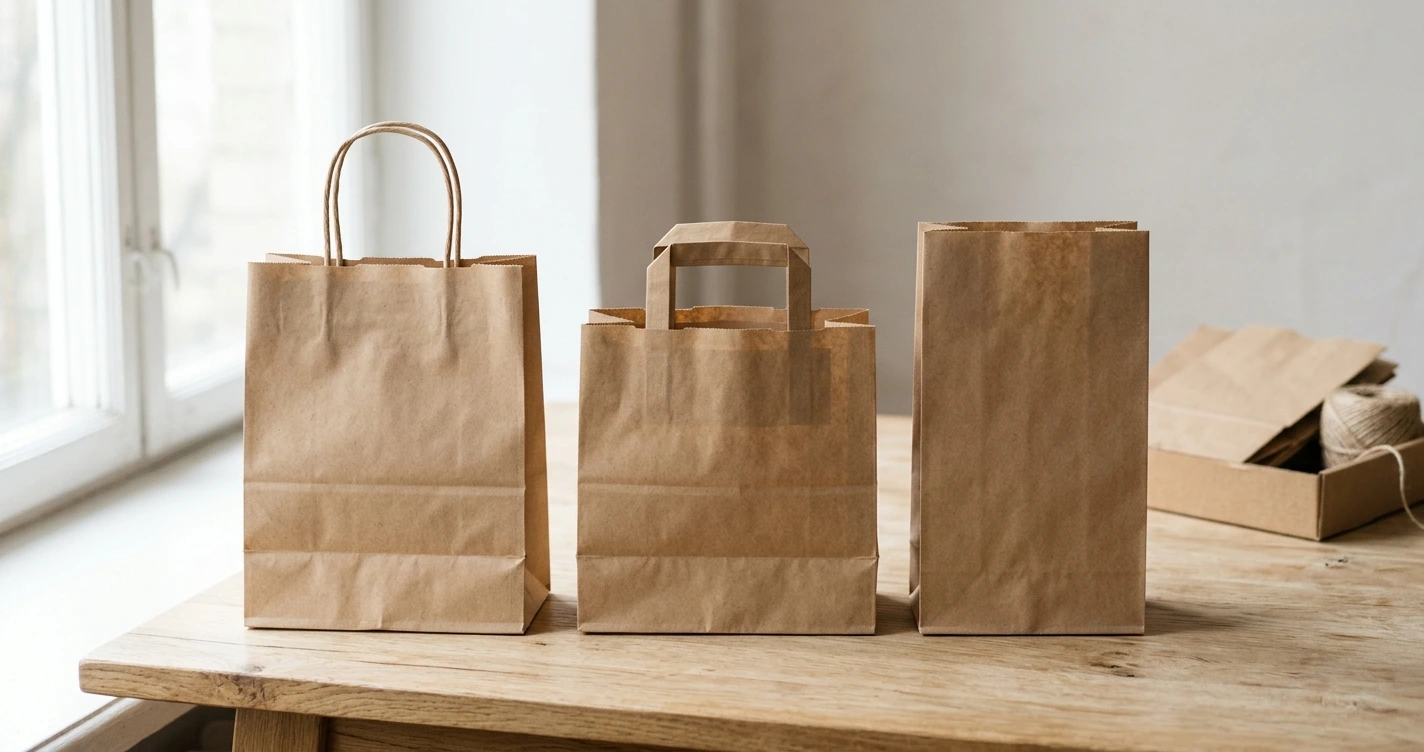
On die-cut handle paper bags the handle is punched out of the paper rather than attached. For the workflow that means nothing dangles, nothing snags in the stack, and bags store flat and pull off singly. A reinforced paper layer sits in the handle area, and load capacity runs to around four kilograms, varying with size, grammage and how the weight is distributed.
Sizes run from 190×80×235 in the small band up to 420×260×400 in the large. More useful than the span is an observation from the field: most operators carry one size too many and one too few. Too many in the middle, where two formats barely differ, and too few at the bottom, where the medium bag still goes out holding two items.
So anyone wanting to speed up the handover looks past the bag itself and checks where it lives. A carrier bag stored under the counter costs a bend. The same bag in a slot at hip height costs a reach.
Where speed stops and damage starts
This section belongs here, otherwise the wrong impression forms. Speed is not the top criterion and packaging must not be chosen on it alone.
The open, quickly filled bag is the wrong answer as soon as the product is greasy, as soon as it is warm and travelling, or as soon as it needs protecting. A pastry that arrives crushed was packed quickly and is still a complaint.
The sensible order runs this way: establish what the product needs, and then pick the faster option among the constructions that suit it. Not the other way round. In nearly every category several constructions work on the product side; the time question then decides between them instead of overruling them.
One more honest line. Packaging does not replace staffing. It cannot rescue an understaffed early shift. All it can do is stop making that shift slower, and even that is a difference you feel.
What you can measure before ordering
You do not have to take our word for it. The test takes one morning shift and needs nothing but a sheet of paper.
- Over three days, note which bag gets picked up how often. Count, do not estimate. The order nearly always surprises people.
- At peak, watch where the hands stall: on opening, on holding open, or on looking.
- Once, put two constructions side by side and pack the same sale with both. The difference usually shows inside ten repetitions.
- Ask the people on the counter which line they would drop. That answer comes instantly and, in our experience, is right.
Those four points produce a list worth more at ordering than any range overview, because it describes your workflow rather than our catalogue.
What to put in the first message
If you want to talk to us about changing something, four details shorten the round considerably:
- Which lines you carry today, with rough frequency for each. That shows us straight away where two items overlap.
- What gets weighed and what goes in with one movement. That decides between standing and flat.
- Whether you can stay on one height, or whether a longer product forces an exception.
- How many carrier bag sizes you run and which of them turns over rarely.
If you do not have those details to hand, that is the finding in itself. In that case the sheet of paper from the previous section comes first and the conversation second.
A sample helps more than any description at this point. Take two constructions, put them in the hands of your early shift, and let a real rush decide. What a datasheet cannot show you, thirty sales in a row will.
Frequently Asked Questions
- Which bag fills fastest at the counter?
- A block bottom bag with a flat square base stands upright and can therefore be filled one-handed, leaving the other hand free. A flat bag has to be rubbed open and held. For a single item that goes in with one movement, the flat bag is still quicker, because there is no setting down.
- Why do so many bakery bags share one height?
- Across the middle and large bands, nine standard sizes sit at 155 millimetres tall while width and gusset vary. Bags of the same height stand flush in one slot, so the hand finds the stack without looking. Additional height options from 175 to 480 millimetres exist, but each of them breaks that uniformity.
- How many bag lines should a counter carry?
- There is no fixed number, but there is a usable test: every line should have a job no other line can take. Lay them all out and ask what would happen if the product went into the bag beside it. On two or three of them the answer is usually nothing at all.
- What does a die-cut handle give over an attached one?
- With a die-cut handle nothing dangles and nothing snags in the stack, so bags store flat and pull off one at a time. A reinforced paper layer sits in the handle area, and load capacity runs to around four kilograms depending on size, grammage and weight distribution.
- Should packaging be chosen on speed?
- Only among the constructions the product already allows. With greasy, warm or delicate goods, protection decides first. The order that works is to establish what the product needs, then pick the quicker option from the suitable constructions.
- How can the time saving be checked in advance?
- Count over three days which bag gets picked up how often, and watch at peak whether the hands stall on opening, on holding open, or on looking. Then pack the same sale with two different constructions; the difference usually shows within ten repetitions.
Related Articles
How to Hold a Packaging Standard Across Multiple Sites
Packaging drifts on its own once you pass three sites. What drifts is not stock but the number of versions, and the bill for that lands on the printing plate rather than the price list.
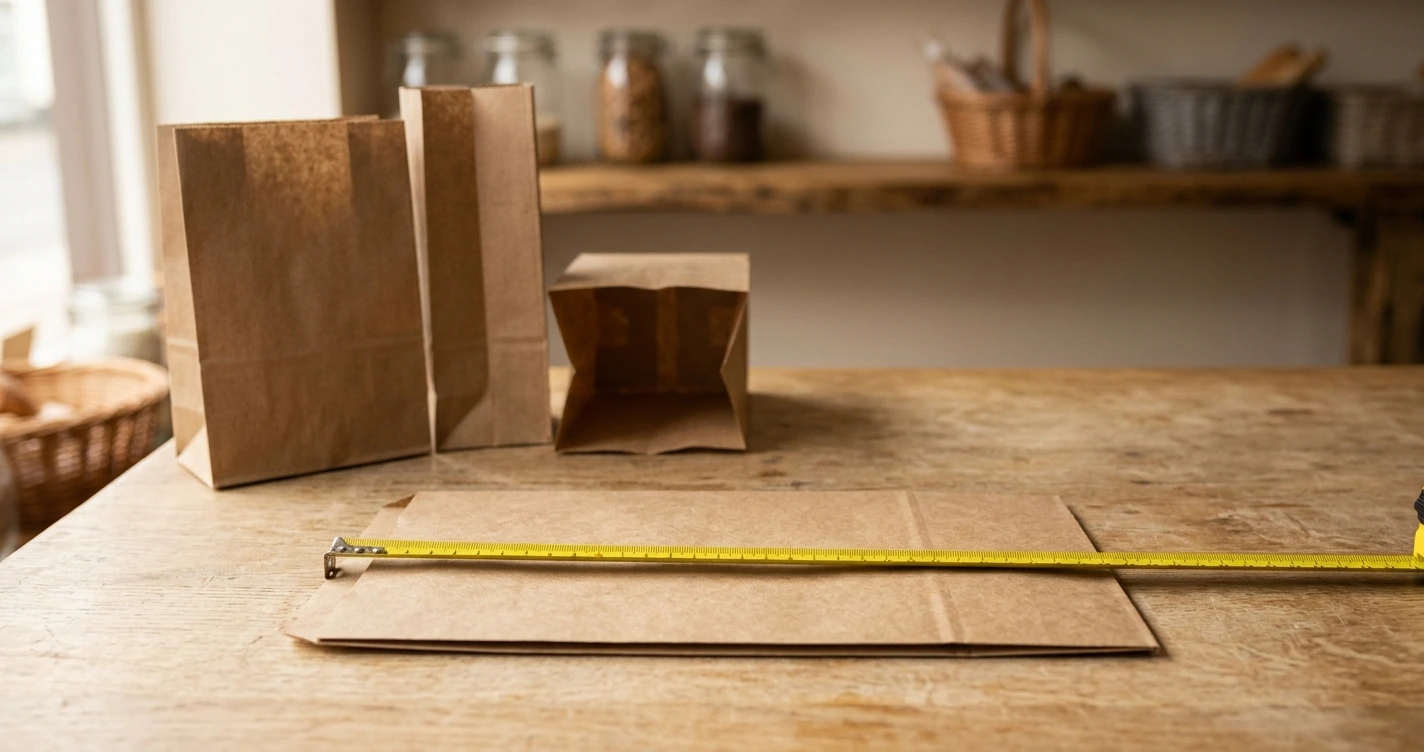
Paper Bag Sizes: Which Size for Which Bakery Product
Size lists are everywhere. What is missing is the line telling you which one fits your product. How to work the size out from what goes in, what separates two numbers from three, and how to measure a bag you already use.
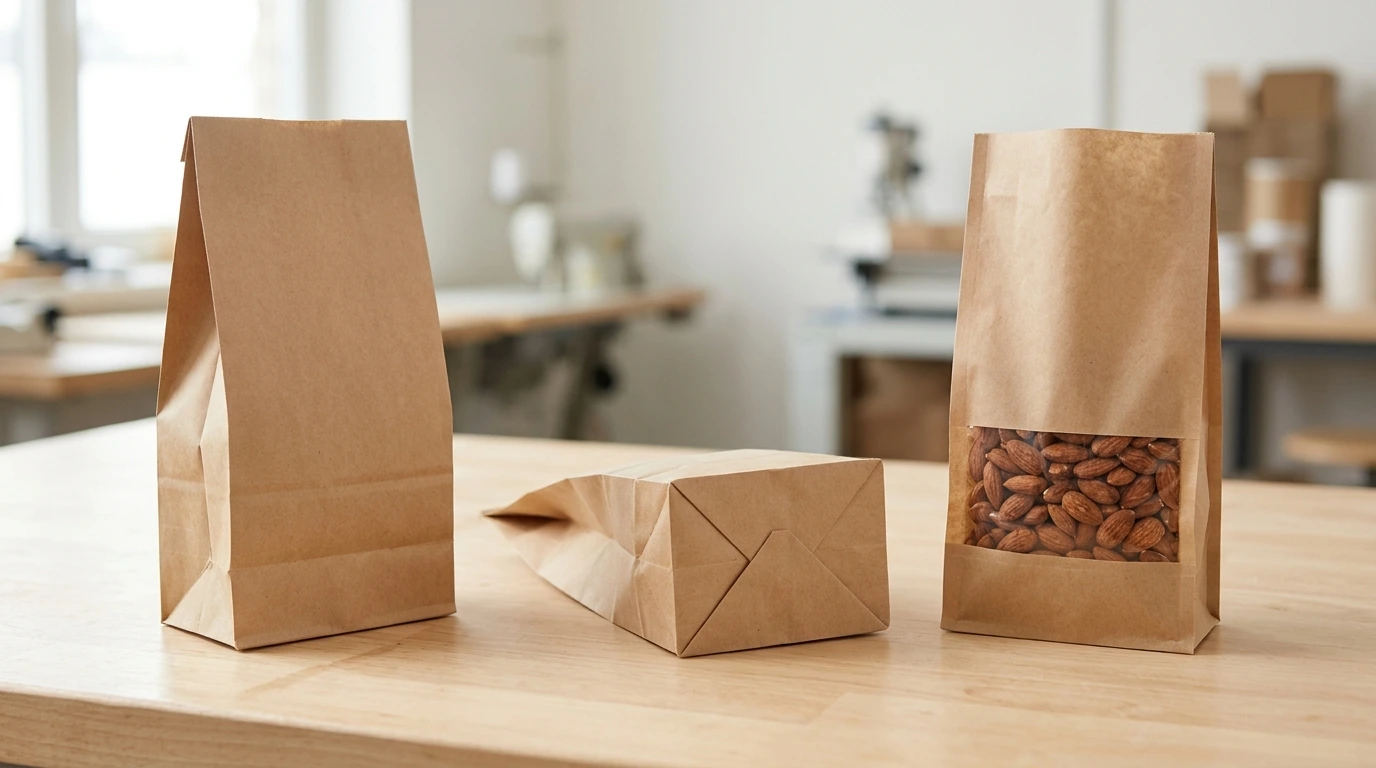
Printed block bottom bags: which base for which product?
Search for printed bottom bags and you are offered three different bags. Which of them stands empty and speeds up the counter, why a coffee roaster is at the wrong address with paper, how fill weights from 100 g to 2,000 g choose the size, what belongs on the side gusset and when the bag needs a second layer.
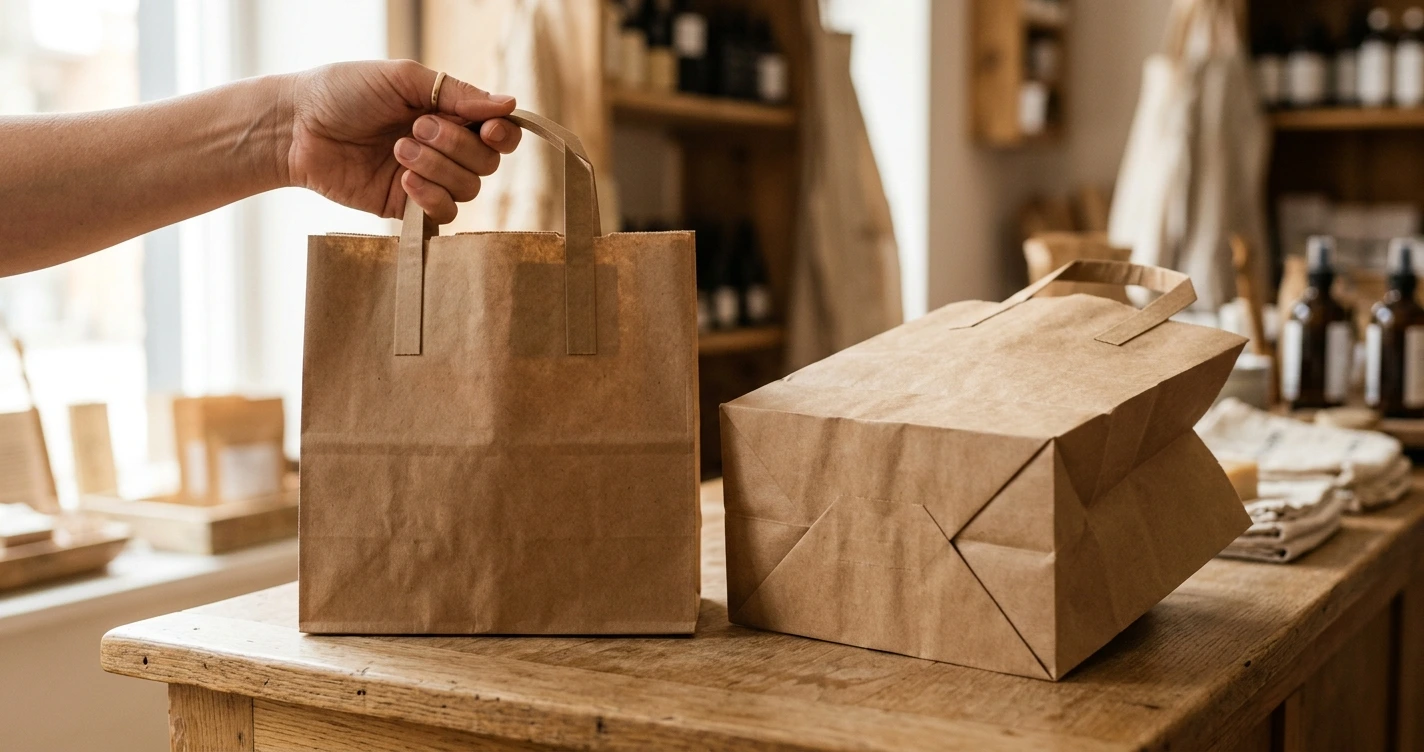
Why Paper Bag Handles Tear and What Weight Ratings Hide
Two nearly identical carrier bags, two wildly different weight claims: the number tells you little until someone explains where bags actually fail. The three failure points, the four factors that decide real capacity, and how to order a bag that survives British weather.