Deutsch
 Français
 Türkçe
Ask a supplier for a stronger box and a good one will answer with a question: stronger how? Most buyers hear strength and resistance as the same property. They are not, they are produced by different means, and paying for one when you needed the other is the most common way to spend more and get less. A chicken shop can run the same box faultlessly under wings for a year, then watch it give way under a saucy rice dish, without anything about the box having changed at all.
That is worth unpicking properly, because material choice quietly decides how your food arrives, what your packaging costs and what happens to it afterwards. What follows takes the questions in the order a kitchen actually meets them: what paper can do unaided, what grammage changes and what it does not, which barrier solves which problem, and which material belongs with which dish. It closes with a twenty-minute test you can run with your own food before committing to any quantity.
What paper can and cannot do on its own
Paper is a mat of fibres, and fibres absorb. That is what makes paper pleasant to hold and vulnerable the moment something wet or greasy goes into it. Three adversaries turn up again and again in food service, and they behave differently.
Grease creeps. It migrates slowly into the fibre, shows as a dark patch and eventually weakens the structure. Moisture pushes: it loosens the bond between fibres, and board loses stiffness exactly where it is needed most, at the base. Steam is the underrated third, because it only appears after the lid goes on, condenses against the cooler inner surface and then supplies the moisture itself. That is why plenty of boxes cope well with hot, dry bakery items and fail with the same portion once something closes over it.
Heat is not a separate adversary but an amplifier. It thins grease and makes it more mobile, and it creates the steam in the first place. Anyone thinking only about temperature tends to underestimate time: twenty minutes in a rider bag loads a pack far harder than three minutes on the counter at the same temperature.
The paper layer: what the substrates are
Before any coating enters the picture, the carrier decides a great deal. In food service you mainly meet four families.
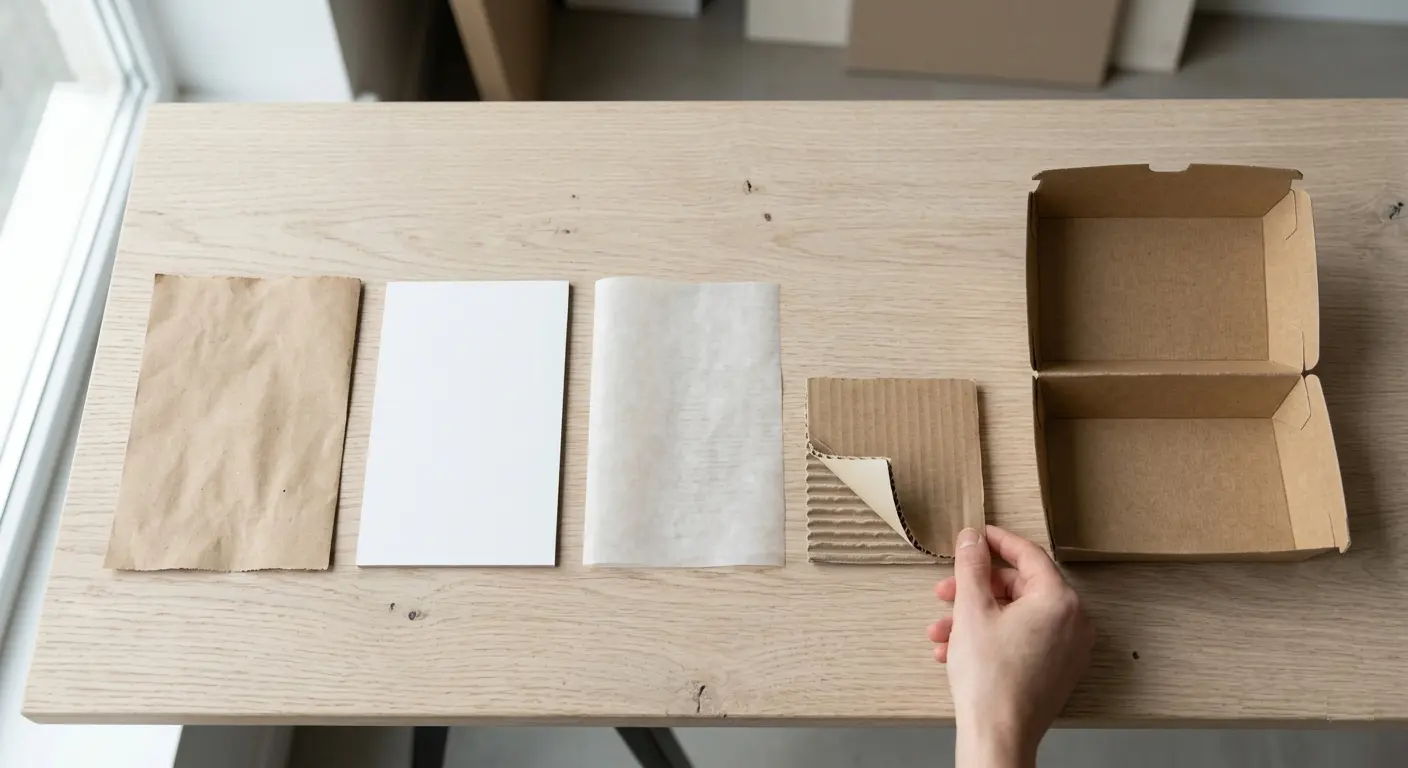
Kraft paper and kraft board are unbleached, fibre-strong and the basis of most bags, boxes and wraps. They are sturdy, read as natural and recycle easily as long as nothing else sits on them. Bleached board is the white version, technically similar but with much better print reproduction and a clean, premium look on the shelf. Greaseproof and glassine papers are a special case: their grease resistance comes not from a coating but from how the fibres are refined and compacted, so the paper barely absorbs at all. These are ideal for wrapping, interleaving and lining, but they are neither boil-proof nor built for lasting wet contact. Genuine vegetable parchment, chemically treated, goes further and stands up to moisture as well, though it plays a smaller part in most operations. Corrugated board solves neither grease nor moisture; it solves stiffness and insulation, carrying weight and holding shape in pizza boxes and shipping cartons.
Grammage: what it changes and what it does not
Few misunderstandings cost operators as much as this one: heavier board does not make a pack more resistant. It makes it stiffer and stronger. Heavy board without a barrier lets grease through just as readily as light board; it simply takes a little longer and looks more expensive while doing it.
Grammage is the right lever when a box sags under weight, distorts when stacked, fails to close cleanly or bows at the base while being carried. It is the wrong lever when grease comes through, when moisture softens the bottom or when sauce creeps. We see the confusion constantly in enquiries: the business asks for thicker board when the real problem is a missing or mismatched coating. The heavier box then fixes nothing and becomes permanently bulkier in the stockroom.
The barrier layer: an honest comparison
This is where the real decision sits. Four routes matter in practice, and none of them is the best in the abstract.
| Barrier | Strength | Honest limit |
|---|---|---|
| PE coating (polyethylene) | Reliable against grease and moisture, including hot fills over longer holds; proven on drinks and wet dishes | Rarely recovered through standard paper collection; recycling needs dedicated schemes |
| Water-based dispersion | Designed to repulp in the paper stream; a good everyday barrier under moderate load | Weaker with very hot, very greasy fills over long holds; acceptance still depends on local collection |
| PLA (compostable) | Barrier performance close to PE, plant-based, certified to EN 13432 for industrial composting | Only meaningful where a collection route genuinely accepts certified packaging; otherwise it goes to general waste |
| Fibre-based grease resistance (greaseproof, glassine) | Grease-resistant without an added plastic layer; mono-material and straightforward in the paper stream | Not built for standing liquid or lasting damp; a wrap and liner material, not a sauce container |
Reading that table rewards a change of perspective. The question is not which barrier is best, but what load will actually reach it and what should happen to the pack afterwards. We set out how much the disposal route decides in our piece on what recyclable, compostable and biodegradable really mean.
Which material belongs with which dish
Now to the practical part. Sort your menu by type of load rather than by product name.
Hot and greasy, meaning kebabs, burgers and fried food: you need a genuine grease barrier and, just as importantly, a route out for steam. A sealed box with no venting produces precisely the sogginess you were trying to avoid, which we took apart in our guide to why kebab boxes arrive soggy. Hot and wet, meaning soups, curries and saucy bowls: alongside the barrier, lid fit does most of the work, because the common complaint is not a soft base but a lid that gives way in transit. Cold and wet, meaning salads, fruit and chilled desserts: the load is lighter, but condensation works against you as soon as chilled goods meet a warm room.
Bakery and sandwiches are the case where less is more. Buttery pastry needs grease resistance and specifically not a vapour-tight wrapper, or the crust softens within minutes. Fibre-based greaseproof papers are in their element here. Frozen lines need material that does not turn brittle in the cold and copes with condensation on thawing. Sauces and dips are small containers with a high failure rate, where almost everything rests on how securely the lid seats.
Barrier is not insulation
Two requirements get mixed up constantly: the pack should stay intact, and the food should arrive hot. Those are different jobs solved by different properties. A barrier stops grease and moisture reaching the fibre. Whether the food holds its temperature is decided elsewhere: by material thickness, by trapped air, and by how full the container is.
Air is the actual insulator, not the plastic. That is why a double wall cup holds coffee hotter than a single wall cup with the identical inner coating, and why a sleeve does more than a heavier coating ever will. The same principle applies to food in another form: a well-filled box holds temperature better than a half-empty one, because less cold air travels with it, and corrugated board works under a pizza not because it is thick but because of the air in its flutes.
The consequence matters for your budget. If your problem is that food arrives lukewarm, a stronger coating is the wrong answer; portion size, container height, a pre-warmed delivery bag and packing order are the right ones. If the problem is a soft base, no amount of insulation helps, only the right barrier and a way out for steam.
Common failures and their real cause
When a pack fails in service, the type of damage usually names the cause. A dark ring at the base means grease has reached the fibre, so the grease barrier is missing or too light. A soft, yielding bottom on an otherwise clean-looking box points to moisture and steam rather than thin board. A lid that warps signals vapour pressure inside and no venting. Grease marks on a carrier bag almost never start in the bag; they start on the box inside it. And cracking in the cold is a material question, not a handling mistake.
The distinction matters because the instinctive fix is often the wrong one. Answering a soft base with thicker board moves the problem by a few minutes and raises the cost permanently.
What the barrier means for disposal and cost
Every extra layer has two side effects. It adds work in production, and it changes what happens to the pack at the end. An uncoated kraft bag is straightforward in the paper stream. A coated cup needs a suitable recovery route. As fee systems in several markets move towards modulation, where harder-to-recycle packaging costs more, the leaner construction is increasingly the cheaper one too.
That gives a simple guideline: choose the lightest barrier that reliably survives your actual load, not the strongest one available. The strongest barrier on a bread bag is not proof of quality; it is a surcharge with a disposal penalty attached.
The material test you can run yourself
Before committing to a quantity, test the sample under your own conditions. It takes about twenty minutes and tells you more than any datasheet.
- Fill the pack with your greasiest and your wettest dish, in the portion you actually sell.
- Close it the way it reaches the customer and stack a second box on top so stacking pressure is in play.
- Put everything in the delivery bag and wait as long as your average delivery takes.
- Open up and check four things: grease at the base, softness of the walls, how the lid sits, and the condition of the food itself.
- Repeat once in poor weather, since cold and rain change the behaviour noticeably.
Write down what you find and keep a dated sample. If a batch feels different months later, you compare two packs side by side instead of debating memories.
Questions to ask your supplier
- Which substrate and which coating are actually in this item?
- What load is the combination approved for: what temperature, what fat content, what hold time?
- Does the declaration of compliance cover the finished item in this exact use?
- Is the same item available with a different barrier, so I can compare both with my own dish?
- What changes about the disposal route if I move from one barrier to another?
Ask those five and you find out quickly whether the person at the other end understands materials or is reading from a catalogue. A supplier who asks first about your dish, your temperature and your delivery time is working on your outcome. The pack that fits that outcome is rarely the heaviest on the list; it is the one whose layer matches what you put inside it. Formats for the most common load cases sit under food boxes, but which one is right is settled by your dish, never by a datasheet.
Frequently Asked Questions
- Does thicker board make packaging more grease-resistant?
- No. Grammage determines stiffness and strength, not resistance. Only the right barrier stops grease and moisture; heavier board without a coating lets grease through just the same, only a little more slowly.
- What is the difference between PE and water-based coatings?
- PE is a thin polyethylene layer with a very reliable barrier, including hot fills and long holds, but it is rarely recovered through standard paper collection. Water-based dispersions are designed to repulp in the paper stream and perform well day to day, though they are weaker with very hot, very greasy fills over long periods.
- What is greaseproof paper best used for?
- Wrapping, interleaving and lining, so bakery items, sandwiches and greasy finger food. The grease resistance comes from the fibre itself rather than a plastic layer, which also means it is not built for standing liquid or lasting damp.
- Why does my box go soft even though it is coated?
- Usually the barrier is not at fault, the steam is. Hot food releases moisture that condenses inside a closed container. Without venting the crust softens regardless of how well the material resists grease.
- How do I work out which material suits my dish?
- Test samples with your greasiest and wettest dish across your real delivery time, closed and under stacking pressure. Ask the supplier for the same item with a different barrier as well, so you can compare both directly rather than in theory.
Related Articles

Why Coffee Cup Lids Leak and What Actually Fixes It
The lid clicked on, the customer got ten steps away, and coffee ran down the sleeve. What causes it nearly every time, the counter habit that fixes it for free, and what to settle with your supplier before the next pallet arrives.
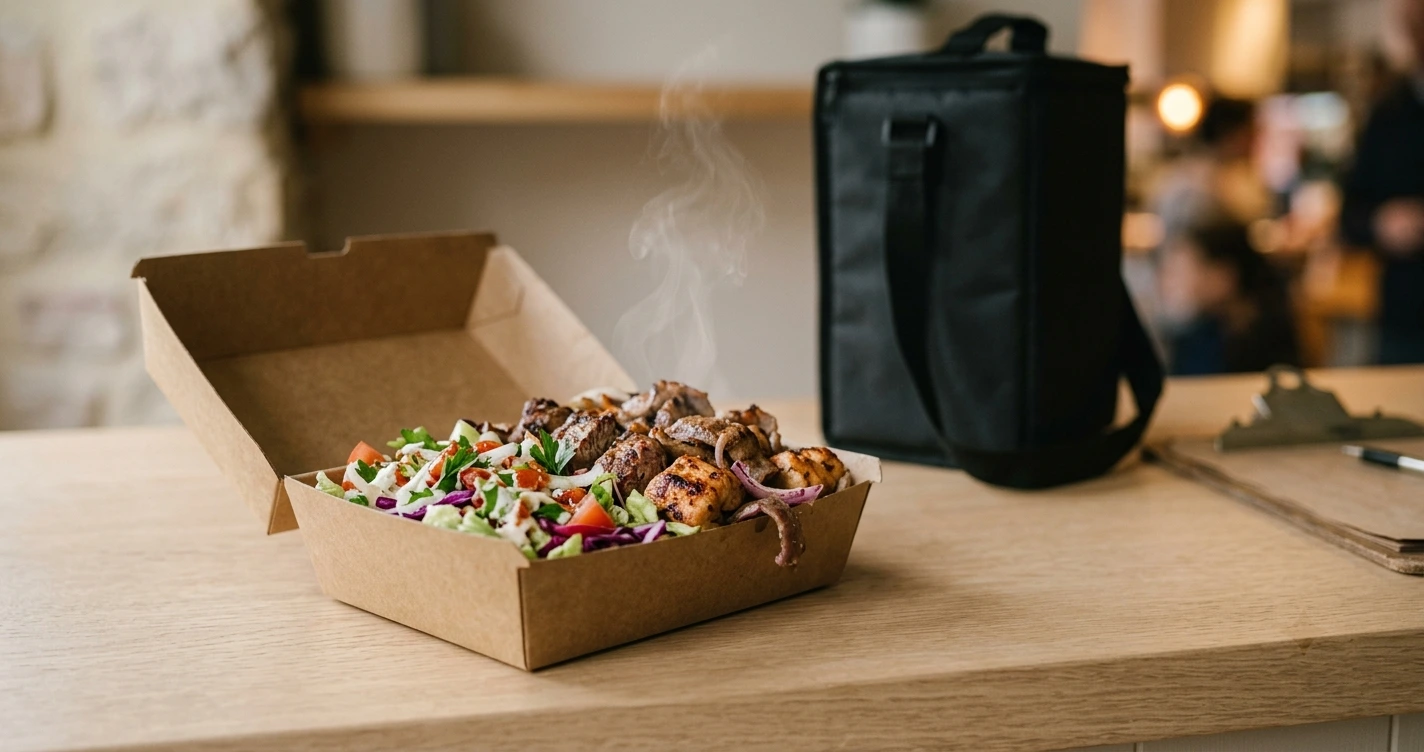
Why Kebab Boxes Go Soggy — a Packaging Guide for Kebab Shops
Grease, steam and the delivery-bag stack: why kebab boxes fail, what PE and water-based coatings really change, and a five-minute test any shop can run before ordering a pallet.
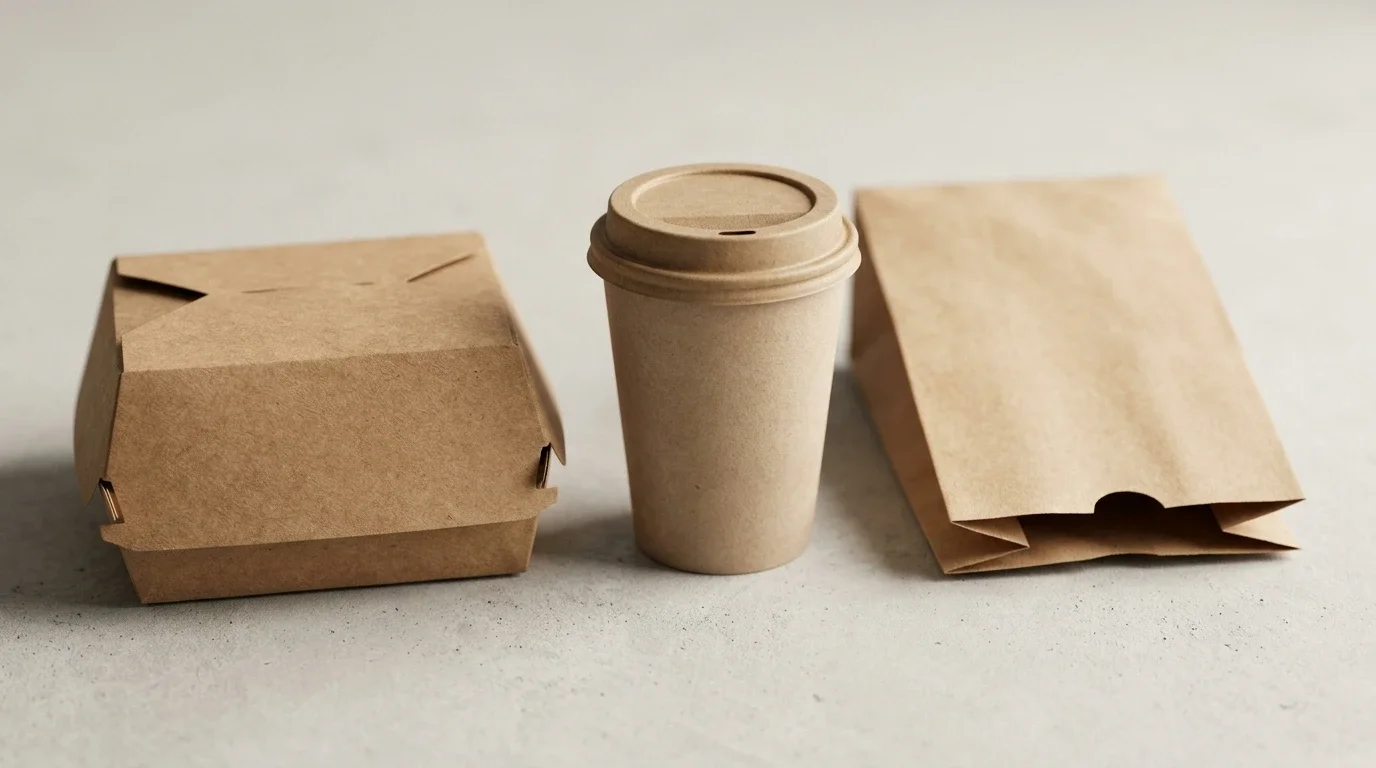
Recyclable, Compostable or Biodegradable Packaging: What the Labels Actually Mean
Recyclable, compostable and biodegradable are not the same promise. Here is what each really means — and how to match the right one to how your packaging is actually used and binned.
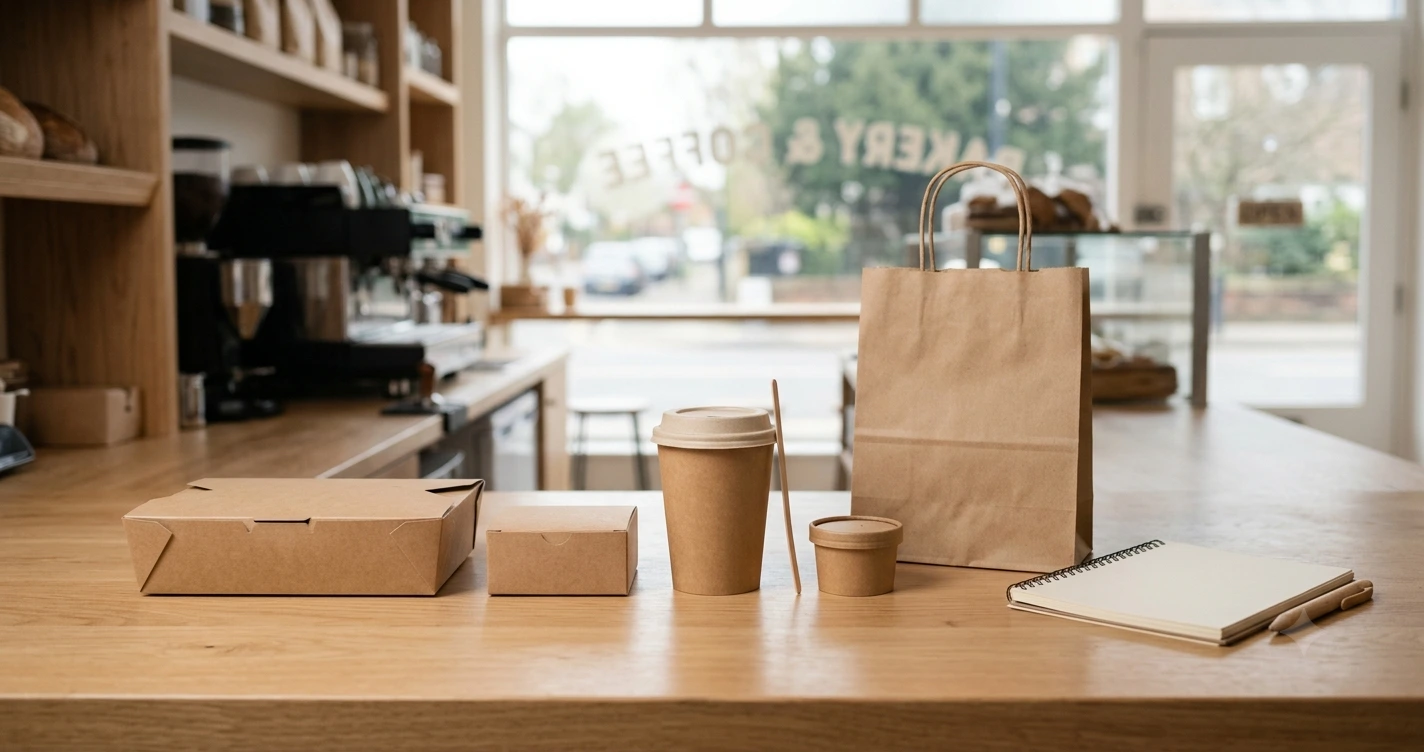
Opening a Takeaway: The Packaging Checklist That Saves You Money
New operators buy packaging from a catalogue, end up with too many sizes and a year of the wrong box. This checklist works from your menu instead, covers how much to order, and ends with the seven lines that get you a real quote.
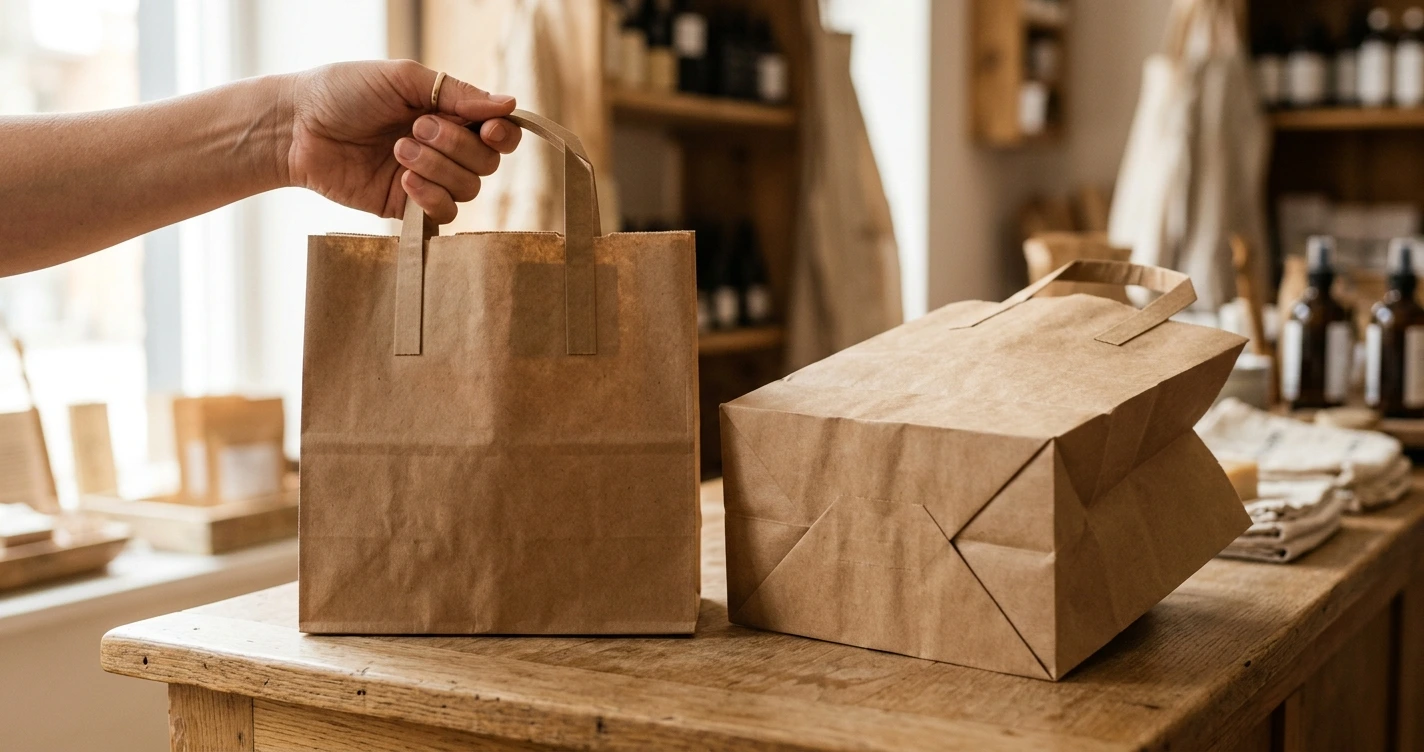
Why Paper Bag Handles Tear and What Weight Ratings Hide
Two nearly identical carrier bags, two wildly different weight claims: the number tells you little until someone explains where bags actually fail. The three failure points, the four factors that decide real capacity, and how to order a bag that survives British weather.