Deutsch
 Français
 Türkçe
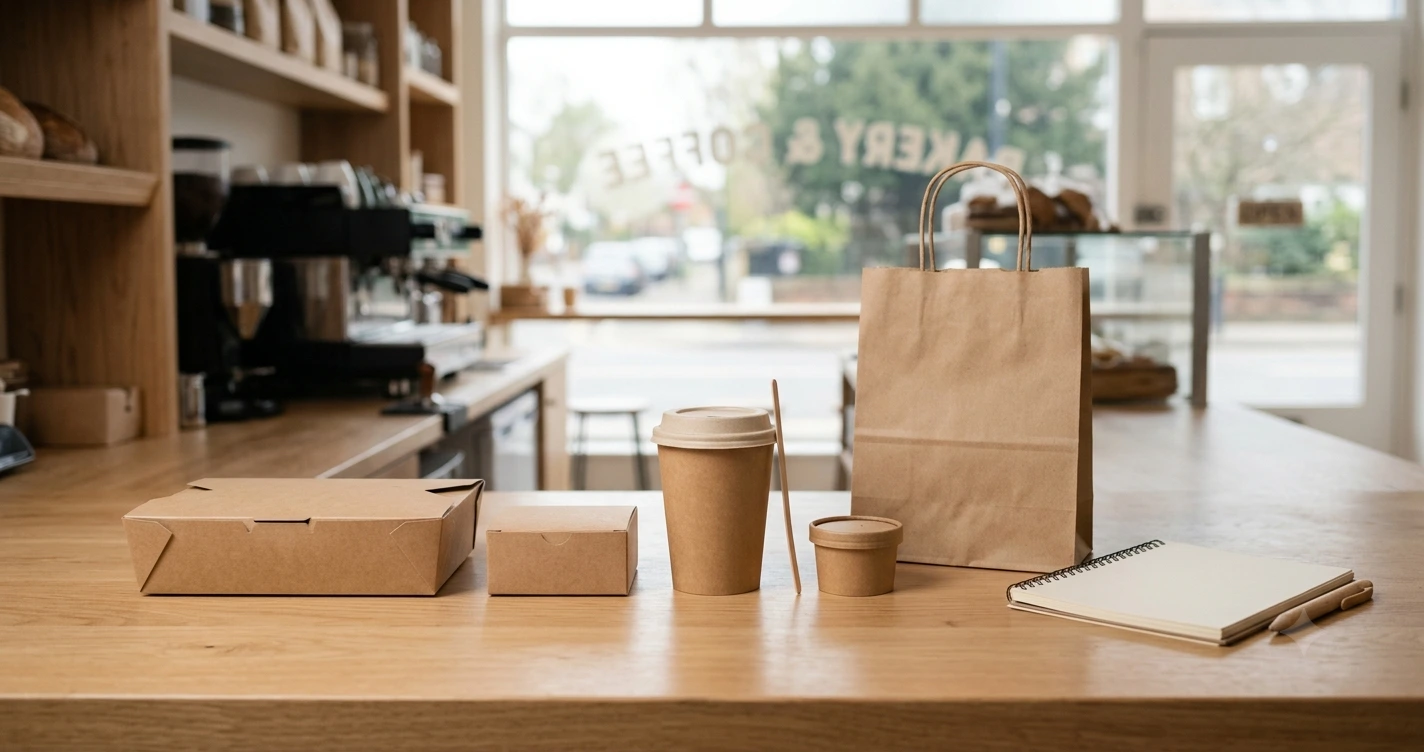
The lease is signed, the kitchen is in, the menu has been tested on friends and family. Then comes the question that never gets its own line in a business plan: what goes around the food? At this point most new operators order from a catalogue, and two weeks later the stockroom is full of sizes nobody reaches for while the box for the best-selling dish has run out. This checklist is an attempt to save you those two weeks. It works from your menu rather than from a product range, and it finishes with the part where new businesses lose the most time: the enquiry you send to a supplier.
Start with your menu, not a product page
Put the menu in front of you and work through it dish by dish. Every dish needs four answers: what holds it, what closes it, what carries it out of the door, and what sits beside it. Those four layers are the backbone of any packaging list, and they explain why an order gets complicated so quickly: a single meal can mean a box, a lid, a bag, a napkin, a cutlery set and a sauce pot. Start from a catalogue and you buy what exists. Start from the menu and you buy what you need.
The starter list by dish type
| Dish type | What holds it | What to watch |
|---|---|---|
| Hot and greasy (kebab, burger, fried food) | Grease-resistant box or wrap | Barrier plus venting, or the crust softens on the way |
| Chips and sides | Open scoop or vented box | Let steam out on delivery; open is fine for eat-in |
| Soups, bowls, salads | Cup or bowl with a secure lid | Lid fit matters more than material; test it on a tilt |
| Hot drinks | Cup with a matched lid | Lid and cup must belong together, not just share a size |
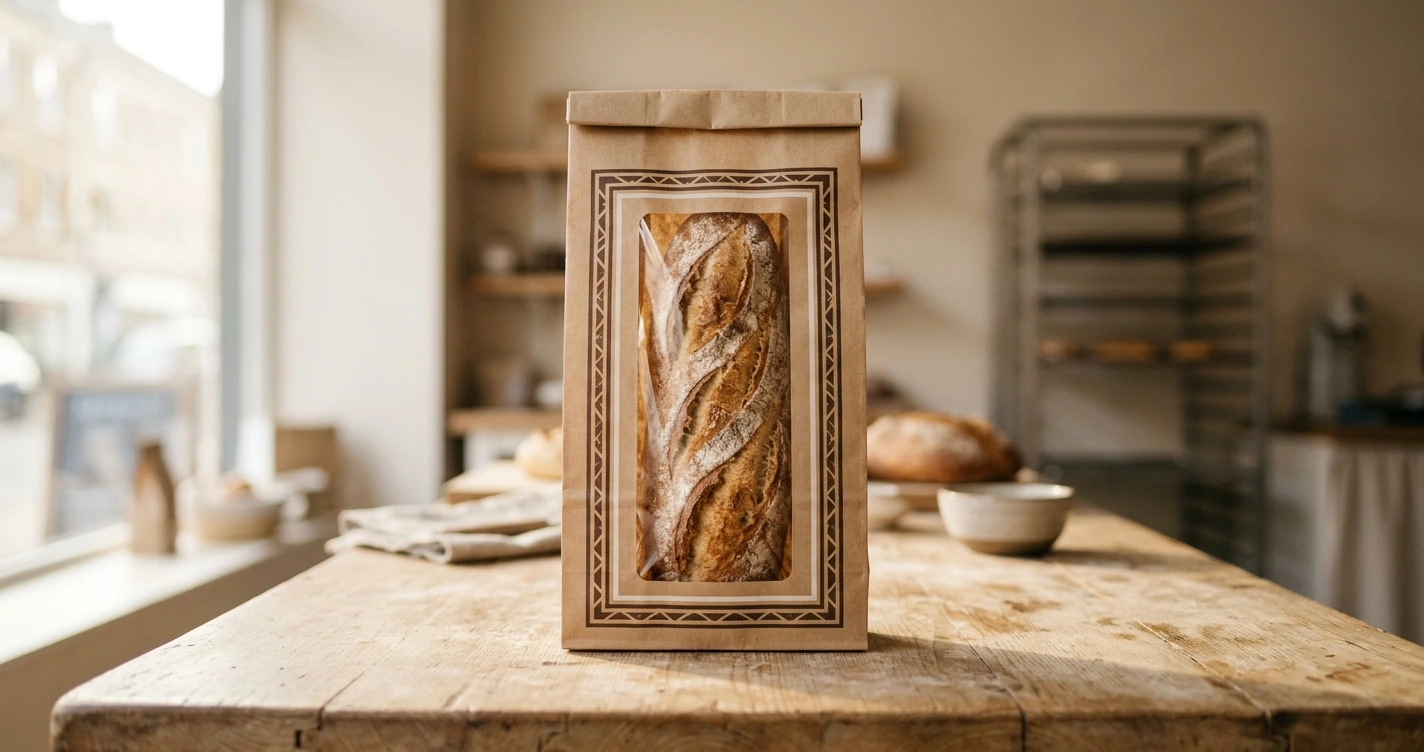
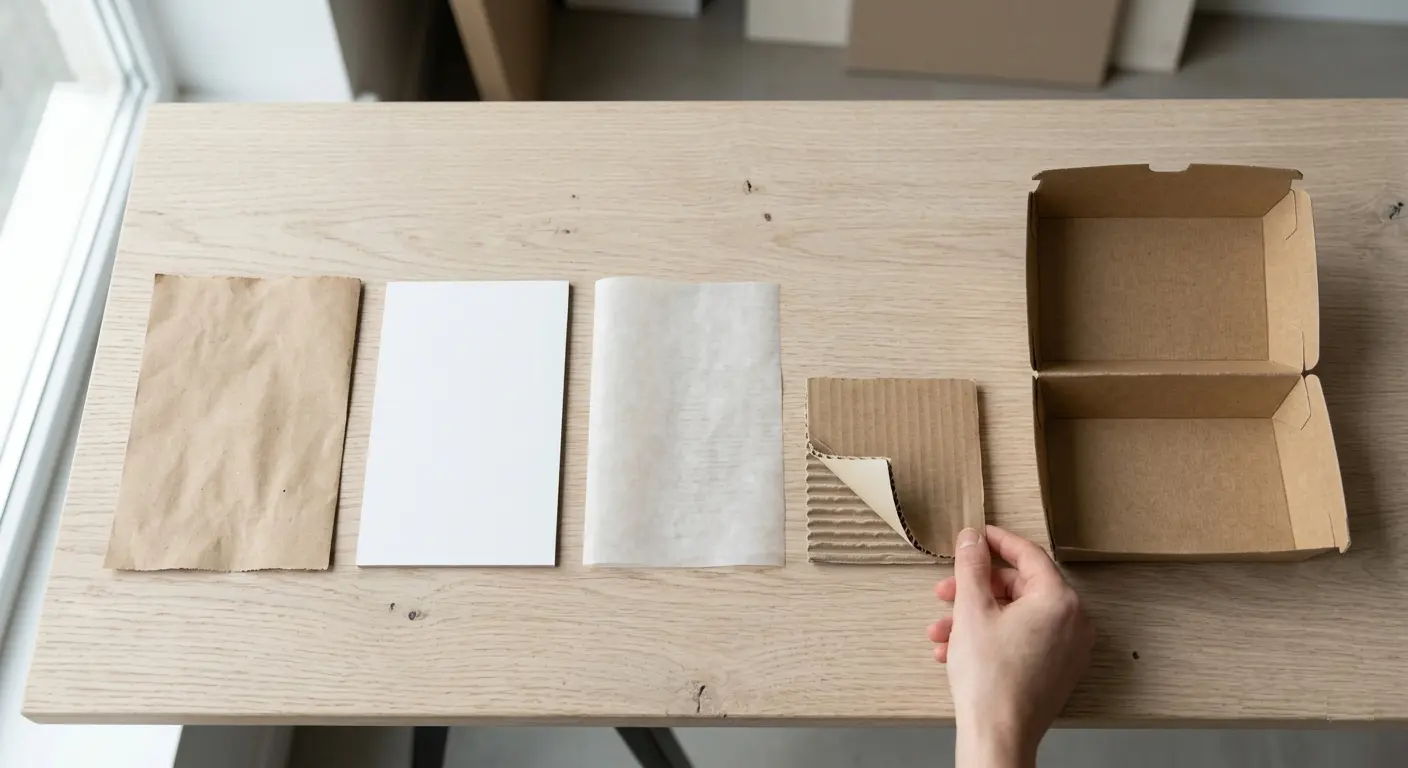
| Bakery and sandwiches | Paper bag or wrapping sheet | Greaseproof for buttery items, plain kraft for the rest |
| Sauces and dips | Small pots with lids | The single most common source of delivery complaints |
| Carrying | Handled bag | Stable and stackable so nothing tips in the rider bag |
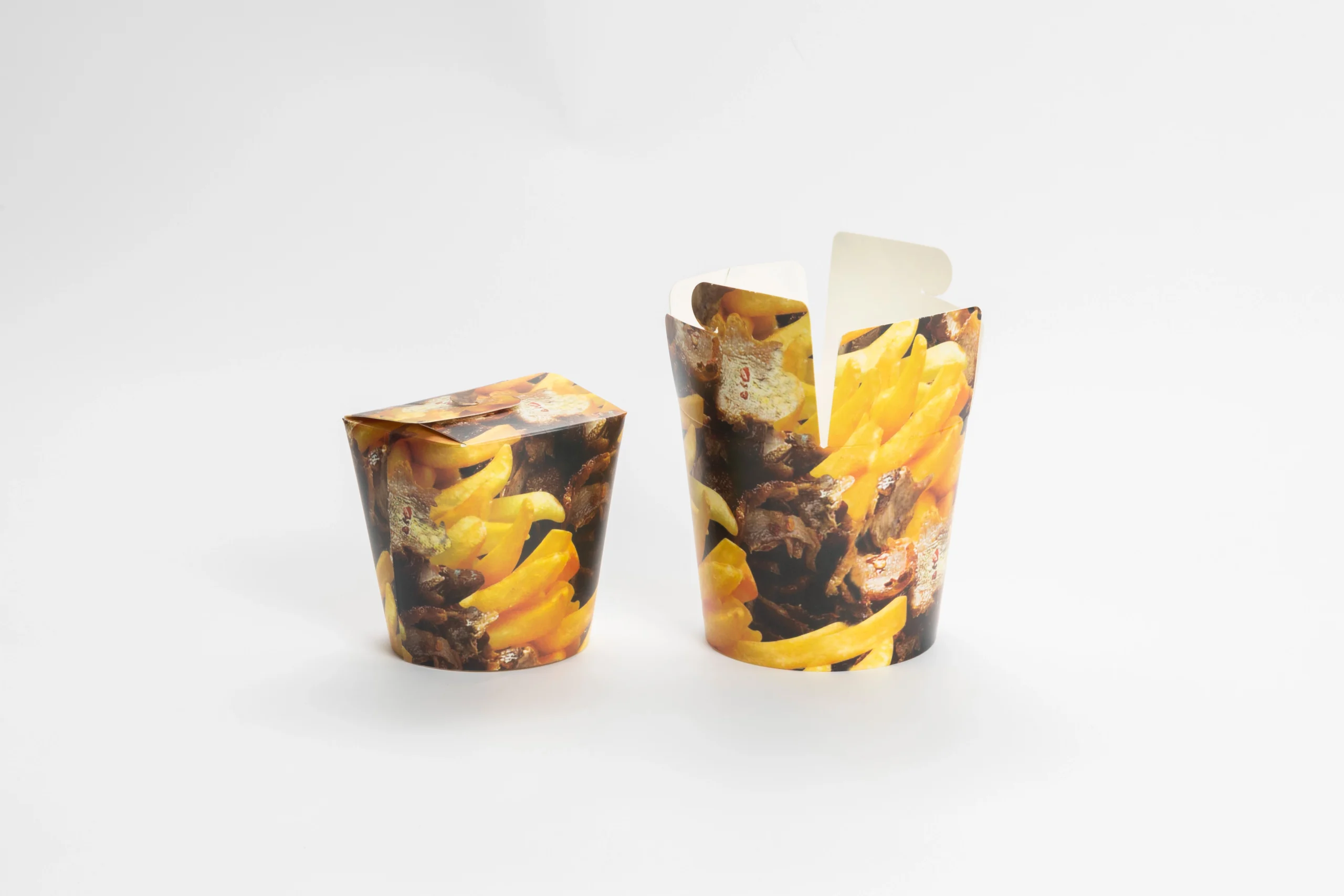
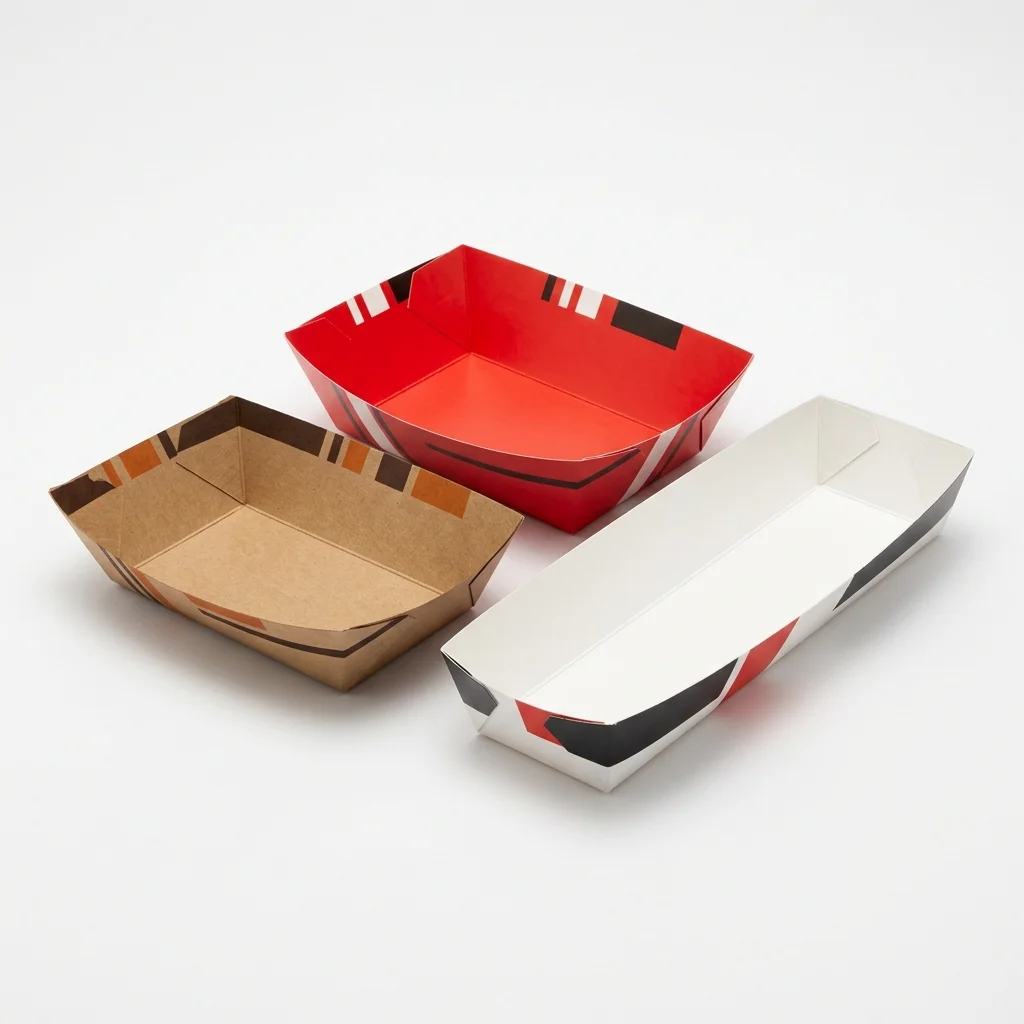
The table stays short on purpose, because the detailed questions only make sense against a real dish. Which food box suits your menu depends on portion size, grease and journey time rather than on a range page.
How many sizes do you actually need?
The most expensive early mistake is not the wrong material; it is variety. On first orders we regularly see seven or eight sizes, of which three survive the first quarter. Every extra format ties up cash, takes shelf space, carries its own minimum quantity and creates mistakes during service. Start deliberately narrow: one box for the standard plate, a smaller one for sides, one hot cup size, one cold, one bag. Whatever is missing announces itself in week one, and adding a line is always easier than clearing one out.
Your first order: err on the small side
Count in days rather than cases. Estimate covers per day, the share going out of the door, and items per order; that gives you a daily use figure per line. Multiply it by the days until your next delivery and add a buffer for peaks. The arithmetic is rough, but it beats instinct, and it prevents the classic opening mistake of a year's supply of a format that turns out wrong after three weeks. Space matters too. Paper packaging is light but bulky, and a stockroom blocked by cases costs you more in daily friction than the volume discount returns.
Test before the pallet arrives
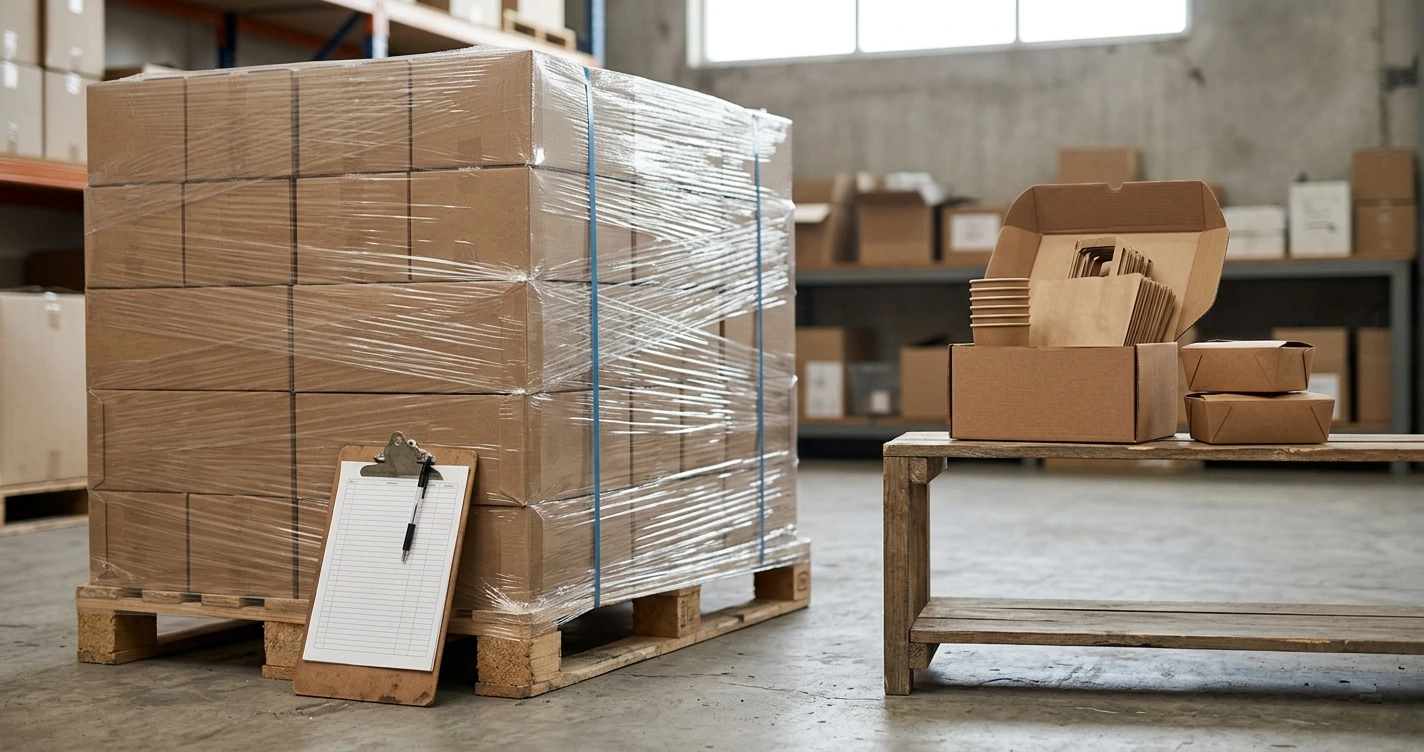
Never commit to a large first run without samples. The test takes twenty minutes and tells you more than any datasheet: fill the sample with your own dish, close it, put it in the delivery bag, stack a second box on top and wait as long as your average delivery takes. Then open it and check three things. Has grease come through? Has the crust gone soft? Did the lid hold? We went through how grease and steam interact in our piece on why kebab boxes arrive soggy, and the same physics applies to almost everything hot on your menu.
The obligations that get missed at launch
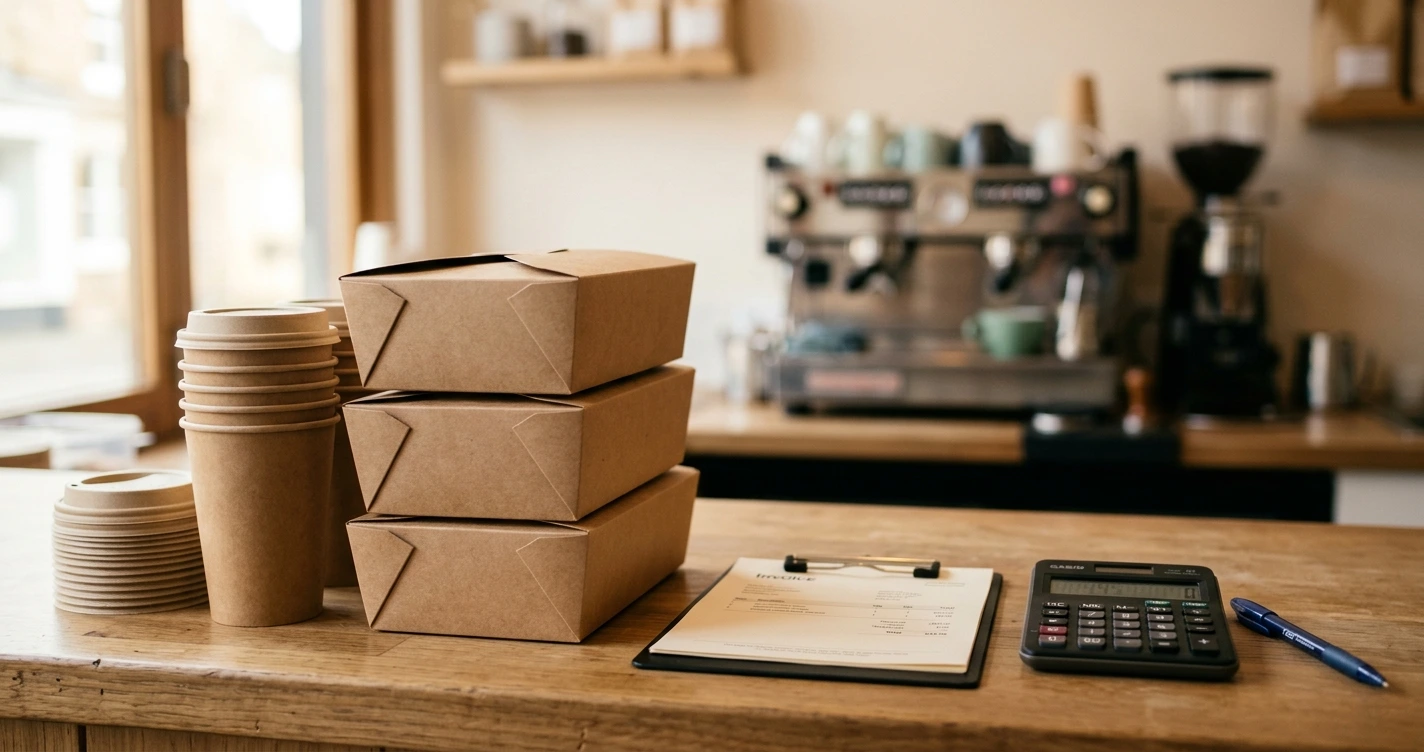
Two items belong on the list even though they are not formats. Begin with where you stand on packaging fees: obligations attach above defined turnover and tonnage thresholds, and most single-site takeaways sit below them, but the cost still reaches you through supplier prices, which we set out in our guide to who actually pays packaging EPR. Then there is food-contact compliance: ask your supplier for the declaration covering the finished item you are buying, and keep it on file from the first order rather than hunting for it during an inspection. Neither takes long at the start; both are awkward to sort out later.
Plain or printed to begin with?
For most new operations the honest answer is plain first, printed second. Portion sizes and sometimes half the menu shift in the opening weeks, and committing a large print run freezes decisions you have not really made yet. A clean sticker on plain kraft carries you through that phase better than full-coverage artwork you regret two months later. Once the formats settle and volumes level out, printing pays twice over, because it lands on lines that are staying.
The enquiry that gets you a real quote
The fastest route to a usable quote is an enquiry that contains everything a supplier needs to price. Seven lines cover it:
- Which dishes you are packing, with portion size and temperature
- Your estimated volume per week or month, line by line
- Whether the food goes in hot, greasy or wet, and how long the journey takes
- Plain or printed, and if printed, how many designs
- Delivery address and how often you want deliveries
- How much storage space you genuinely have
- The date you need to be trading
An enquiry with those seven points gets answered in hours instead of days, because nothing has to be asked back. Without them, a round of questions begins that delays your opening as effectively as a late delivery.
What packaging cannot do
One honest limit to close on. Packaging does not rescue a long delivery radius or a kitchen that plates too early under pressure. If twenty minutes pass between the fryer and the customer, the box only decides how much of the quality survives, not whether it was there. So the best starter list is the shortest one that genuinely covers your menu: few formats, properly tested, in quantities your stockroom can hold. The rest sorts itself out on the second order, when you are working from numbers instead of guesses.
Frequently Asked Questions
- How many packaging sizes should I start with?
- As few as you can manage. One box for the standard plate, a smaller one for sides, one hot cup size, one cold and one bag will cover most menus. Anything missing becomes obvious in the first week, and adding a line is far easier than clearing out sizes nobody uses.
- How much should I order the first time?
- Work in days rather than cases: estimated covers per day, times the share going out of the door, times items per order gives a daily figure, which you multiply by the days until your next delivery and top up with a buffer. Avoid a year of any format you have not yet tested in service.
- Should I start with plain or printed packaging?
- Plain with a sticker usually suits the opening phase, because portions and menu items still move. Once formats settle and volumes level out, printing is worth it, since it goes on lines that are staying rather than on decisions you are about to change.
- What compliance paperwork should I ask for at the start?
- Ask for the declaration of compliance covering the finished item you are buying, not just the raw board, and keep it on file from the first order. Also check where your business sits relative to packaging fee thresholds, since obligations depend on turnover and tonnage together.
- What should I put in my enquiry to a supplier?
- Dishes with portion size and temperature, estimated volume per line and period, notes on grease and moisture, plain or printed, delivery address and frequency, available storage and your start date. That set lets a supplier quote without a round of questions.
Related Articles
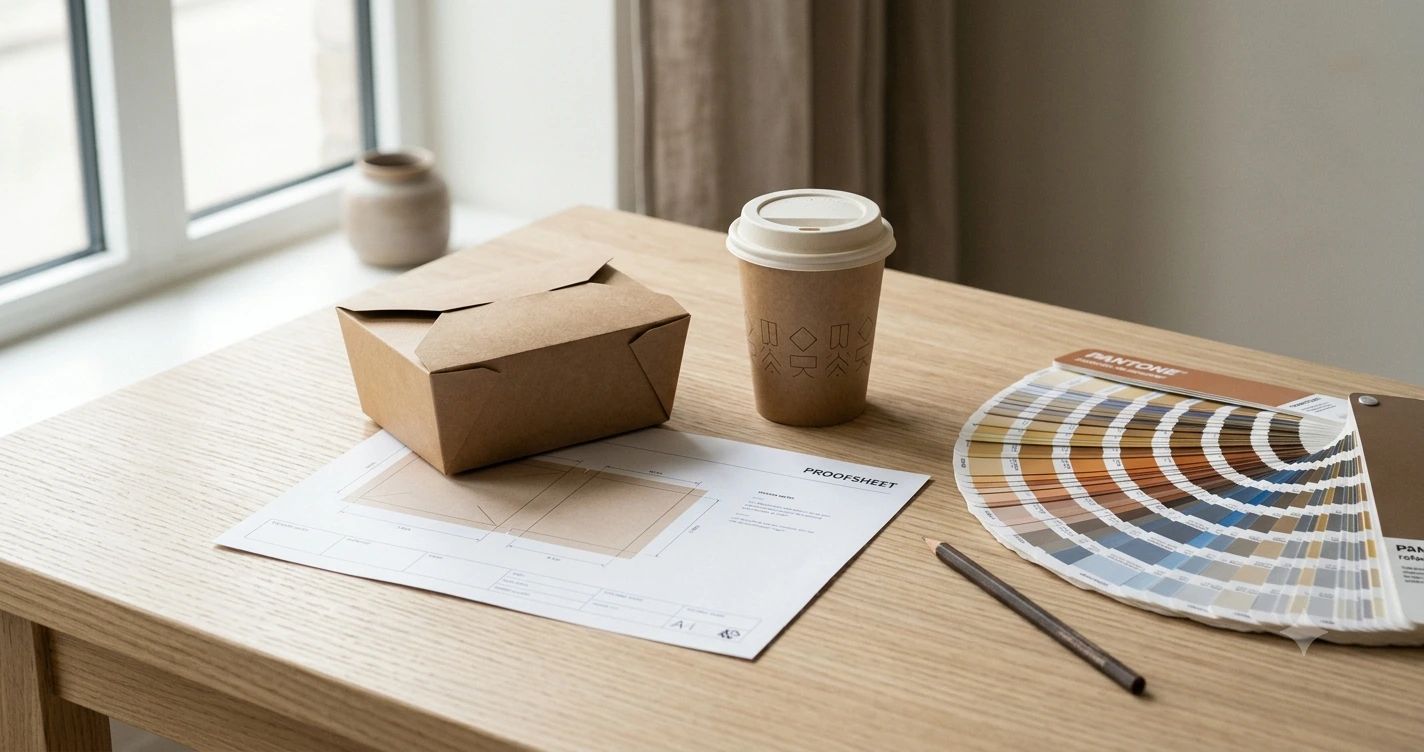
Custom Printed Food Packaging: Getting the Artwork Right
Before a print run starts, a good supplier asks three questions most buyers cannot answer. What they mean, why brown board changes your colours, what stays off the food-contact side, and how finishes quietly add cost.
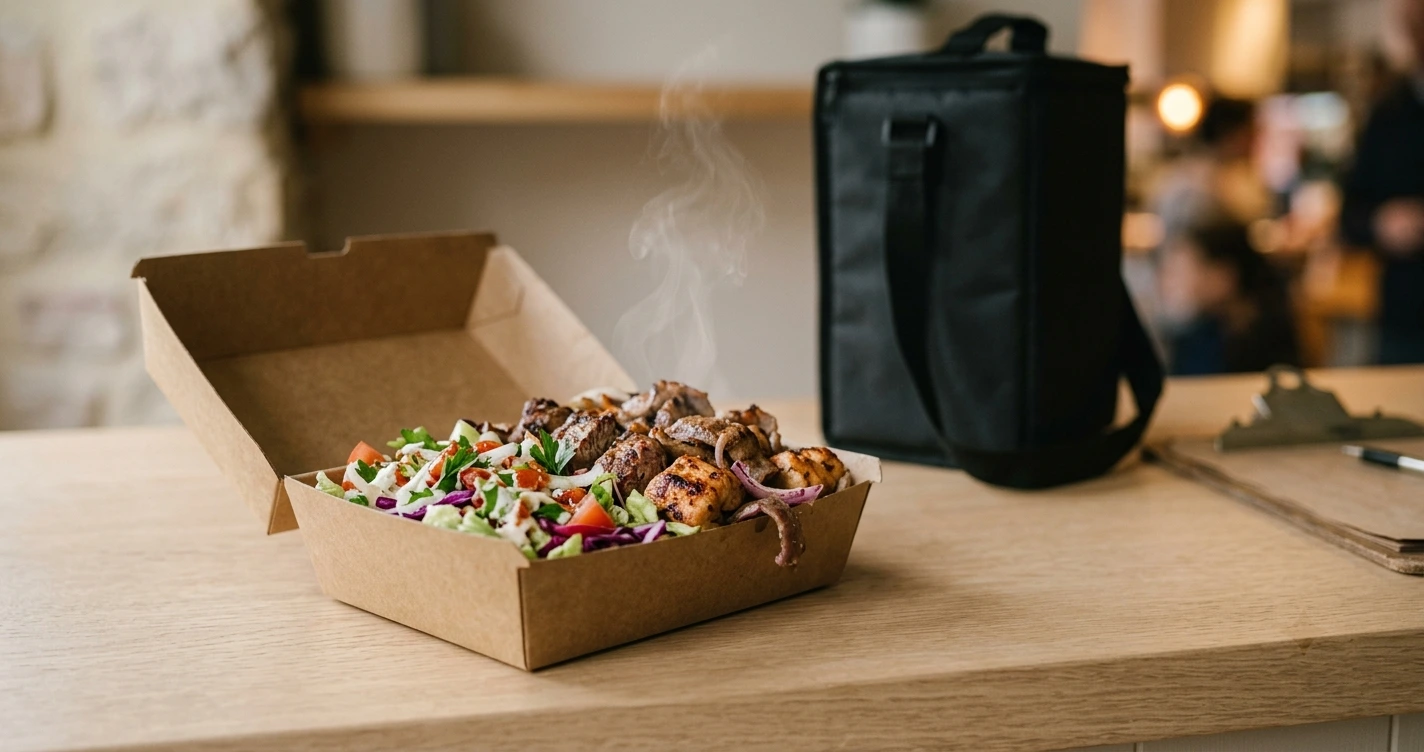
Why Kebab Boxes Go Soggy — a Packaging Guide for Kebab Shops
Grease, steam and the delivery-bag stack: why kebab boxes fail, what PE and water-based coatings really change, and a five-minute test any shop can run before ordering a pallet.
Packaging: Buy Direct From the Manufacturer or Through a Wholesaler?
The cash and carry is convenient and the manufacturer is cheaper per unit, which makes them look comparable. They are not. When going direct genuinely pays, why minimum quantities exist, and the split most operators never think to ask for.
Who Actually Pays Packaging EPR on Your Takeaway Boxes?
Most independent takeaways sit below the EPR thresholds and owe nothing in reports or fees. That does not mean the cost never reaches your invoice. Where the money actually lands, why recyclability is about to change your bill, and what to ask your supplier.
Paper, Grammage and Barriers: Which Material for Which Food
The same box holds a burger perfectly and fails under a curry. The difference is not the board, it is the layer on it. What grammage actually changes, which barrier suits which dish, and how to test material with your own food before you commit.