Deutsch
 Français
 Türkçe
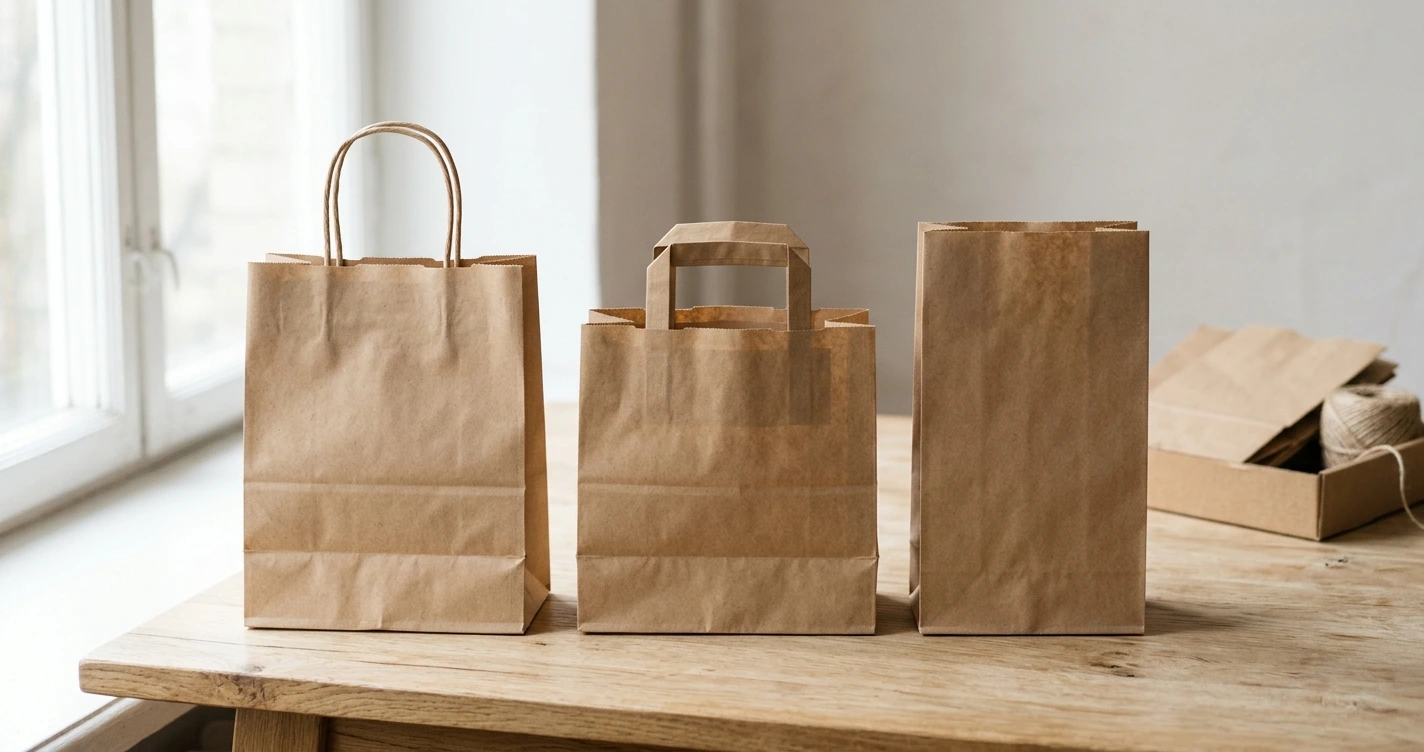
Two months after the fourth site opened, the marketing manager had a carrier bag sent over from three of them and lined them up on a table. One still carried the old logo. Another was a size down, so the meal box only just went in. The third had no print at all: the manager had run out on a Saturday, bought from a wholesaler round the corner, and then simply carried on doing that.
Nobody decided to let the brand slide. It just happened. And it happens in nearly every business once the third site opens.
What drifts is versions, not stock
Search this subject and most of what comes back is about stock control and cost tracking, written by till and inventory software companies. But stock is not what drifts in a branch. Stock runs out, more arrives, the matter closes. What drifts is versions: how many designs, how many sizes and how many suppliers are in circulation at once.
It creeps because each individual step looks sensible on its own. A manager who runs out at seven on a Friday cannot keep customers waiting, so they buy locally. A newer site says the smaller size sells better here, and has one added. When the menu changes the print gets updated, but the thirty cases of the old design keep being used. Six months on there are four designs, seven sizes and three suppliers.
From our side of the counter it shows up even more plainly. We sometimes get two enquiries from the same brand in the same month, from two different people, with two different sets of dimensions. Neither knows about the other. It only surfaces because we ask.
The bill lands on the plate, not the price list
This is the part most operators notice late. On printed packaging, the thing that drives the job is not quantity alone but how many separate production set-ups there are. Every different design wants its own plate, and every different size wants its own set-up and its own start-up waste.
Work it through. Four sites get through forty thousand bags in a year. That is not one job. With four designs it is four jobs, each carrying its own minimum. The total has not moved; the number of jobs has.
One common assumption is worth correcting straight away, because it comes up almost every time. "One design means one minimum" is not true. Even with a single design, each size remains a separate set-up with a minimum of its own. One design fixes brand consistency and the artwork work; the number of sizes still decides the minimum. Keeping those two apart makes the plan far more realistic.
How many packs do you actually need
Tidying up starts with an inventory, and that inventory goes by job rather than by product name. Put one of every pack currently in use on a table and, instead of writing the name next to it, write the question: what does this carry?
In most multi-site operations the list settles somewhere like this: a small carry for one or two items, a large carry for a full order, a container for hot, a container for cold, a sauce pot, a wrap. Six to nine lines. If yours is twice that, you probably have two sizes doing one job and neither is doing it well.
The useful part works in the other direction. Fewer sizes lift the quantity on the ones that remain, and once quantity moves, what you are able to discuss with a manufacturer changes with it. Standard formats across food boxes and the paper bag range are built for that consolidation; most operations cover the bulk of a menu with three or four sizes.
What to hold centrally and what to leave to the site
Pulling everything into head office does not work either. In practice the split runs like this.
- Head office holds: the design, material and grammage, the size set, the supplier, the artwork file.
- The site decides: which size in what quantity, when it is delivered, how it is stored on their shelves.
- Agreed together: whether the size mix varies by location. A shopping centre site sells more single portions, a high street site more family portions. Drawing different proportions from the same set is normal; inventing sizes is not.
Whether that split survives is decided on a Friday night in a branch. If it is obvious which size comes from whom, nobody walks to the wholesaler on the corner. A standard built as a convenience holds; one built as a prohibition gets worked around on the first busy Saturday.
Written down it does not fill a page, and it ends the argument six months later about who was allowed to order what.
Ordering centrally, delivering to sites
Buying centrally lifts the quantity, but the goods have to go somewhere. Paper packaging does not spoil; it does draw moisture and it does take floor space. A kraft bag that has spent six months in a damp cellar is not the same bag any more.
Three routes work. With a central store it is straightforward: one delivery, then distribution at your own pace. Without one, call-off deliveries are worth discussing, meaning a single order released in stages. Failing both, the largest site's store can act as shared space, which works but puts extra handling on that manager and should be agreed rather than assumed.
The question to settle is simple enough: how often do you want to reorder, and where will that quantity sit? Leave either unanswered and the move to central buying only half happens.
When a new site should order its packaging
Packaging sits at the bottom of every opening list and is among the first things a customer handles. Those two facts pull against each other. Printed production takes time, so the order has to leave before the fit-out is finished.
With an existing design a new site is easy: same file, same size set, more units. If a new design is needed the job is set up from scratch and planned backwards from the opening date. What a manufacturer needs from you to do that is set out step by step in our piece on what to send before asking for a quote.
In a franchise: who owns the design, who may order
This is where we stall most often. Someone wants to order against a brand's design but does not sit in that brand's head office. Sometimes they are entirely authorised; sometimes not. We step back and ask head office, and the order waits there.
Settling it once is enough. Head office tells the supplier in writing who may order against that design, and updates the list when it changes. If a franchisee is to use their own supplier, that boundary needs defining too; the usual arrangement keeps sizes and material specification central while leaving sourcing open. Any arrangement that is not written down gets tested in the first busy week.
The most visible carrier of all this consistency, incidentally, is the bag the customer walks out with. When lines like twisted handle paper bags vary from site to site, your customer usually notices before you do.
Where standardising does not help
Forcing everything onto one type is equally wrong, and not saying so would turn this into an advert.
A site with a genuinely different menu may not fit the central size set; one deliberate exception on the list costs less than squeezing it in. At a trial location, committing to printed stock rarely pays until the concept has settled. And there is this: bringing every site onto one design while still placing five separate orders a year does not reduce the number of set-ups, it only tidies the look. The gain arrives when consolidating the design also consolidates the order.
A one-page site inventory
If you want to start today, ask each site for these six lines. Half a day covers it.
- A photo of every pack in use, laid flat.
- The printed size, or a width and height taken by hand.
- Where it came from and the date of the last order.
- Roughly how many go through in a month.
- What it carries: single item or full order, hot or cold.
- The one complaint the manager has about it.
That last line is the one that surprises people. Whatever never appears on a size list comes out there: the lid opens in transit, two boxes will not stack squarely, the handle cuts into your hand. So alongside the standard you also end up with the list of things worth fixing while you build it.
At four sites this is an afternoon. Past ten sites the same work becomes a project. The only variable is when you pick it up.
Frequently Asked Questions
- Can each site place its own orders?
- Yes, provided the design and the size set stay with head office. What the site controls is quantity and delivery timing. Tell your supplier in writing who may order against which design and the later confusion never gets started.
- Does moving to one design mean one minimum?
- No, and this is the assumption we correct most often. Even with a single design, every size remains a separate production set-up carrying its own minimum. One design solves brand consistency and artwork; the number of sizes is what decides the minimum.
- Does a new site trigger the minimum again?
- If it uses the existing design and size set, no new job opens and you are simply adding units. A new design or a new size is a separate set-up. Making that distinction early takes pressure off the opening schedule.
- What if we have no central warehouse?
- Call-off delivery usually solves it: place one order and take it in stages. Alternatively the largest site can act as shared storage, though that adds handling for its manager and should be agreed in advance. Remember that paper draws moisture wherever it sits.
- Can a franchisee buy from their own supplier?
- That is the brand owner’s call and the boundary needs setting. The common arrangement keeps sizes and material specification central while leaving sourcing open. Arrangements that are not written down get tested in the first busy week.
- How long does a site inventory take?
- With four or five sites, half a day is enough; six lines and a few photos from each location will do it. Past ten sites the same exercise turns into a project, which is why doing it early is noticeably easier.
Related Articles

Framework agreement for packaging: call-offs, stock, leftovers
A framework agreement does not lower the minimum run; it spreads it over twelve months. Whoever does not call off still buys in the end, and whoever leaves the leftover unregulated pays for the next menu change with a pallet. What the agreement settles and what only the call-off does, why the supplier prints the annual volume in one run, who stores and bears the risk, how many call-offs a chain needs and which lead time the contract actually means.

Packaging: Buy Direct From the Manufacturer or Through a Wholesaler?
The cash and carry is convenient and the manufacturer is cheaper per unit, which makes them look comparable. They are not. When going direct genuinely pays, why minimum quantities exist, and the split most operators never think to ask for.

What Your Packaging Supplier Needs Before They Can Quote
Three suppliers, three prices, three different bags. Most packaging quotes are unusable because the enquiry described a logo instead of a product. Here is the brief that gets you comparable numbers.
A second packaging supplier: who owns the tooling?
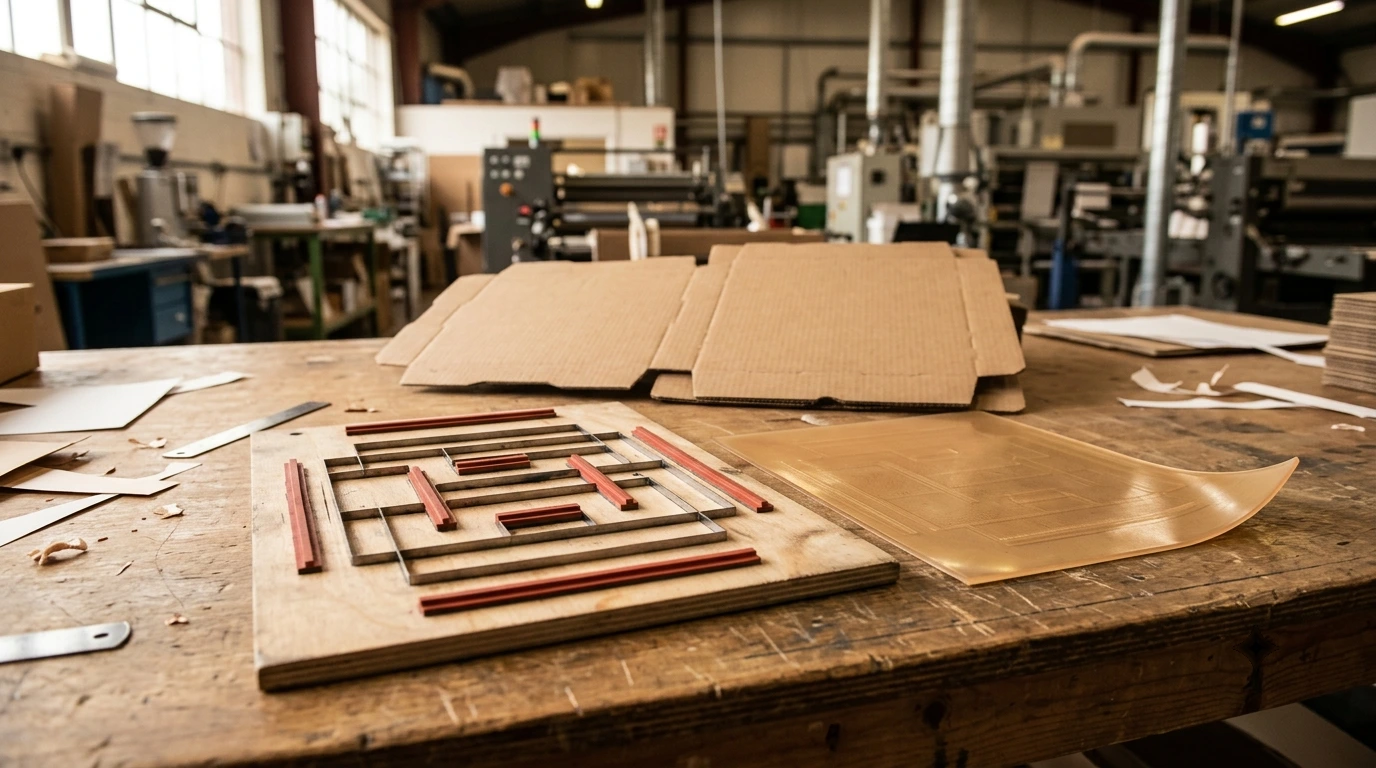
A second supplier rarely fails on price and often on a question nobody asked in the first contract: who owns the cutting die and the printing plates, and what of that fits another plant at all. When a second supplier becomes a must, what data it really needs, where two plants differ on the shelf, what happens to marking and conformity, and from what volume a business can carry two minimum runs.

Supplier scorecard for packaging: which KPIs the plant reports
A scorecard without supplier data rates your own goods-in, not the supplier. OTIF, complaint rate and delivery reliability are measurable, but only when both sides use the same clock and the same specification. Which five figures a packaging manufacturer can report every month, which two it cannot, why delivery reliability counts from artwork approval and how the annual review gets by with three numbers.