
 Deutsch
 Français
 Türkçe
Fast food packaging supplier for restaurant chains and franchises
Last reviewed:
The development agreement for the North West is signed: twelve sites in three years, branded packaging from day one. Two weeks later the first franchisee rings head office with a simple question. Does she buy the boxes herself, or does the brand? If you are looking for a fast food packaging supplier for a restaurant chain or franchise system, that question decides almost everything that follows, from minimum quantities to who reports the packaging under pEPR. This page answers it as the manufacturer that prints the boxes.
Who orders from the fast food packaging supplier: head office or the site?
For printed packaging, usually head office. The reason is the minimum quantity, which applies per design and format: 10,000 pieces for burger boxes, chip boxes and cups. A busy item such as the chip box may reach that at one site eventually; a slower item such as the chicken box often will not. Head office pools the demand of every site and reaches the minimum with ease.
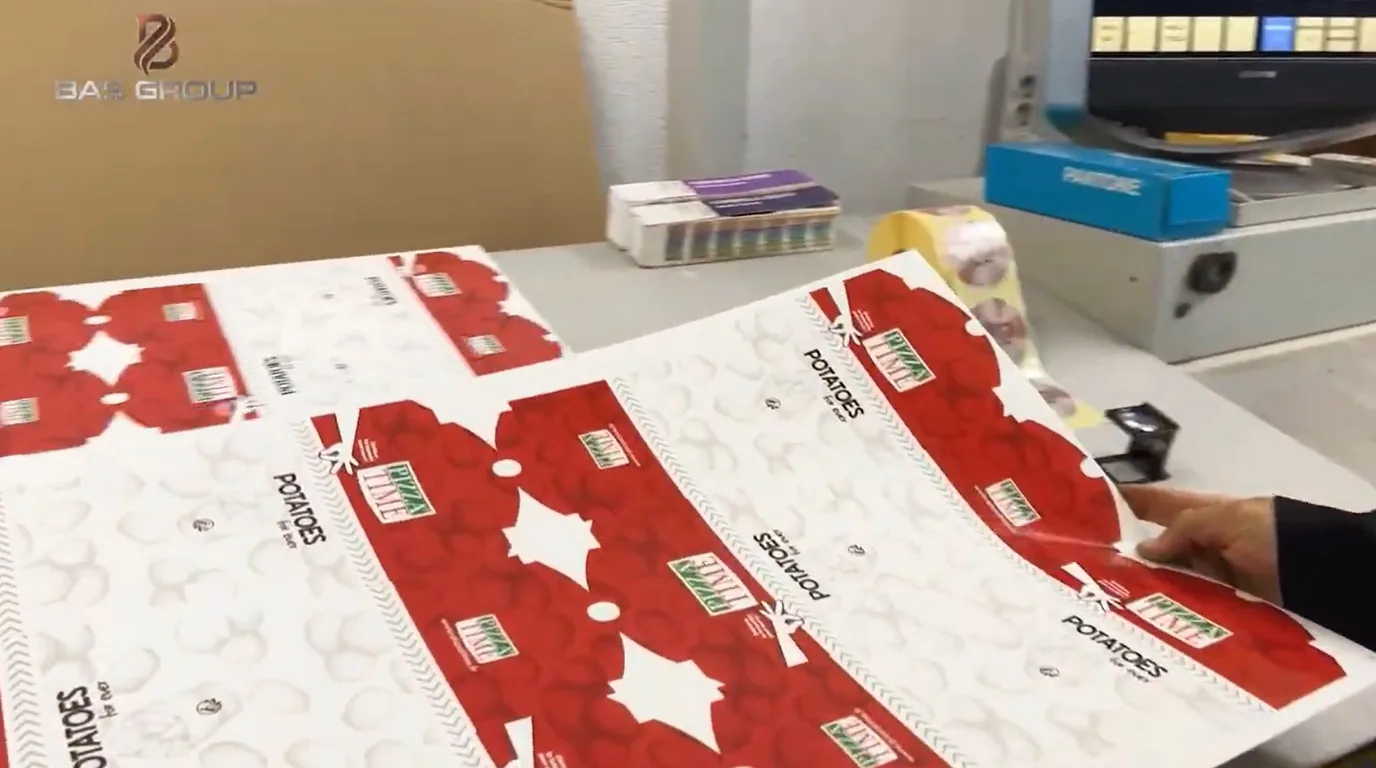
Franchise systems use three ordering models. Under central purchasing, the franchisor buys, stores with a logistics partner and distributes to the sites, which suits printed packs. With an approved supplier list, head office only names the suppliers and every franchisee orders separately; that works for plain stock but usually fails on quantity for printed packs. Under a master franchise, the regional partner orders for its territory. The French chain Pizza Time, for example, has been supplied by us since 2020 through its partner in Amiens, as set out in the Pizza Time case study. Which model you run decides who we talk to and where we deliver.
Fast food packaging by menu item
The table matches each item on a burger, chicken or bowl menu with its format. Minimums and lead times apply per design from artwork approval.
| Menu item | Format (mm) | Minimum per design | Lead time |
|---|---|---|---|
| Burgers | Burger box 95×95×75, 114×114×90, 130×130×100, 190×145×80 | 10,000 | 15 to 20 working days |
| Burgers, wraps and sandwiches | Wrapping paper 250×250 to 400×500, greaseproof or foil-lined | 10,000 | 10 to 15 working days |
| Chips | Chip box 65×40×95 to 87.5×48×178 | 10,000 | 15 to 20 working days |
| Chicken, nuggets, wings | Chicken box in four sizes from 140×84×55 to 158×158×200, bucket 1,750 and 2,500 ml | 10,000, bucket 25,000 | 15 to 20 working days |
| Sauces and dips | Sauce cup 30, 60, 90 and 120 ml | 50,000 | 15 to 20 working days |
| Bowls and salads | Kraft bowl 470 to 1,250 ml | 10,000 | 15 to 20 working days |
| Drinks | Paper cup, single or double wall | 10,000 | 15 to 20 working days |
| Napkins | Two-ply paper napkin, 240×240 to 400×400 | 50,000 | about 15 working days |
| Collection and delivery | Flat-handle carrier bag, 260×140×300 to 420×260×400 | 10,000 | 15 to 20 working days |
Two lines have higher minimums. The sauce cup starts at 50,000 pieces; for a system with few sites a plain cup is often the better choice. The chicken bucket sits at 25,000; if it is only a promotional format, order it plain. Sizes and variants for the core box are on the page for custom printed burger boxes.
Counter and delivery: plan use per channel
At the counter a meal needs the box, the paper and the cup; in delivery the carrier bag is added. Chains running both channels therefore plan two consumption figures per item. If the bag is ordered only once delivery goes live, the first weeks run on plain stock. Take the delivery share per site from your till data before fixing the bag quantity, and decide whether the restaurant bag and the delivery bag carry the same design. With one design for both, the minimum is reached sooner.
Opening a new site: our planning example in weeks
For a new site with known formats we count back from opening day. Eleven to ten weeks before: fix the quantity per item and supply artwork. Nine weeks before: artwork approval, from which production takes 15 to 20 working days, or 10 to 15 for wrapping papers. Five weeks before: collection at the plant; a full load takes about five to seven working days to Germany, and the UK adds the Channel crossing and UK customs clearance. Two weeks before: stock at the central warehouse or the site, with buffer for customs, unloading and the first stock-up.
For every later opening most of that plan falls away, because designs and approvals already exist, and a call-off or a repeat run is enough. How call-offs and leftovers are written into a contract is covered in our guide to a framework agreement for printed packaging.
Who is the brand owner in a franchise? pEPR, the plastics ban and EU sites
Three sets of rules apply to a UK chain, and the EU one only matters if you also trade in the Republic of Ireland or elsewhere in the EU.
| Since / from | Rule | What it means for the packaging |
|---|---|---|
| 1 October 2023 | Single-use plastics ban (England) | Single-use plastic cutlery and polystyrene cups and food containers can no longer be supplied |
| 2025 | pEPR fees | Above £2 million turnover and 50 tonnes the brand owner reports branded packaging and pays fees; between £1 million and 25 tonnes and those limits it reports data only |
| 12 August 2026 | PPWR applies (EU sites) | The business handing over service packaging under its own name or brand is its producer, even when the supplier is outside the EU |
| 12 February 2027 | PPWR Art. 32 (EU sites) | Customers’ own containers must be filled at no extra charge |
| 12 February 2028 | PPWR Art. 33 (EU sites) | A reusable option for takeaway food and drinks, not dearer than single-use; micro-enterprises exempt |
For franchise systems the pEPR line needs a clear answer. The logo on the box belongs to the franchisor, but the franchisee hands it to the customer. Confirm with your compliance scheme which party counts as brand owner and reports, and record that in your franchise documents. For EU sites the same question arises under the PPWR; our article on who counts as producer of branded service packaging (German example) shows what data is needed. We provide material and weight per SKU and the conformity documents, so the report rests on figures rather than estimates. For the legal position of your own business, please take advice.
Cup lids, drink carriers, reusables: outside our range
We do not make these three items. A chain still needs them, particularly where reuse rules apply, so plan a separate supplier for them in the tender from the start; we flag them in the quote as open lines. To be frank: for a concept with three sites and a test menu, your own printed packaging is usually premature. Off-the-shelf plain stock with a label will do until volumes settle.
What to send with your enquiry
A quote for a system is reliable when it includes the format list per menu item with the sizes you want, annual use per item from your till data, the number of sites today and in twelve months, the ordering model (central purchasing, master franchise or site), the delivery address of your central warehouse or logistics partner, and the artwork with Pantone references.
In short
- Bas Packaging supplies fast food packaging from 10,000 pieces per design and format; sauce cups and two-ply napkins from 50,000, chicken buckets from 25,000.
- In a franchise system the pooled demand of head office or a master franchisee reaches the minimums.
- Our planning example for a new UK site supplied from Turkey: around eleven weeks from format list to stock on site.
- Under pEPR the brand owner of branded packaging reports it; a franchise should record in writing who that is.
- Sites in the Republic of Ireland or elsewhere in the EU fall under the PPWR from 12 August 2026, with customers’ containers from 12 February 2027 and a reusable takeaway option from 12 February 2028.
Restaurant chains and franchise systems have their burger boxes, chip boxes, chicken boxes, wrapping papers, sauce cups, paper cups and carrier bags printed by Bas Packaging for all their sites through one central order: from 10,000 pieces per design, 10 to 20 working days after artwork approval. Our planning example for a UK opening is around eleven weeks. Under pEPR, branded packaging is reported by its brand owner.
Packaging Needs
- Franchisees ordering printed packs below the minimum
- New site opening before the boxes arrive
- Unclear who is brand owner under pEPR
- Sauce cup minimum underestimated
- Delivery bags ordered after delivery goes live
- Sites in the Republic of Ireland under different rules
Relevant Certifications
- ISO 9001
- ISO 14001
- ISO 45001
- BRCGS Packaging Materials
- FSC Chain of Custody
