Deutsch
 Français
 Türkçe
Friday, 4.10 pm, and the search for a second packaging supplier begins with a refusal. The first supplier of a chain with 60 sites writes that its capacity is booked until March; the next run of pizza boxes cannot start before then. The central warehouse holds four weeks of stock.
The head of purchasing rings a second plant, and the first question from there concerns neither price nor date but two things that never appeared in her contract: who owns the cutting die, and which process were the boxes printed in so far?
A second supplier for printed packaging is not an order placed at another address. It is a second tool, a second set of plates, a second colour match and a second minimum run. What of that you can take with you, what is made anew and what shows on the shelf depends on questions that one sentence in the first contract would have settled. We describe them from the side of a plant that is the second supplier to many chains, in the UK and on the continent, and therefore knows which data is missing at the first call.
When does a second supplier become a must?
As soon as a supply failure would leave sites without packaging before a new plant could produce. The arithmetic is simple: lead time for artwork approval, tooling and production at the new supplier against the stock in the warehouse. If stock is lower, and for a chain with 60 sites it nearly always is, there is no replacement from a standing start. The shortages of 2021 and 2022, when lead times for board and folding cartons grew in a way the trade had not seen before, showed that to many procurement teams; whoever had one source then ended up buying packaging that did not match the brand, or none at all.
A second supplier is not distrust of the first. It answers a question the first cannot answer about itself: what happens if it fails? Failure does not only mean insolvency. A press down for three weeks, a paper lot that fails its compliance test or capacity handed to a larger customer is enough. Nearshoring to Eastern Europe and Turkey has therefore become the second leg in many sourcing strategies, and we say openly that we are asked for that role more often than for the role of first supplier. For the decision itself that changes nothing: the second plant must produce before the first fails, otherwise it is not insurance but a name on a list.
Who owns the cutting die and the printing plates?
Whoever the contract says, and without a contract almost always the supplier. Ownership of a tool does not pass to you because a line called “tooling” appeared on an invoice. Whether the cutting die is yours depends on the type of contract and its content, not its heading: was the tool bought, lent or made as part of a supply agreement? Where it is amortised through the unit price, many contracts pass ownership only once the agreed quantity has been reached. Where nothing is agreed, the tool stays with the supplier, with consequences for your accounts and above all for the day that supplier becomes insolvent: only a customer who can prove ownership can claim the tool back from the administrator; everyone else negotiates. Some manufacturers fold tooling into the unit cost and, less visibly, carry on charging for it on every repeat order, which is another reason to have the line in the open.
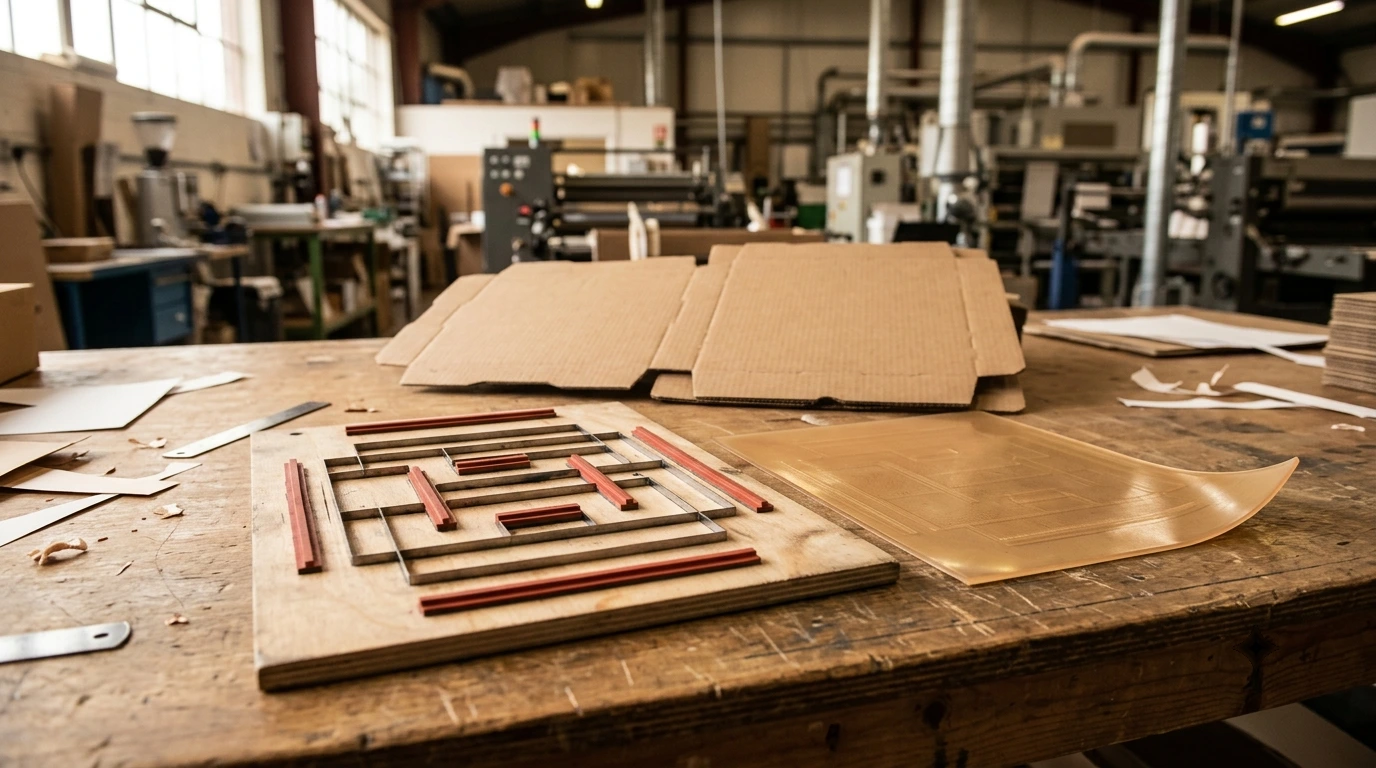
Printing plates add a technical layer. The flexo plate, usually photopolymer, is matched to the press, the anilox roller and the sheet format of the plant that made it. Even if a supplier hands it over, which some exclude in their terms, it does not print the same result in another plant. In practice the plate is made anew at the second supplier from your artwork. The cutting die is different: it can be yours and stored at the plant; whether it fits another machine depends on format and cutting system. In the chain from our example the die belonged to nobody on paper, because nobody had mentioned it. Whether it fitted at all was the second question.
What data the second supplier really needs
Not the plates and not the die, but the data both were made from: open artwork, die line, colour reference, specification. The artwork comes as an open file with the die line as its own spot colour, so the second plant can separate design and contour; spot colours are Pantone numbers in the scale that matches the paper, coated or uncoated. The specification names dimensions with tolerances, grammage, coating and pack size. And the colour reference is a press proof or a printed pack from the first supplier, not a screen.
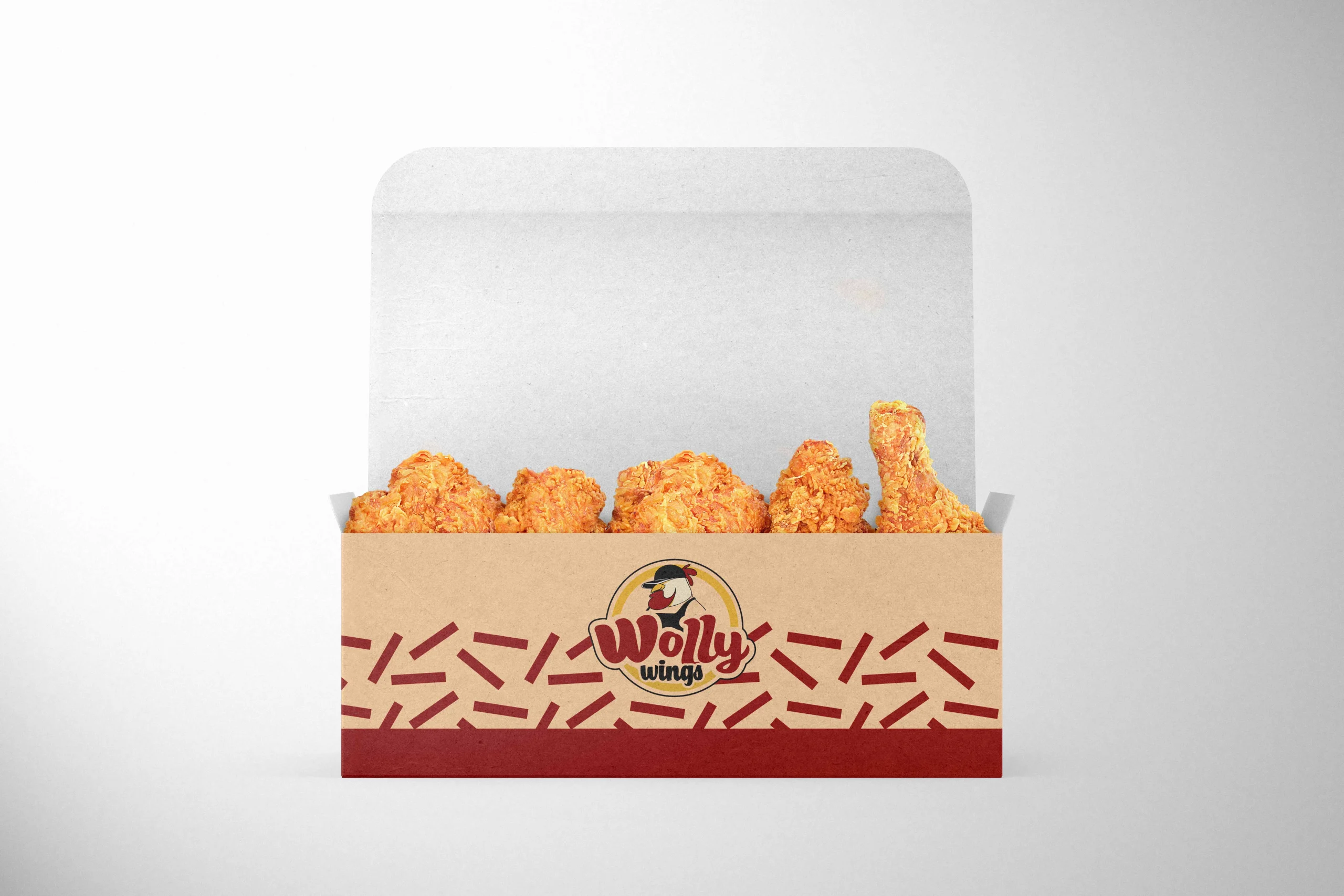
Our product page for pizza boxes says, on the print process, that they are printed in flexo or offset depending on artwork, quantity and production specification. For a second supplier that line is the most important and the least often sent. The same design can be printed in both processes, but with different tooling, different screen ruling and a different colour impression on brown kraft. A plant that prints offset cannot even take delivery of the other plant’s flexo plates. Whoever qualifies a second supplier for printed pizza boxes should first record which process the first one used, and only then decide whether the second must run the same process or whether a new press proof signs off the difference.
The same box from two plants: where the differences show
In three zones, in this order: colour, fit, paper. Colour first, because brown kraft has no standard against which two plants could be measured; the common proofing profiles describe white papers. Two plants with the same Pantone number deliver two browns on kraft, because paper lot, ink film and process differ. If you do not want to see a difference on the shelf, set a colour tolerance and have both plants measured against the same press proof. Fit second: a lid from plant A must fit a tray from plant B if both sit on the same shelf; that only works when the specification carries dimensions with tolerances and not just nominal sizes. Paper third: two plants buy from two mills, and the same grammage feels different, folds differently and takes ink differently.
A hint from production that concerns most parallel operations: the differences do not show in the central warehouse but in the site that receives both batches at once. Whoever runs two plants therefore splits by region or by item, not by pallet. The chain in the example ended up running the large formats at the first plant and the small ones at the second; no site ever had two origins of the same size on its shelf. For waffle boxes and other offset items the split by item is especially natural, because the tooling exists per format anyway and colour on white board is easier to match than on kraft.
Does the second plant change the marking too? The marking no, the documentation yes: you remain the producer, but data sheet, test report and batch number are kept per plant. Since 12 August 2026 the EU packaging regulation applies, and whoever has packaging made under their own name or logo is its producer; the details on the pack, name, address, contact and an identification element, are your details and do not change when a second plant makes the same box. What doubles is the technical documentation behind them. Each plant supplies its own data sheet with material composition and unit weight, its own migration test report and its own batch number; your declaration of conformity rests on both sets. For UK businesses supplying EU sites the same applies to the producer under pEPR: the brand owner does not change with the converter. And for imported paper packaging, from 30 December 2026 one more line arrives: the reference number of the due-diligence statement under the EU deforestation regulation, per delivery and therefore per supplier. Two plants in two countries mean two origins of pulp and two references.
How do you qualify the second without losing the first?
With a sample against the specification, a press proof against the reference and a trial run in a few sites before any pallet is ordered. The first supplier is best told by you and not by the shelf; a first supplier who knows a second exists tends, in our experience, to deliver more punctually than one who does not. The sample tests dimensions, fit and material against the specification, not against the first supplier’s pack, which may itself sit outside tolerance without anyone ever having measured it. The press proof tests colour on the real paper against the first supplier’s proof. The trial run tests what no laboratory tests: folding at the counter, the stack in the delivery bag, the site manager’s verdict.
Only then comes the split. A second supplier that is only called when the first fails has, at that moment, neither current plates nor a running process nor free capacity; procurement teams therefore quote splits such as 70 to 30 or 60 to 40 that keep the second in business permanently. More important than the ratio is that both plants reach their minimum run per version within a year. Otherwise you pay for the insurance with pallets nobody needs. How a chain keeps its packaging standard together across sites, even with more than one plant, is set out in our guide to a packaging standard for multi-site operations.
From what volume can a business carry two minimum runs?
From an annual demand that absorbs two minimum runs per version within the paper’s shelf life; below that the second costs more than the risk. The minimum run applies at each plant per item and design, and it does not halve because a second plant joins. A business that uses one minimum run a year cannot split it across two plants; it can only take both in full and store half. For a single takeaway or a café with three sites the second supplier is therefore usually the wrong answer; the right one is a first supplier with documented capacity and a safety stock in your own store. We say that even when we would be the second.
For a chain with 60 sites the sum looks different. There the question is not whether two minimum runs can be carried but which items belong at two plants at all: the ones with the highest consumption and the shortest stock, not the ones with the prettiest design. Seasonal items, special editions and small formats stay with one plant; the everyday meal box, the pizza boxes, the carrier bag get a second. Whoever sorts the list that way carries two minimum runs only where a failure would really close sites.
Before the second plant produces: five clauses
Five clauses belong in the contract with every plant, including the first, and ideally before the first tool is made.
- Ownership of tooling: cutting dies, embossing tools and all forms made on your account are yours from payment or from a stated amortisation quantity; the tool is marked as your property and stored at the plant.
- Release: the tool is released on request within a fixed period, also during a running contract and expressly in the event of insolvency.
- Data: open artwork, die line, colour recipes and press proofs are your documents and are handed over in full on request; the plate itself stays with the plant, because it would have to be remade there anyway.
- Documentation per plant: data sheet, test reports, batch numbers and, for imports, the deforestation due-diligence reference are supplied with every delivery.
- Storage and replacement: who maintains the tool, who replaces it when it wears and how long it is kept after the last run.
The head of purchasing ordered nothing that Friday. She sent three files, the specification, the artwork and a photograph of the die, and on Monday received an answer that told her more than any price: the die does not fit, the data will do, the sample comes in two weeks. Since then every one of her contracts has a paragraph on tooling. Whether your clauses hold in a given case is for your legal team; that they are missing, you notice on a Friday at 4.10 pm.
In short
- A second supplier for printed packaging means a second tool, a new set of plates, its own colour match and a second minimum run per version.
- Ownership of cutting die and printing plates does not pass to the customer without an explicit contract clause, even where tooling charges were paid; only provable ownership gives a claim to the tool if the supplier becomes insolvent.
- Flexo plates are tied to press and anilox roller and are remade at the second plant; what is handed over is open artwork, the die line as a spot colour, the Pantone reference on the matching paper and a press proof from the first plant.
- Brown kraft has no standard profile for colour-accurate proofs; two plants are measured against the same press proof and an agreed colour tolerance.
- Under the PPWR the producer since 12 August 2026 remains whoever’s name or logo is on the pack; data sheet, test report and batch number are kept per plant, and from 30 December 2026 imported paper packaging carries a deforestation due-diligence reference per supplier.
- Two minimum runs pay off only from an annual demand that absorbs both within the paper’s shelf life; smaller businesses are better protected by documented capacity and their own safety stock.
Frequently Asked Questions
- Can I take my cutting die to a new supplier?
- Only if it is yours and the contract says so. Without an explicit clause the tooling stays with the supplier even if you paid a tooling charge; where tooling is amortised through the unit price, ownership often passes only once an agreed quantity has been reached. And even a die you own fits only a machine with the same sheet format and cutting system.
- Does the second supplier need the same printing press?
- No, but it must be able to deliver the same result. Flexo plates are tied to the press and the anilox roller and are remade at the second plant; what matters are the open artwork files, the die line, the Pantone reference on the right paper and a press proof from the first supplier as the colour sample. If the process changes, say from flexo to offset, the same design looks different.
- Who appears as producer on the packaging when two plants supply it?
- You, as long as your name, logo or brand is on the pack. The producer details do not change with the supplier; what differs are batch numbers, data sheets and test reports, which you keep per plant in your documentation. From 30 December 2026, imported paper packaging also carries a due-diligence reference number per supplier under the EU deforestation regulation.
- How do I split volume between two suppliers?
- So that the second one produces regularly. A second supplier who is only called in an emergency has neither current plates nor a running process. Splits such as 70 to 30 or 60 to 40 are often quoted; more important than the ratio is that both plants reach their minimum run per version within a year.
- What do I need to send a second supplier so it can make a sample?
- The specification with dimensions and tolerances, the open artwork with the die line as a spot colour, the Pantone numbers in the right scale, a press proof or a printed pack from the first supplier as reference, the data sheet of the current material and your annual volume per version. Ask first which process the second plant prints in, so that the sample matches the result.
Related Articles

EXW, FCA or DAP: what the ex-works price does not include
Paper packaging from Turkey reaches an EU warehouse duty-free thanks to the customs union, and a UK warehouse duty-free under the UK–Turkey trade agreement, but neither route is cost-free. Between the ex-works unit price and the pallet at your dock sit an Incoterm, a certificate, import VAT, loading metres and the question whether your cups travel nested or your boxes flat. What EXW, FCA and DAP really allocate, how long the lorry takes and what a ten-line landed-cost sheet looks like.
How to Hold a Packaging Standard Across Multiple Sites
Packaging drifts on its own once you pass three sites. What drifts is not stock but the number of versions, and the bill for that lands on the printing plate rather than the price list.

Packaging: Buy Direct From the Manufacturer or Through a Wholesaler?
The cash and carry is convenient and the manufacturer is cheaper per unit, which makes them look comparable. They are not. When going direct genuinely pays, why minimum quantities exist, and the split most operators never think to ask for.
Print approval for packaging: which proof actually binds?
The approval PDF binds position, size and content; it does not bind colour. Whoever signs off printed packaging for a chain therefore signs not once but four times: soft proof, contract proof or press proof, first-article sample, limit sample. What each stage states, who signs where in the chain, what still holds on a repeat order and why a paper wrapper needs an approval of its own.

How to read a packaging quote: unit price, plates, EXW, tolerance
The cheapest unit price is often the dearest quote, because it leaves out the other five lines. What plates cost and who owns them after the run, why 10,000 bags ordered seldom means exactly 10,000 delivered, what an ex-works price leaves open at the border and how long a price actually holds. With a comparison table that makes two quotes readable side by side.