Deutsch
 Français
 Türkçe
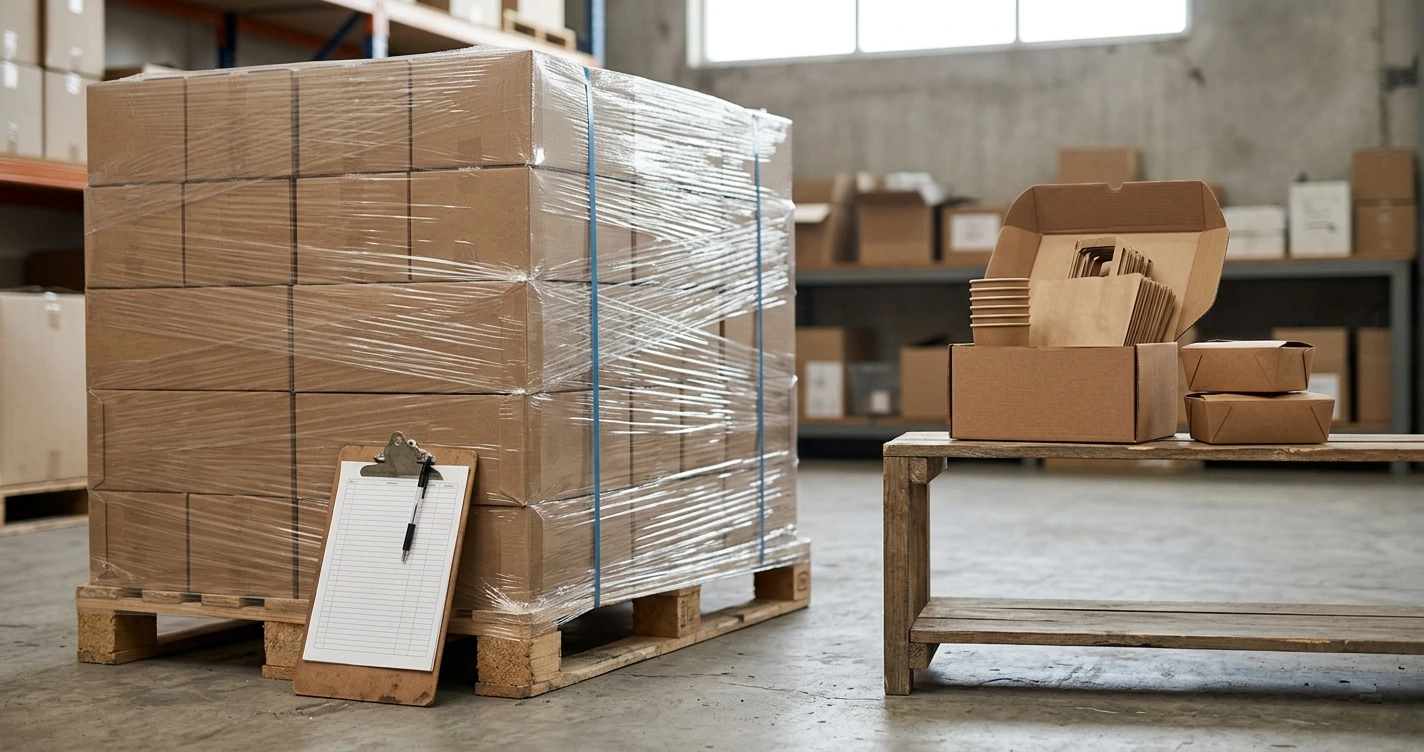
Every week the same routine: someone drives to the cash and carry, or the standing order goes in, and the cups, boxes and bags come back the way they always do. It works, so nobody questions it. Then a manufacturer quote arrives with a unit price well below what you have been paying, and the obvious question follows: have we been overpaying all this time? The honest answer is that the two prices are not measuring the same thing, and the figures that decide it are on neither quote.
They are not selling the same thing
A wholesaler sells availability and breadth. Many products, small quantities, off the shelf, often next day. You pay a margin for that, and it is a fair one, because it covers real work: holding stock, picking orders and carrying the risk of goods nobody ends up ordering. A manufacturer sells specification and repeatability: a defined board, a defined barrier, a format, a print, and the same result on the third reorder. That takes lead time and a quantity that carries the effort.
Most of the frustration on both sides comes from mixing up the roles. Asking a wholesaler for a special coating gets you nowhere, and neither does expecting a factory to send three cases the day after tomorrow.
When the wholesaler is genuinely the better choice
We are a manufacturer, and we are putting this section first because it applies more often than manufacturers like to admit. The wholesaler wins when your usage is small or unpredictable. It wins when you need many different lines in small numbers, five formats at a few hundred each. It wins when you have no storage, and it wins every time something has to be there this week. It also wins while you are still experimenting: if the menu is new and you do not yet know which size sticks, buy, use, watch, and only then commit. For the first weeks of a new site we set that out in detail in our packaging checklist for opening a takeaway.
When going direct actually pays
Direct supply starts to make sense the moment usage becomes predictable. There is a simple signal for it: if you have reordered the same line every week for months, you are paying a convenience premium on something entirely forecastable. Three other cases point the same way. If you want your brand on the pack, production is the only route. If specification decides the outcome, grease resistance, venting, how the lid seats, you need someone who can change those properties rather than only sell them. And if you supply more than one site, every per-unit gain multiplies.
Which lines to switch first
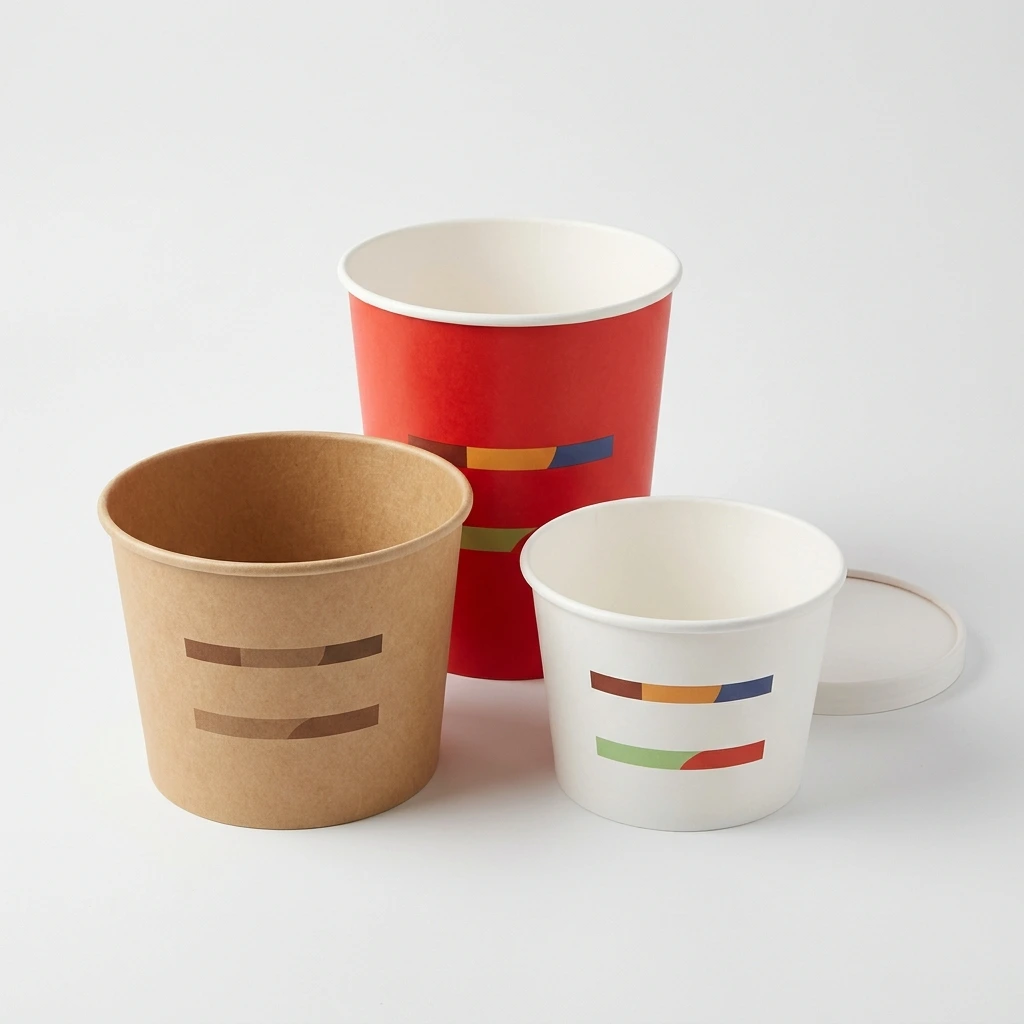
You do not have to move everything at once, and you should not. Start with the line that has the highest and steadiest usage. In most food businesses that is the cup, because it goes out in similar numbers every day and rarely swings with the season, which makes custom printed cups the classic first step into direct supply. The main box for your core dish usually follows, then the standard bag. Anything occasional, the large family format or a seasonal line, sensibly stays with the wholesaler.
A second question helps with the order: where does a quality difference hurt most? A cup that drips at the lid costs you regulars. A merely adequate napkin costs you nothing. Take control of specification where it matters, and leave the rest where it is easiest to buy.
Why minimum quantities exist
Minimums look like leverage from the outside. They are arithmetic. Before any run there is set-up: the machine has to be prepared, material brought to the line, and for printed work the plate made, ink brought up to colour and the first sheets discarded. That effort happens once, whether a short or a long run follows. So the useful question is not why the minimum is so high, but at what quantity the set-up spreads to a sensible level per unit.
Which leads somewhere practical: the structure of a minimum is negotiable even when the number is not. One design instead of three lowers set-up immediately. A standard format instead of a bespoke die does the same. We went through how much the number of designs moves the total in our guide to getting printed packaging artwork right.
The split nobody offers you
In practice the sensible answer is usually not a decision but a split. The two or three lines that run daily come from production, where volume works in your favour. Everything occasional stays with the wholesaler, where flexibility lives. Ask as well about call-off delivery: produce once, draw it down in instalments. You carry the set-up once without your stockroom holding a year of stock.
This combination is rarely proposed unprompted, because it takes a share of revenue from both sides. So you have to ask for it, and asking is entirely reasonable.
What you should actually compare
The common mistake is comparing unit price against unit price. The comparison only becomes meaningful across a year, with the lines that appear on neither quote:
- Unit price times realistic annual usage, not the quantity you hope for
- One-off set-up and plate costs, spread across the quantity you will genuinely draw
- Freight and the number of deliveries per year
- Cash tied up in stock and the shelf space it occupies
- The cost of running short, which means an emergency top-up at retail rates
- Waste from damaged or damp stock sitting too long
We see both extremes in enquiries. One business wants a long run of a format it has been selling for four weeks. Another has bought the same cup in small packs every week for two years and has never added it up. Both would be helped by a single number: real annual usage per line. Getting it costs no analysis and no software. Note for four weeks how many outer cases you open of your three main lines, then scale it to twelve months, avoiding an unusual week such as a holiday or an opening offer.
Questions both sides should be able to answer
For the wholesaler: who manufactures this line, and can I have the declaration of compliance for the finished item? Does the specification stay the same across batches, or can the source behind the product change? What happens in a shortage, is there an alternative in the same format?
For the manufacturer: what is the minimum for this exact format, and what changes if I take one design instead of three? Is call-off delivery possible? What are production and transit times separately? Do I get samples and a printed proof before the run?
One honest limit to finish on. Direct supply is not automatically cheaper, and at a few hundred cups a year it is almost never cheaper; a manufacturer who tells you otherwise is doing the sums for themselves rather than for you. Know your annual usage and both conversations change: the wholesaler can build you a tiered price instead of sending a list, and the factory can propose a first run that fits your shelf rather than its machine.
Frequently Asked Questions
- Is buying direct from a manufacturer always cheaper?
- No. It pays when usage is predictable and the quantity carries the one-off set-up. With small or erratic volumes a wholesaler is often the better economics, because you are not financing set-up or storage.
- What quantity makes custom printed packaging worthwhile?
- There is no universal figure, because format, print method and the number of designs decide it. Give your weekly or monthly usage per line in the enquiry and ask for a sensible first run to be proposed rather than quoting a round number yourself.
- Why do manufacturers have minimum order quantities?
- Because every run starts with set-up: preparing the machine, bringing material to the line and, for printed work, making the plate and discarding the first sheets. That cost occurs once regardless of run length and has to spread across the quantity produced.
- Can I use a wholesaler and a manufacturer at the same time?
- Yes, and for many businesses that is the best answer. Daily lines come from production while occasional lines stay with the wholesaler. Ask about call-off delivery too, so you do not have to store an entire run at once.
- What should my enquiry contain to get comparable quotes?
- Lines with format and use, realistic annual or monthly usage per line, plain or printed and how many designs, the delivery rhythm you want and the storage you have. With that, two quotes can finally be compared properly.
Related Articles
Buying Food Packaging from Turkey: An Honest Guide
A quote from a Turkish packaging manufacturer can look very attractive, and it can be exactly as good as it looks, if the paperwork holds up. The documents to demand, how sampling and customs work, and the red flags that separate a partner from a problem.

Custom Printed Food Packaging: Getting the Artwork Right
Before a print run starts, a good supplier asks three questions most buyers cannot answer. What they mean, why brown board changes your colours, what stays off the food-contact side, and how finishes quietly add cost.

What Your Packaging Supplier Needs Before They Can Quote
Three suppliers, three prices, three different bags. Most packaging quotes are unusable because the enquiry described a logo instead of a product. Here is the brief that gets you comparable numbers.
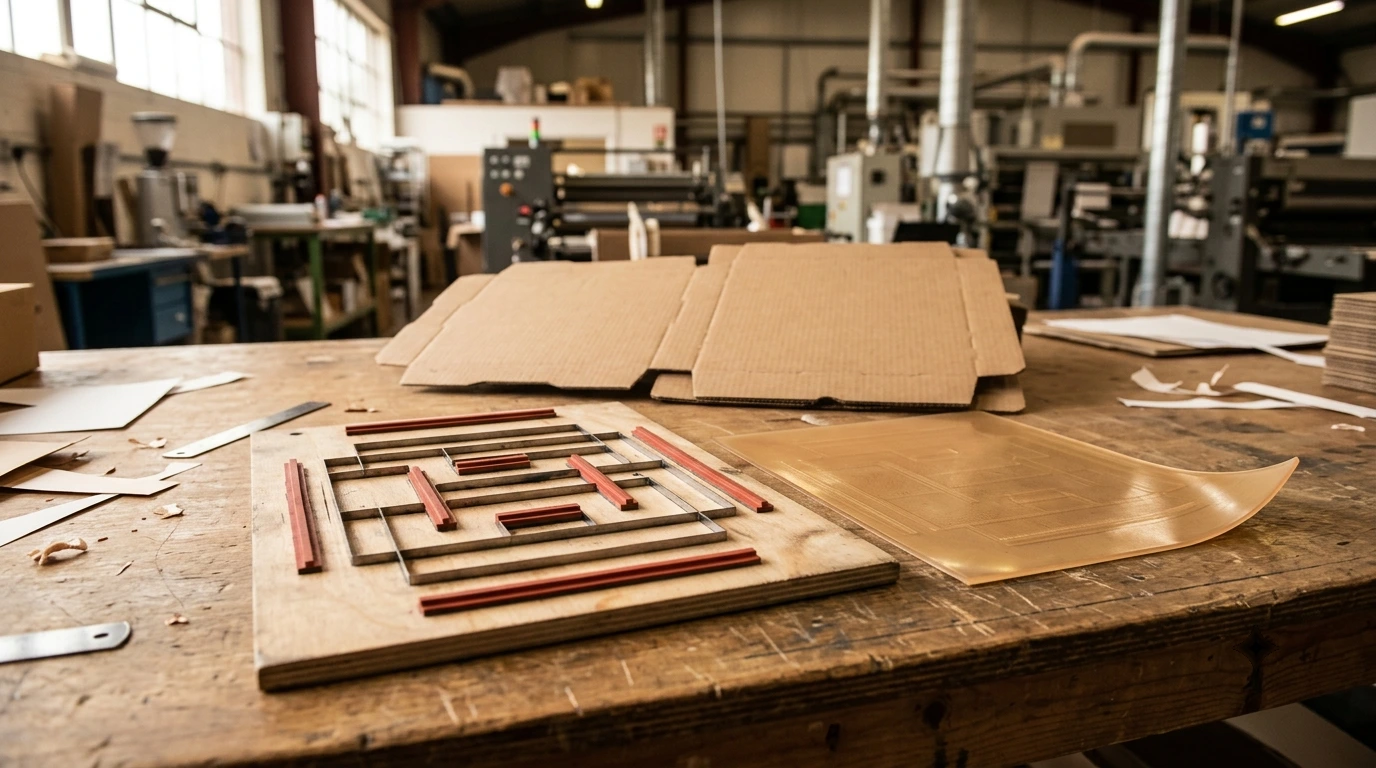
A second packaging supplier: who owns the tooling?
A second supplier rarely fails on price and often on a question nobody asked in the first contract: who owns the cutting die and the printing plates, and what of that fits another plant at all. When a second supplier becomes a must, what data it really needs, where two plants differ on the shelf, what happens to marking and conformity, and from what volume a business can carry two minimum runs.
Opening a Takeaway: The Packaging Checklist That Saves You Money
New operators buy packaging from a catalogue, end up with too many sizes and a year of the wrong box. This checklist works from your menu instead, covers how much to order, and ends with the seven lines that get you a real quote.