Deutsch
 Français
 Türkçe
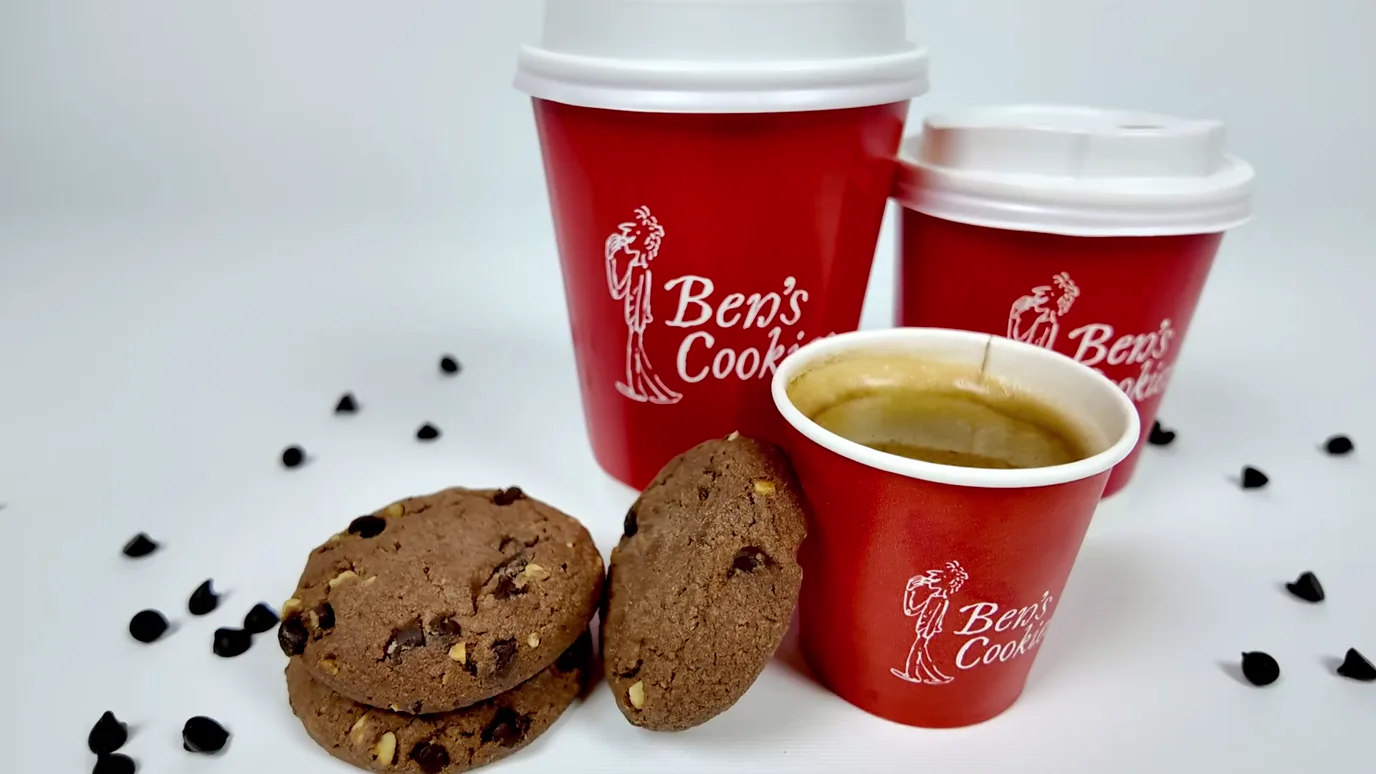
Take a coffee brand with nine shops in Manchester that sends us a spreadsheet: five cup sizes, two of them double-wall, four lid diameters, two sleeve sizes. Our quote puts a minimum of 10,000 pieces against every size. Five sizes, five orders. The smallest cup sells 6,000 a year across all nine shops.
The spreadsheet came from the menu, drink by drink; that is normal. What the press dictates, nobody had asked: one set-up and one minimum per size.
A cup programme for a chain is a few sizes, as few lid families as possible, one artwork and a minimum order quantity for each size. The minimum applies per size, not per programme: three sizes are three orders. Build the programme from the lid and lay the menu over it afterwards and you end up with three cups and two lids, and at most chains one of the three stays unprinted. The pattern repeats in most first quotes we see from chains: too many sizes, then a lid that does not fit half of them, then a minimum that means two years of stock for the smallest size. This article takes the decisions in the right order and says what the UK packaging rules ask of a chain that buys its own cups.
How many sizes does a cup programme really need?
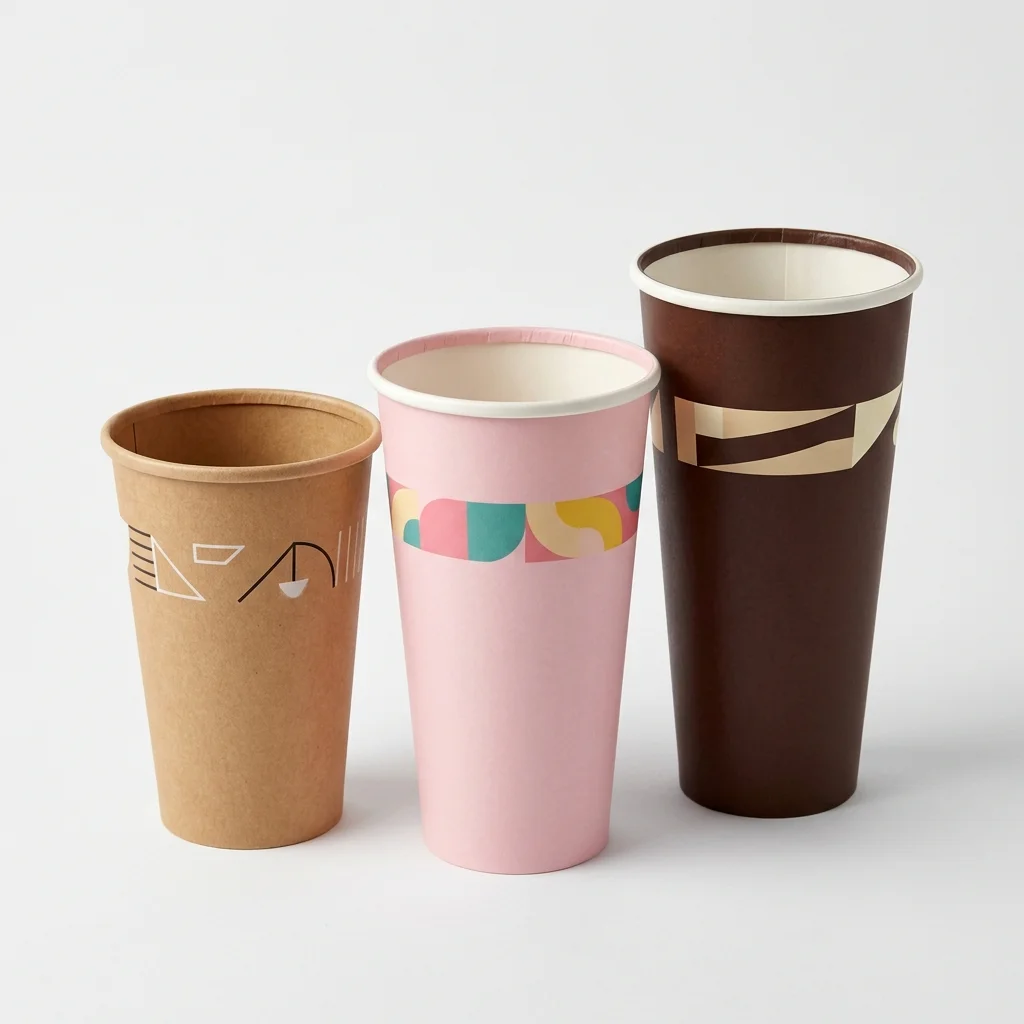
Three; which three depends on the menu. It is 4, 8 and 12 oz for a brand built on espresso and small milk drinks, and 8, 12 and 16 oz where the large latte runs in a 16 oz. Our range runs from 4 to 22 oz single-wall and from 8 to 16 oz double-wall. Eight single-wall sizes on the list does not mean a programme needs eight. Read your menu by volume rather than by drink name: 100 ml for espresso and cortado, 200 ml for americano and filter, 300 ml for cappuccino and latte. The Manchester chain had 6 and 7 oz on its list as well, because two drinks fell between two sizes. Both fit the 8 oz; the fill line moves, the cup stays.
The test we apply to every size: if it sells fewer than the minimum quantity in a year, it does not belong in the printed programme. It is either dropped or bought unprinted. For the nine shops that is the 4 oz at 6,000 cups a year; a printed run of 10,000 would sit there for twenty months by simple arithmetic, and in two years a menu changes, a logo changes, a web address changes. The espresso gets the unprinted standard cup, and the brand is on the two larger cups anyway. Unprinted also means no artwork approval and no minimum per artwork; where the brand has to show, a printed sleeve can cover it, with its own minimum and its own fit, both of which belong on the quote.
Single-wall or double-wall: which wall type for which size?
The wall type is decided per size, because on some sizes it changes the lid; on our cups that size is the 12 oz. Single-wall is the lighter cup and is enough for espresso and for anything not held for long. Double-wall has a second wall on the outside, insulates better and, depending on the drink temperature, can make a sleeve unnecessary; our product page says no more than that “can”. The sleeve is the third route: a single-wall cup that only gets a jacket when the drink is hot. It adds a step at the counter and a second line in the stockroom, but it saves the double-wall order.
The line in the product table that is rarely read: the single-wall 12 oz has a top diameter of 80 mm, the double-wall 12 oz 90 mm. Same capacity, different lid. The 8 oz keeps its 80 mm in both wall types and the 16 oz its 90 mm; only the 12 oz moves. Order the 8 oz single-wall and the 12 oz double-wall and you run two lid diameters while believing you have bought two cups from the same family. Take both in single-wall and one 80 mm lid covers them. The wall decision therefore decides how many lid sizes sit in the stockroom, and it is made before anything is printed. Why lids leak when cup and lid do not match is covered in our article on leaking coffee cup lids; this one is about the step before.
Which lid fits which cup?
The lid follows the top diameter of the cup. Our product page carries an unassuming line for it: “Plastic hot lids: 4 oz: Ø62 mm · 7 oz: Ø72 mm · 6/8/12 oz: Ø80 mm · 14/16/22 oz: Ø90 mm”. It decides more about a programme than any capacity does. Four lid diameters, and every single-wall size belongs to exactly one; on the double-wall 12 oz the diameter moves to 90 mm. A programme of 8 and 12 oz single-wall lives with one lid. A programme of 4, 8 and 12 oz single-wall needs two: 62 mm for the espresso, 80 mm for the other two. Add a 16 oz and that is a third diameter. We supply matching lids, plastic and paper, as their own line on the quote with the diameter per size.
With paper lids the range is shorter: 8 oz at 80 mm, 12 and 16 oz at 90 mm. There is no entry for the single-wall 12 oz at 80 mm. A chain that wants paper lids on its 12 oz therefore orders the double-wall 12 oz at 90 mm, and with it a different lid family from the 8 oz. Choosing paper lids is a wall-type decision as well as a lid decision. Check the fit on an unprinted sample with its lid before artwork approval; ask for one with the quote. A chain carrying three lid lines per shop instead of two only notices at the reorder. That is why we ask at the enquiry which lids are intended.
Why does the MOQ apply per size and not per programme?
Because cups are offset printed and offset needs plates made to the blank of each size. Two sizes are two plate sets, two set-ups, two runs. The blank of an 8 oz cup is a different piece of board from that of a 12 oz. The plates, the press set-up, the cutting and the forming on the cup machine are separate operations for each size. That is why the quantity of one size cannot be netted against another; with us it is 10,000 pieces per size and artwork. That is a property of offset cup printing, not a house rule. What you can compare between quotes is where the minimum sits, and you should always have it stated per size.
For planning it means the annual volume per size decides whether the size belongs in the printed programme. Either the size uses up the minimum in about twelve months, or it is a case for unprinted stock. Whether a size belongs in the programme is the chain’s decision, not ours; putting the annual volume per size in the enquiry is what makes it visible. The limit is how long 10,000 cups can sit in the stockroom before something on the artwork changes.
How does one artwork scale across three sizes?
The colour is fixed once as a Pantone reference and the logo is laid out again for each size. The reference stays, the file does not. We print paper cups offset in CMYK and Pantone, and for a chain the Pantone number is the most important line on the artwork approval: the same number on every size. What changes is the area. A 4 oz cup is 62 mm across the top and 62 mm tall; a single-wall 12 oz is 80 mm across and 117 mm tall. A logo that sits well on the large cup with a strapline and an address becomes a smudge on the small one. That is why three artworks are built rather than one scaled file; we supply the blank outline for each size as a template, and each size gets its own proof for approval. In our experience type under about two millimetres, especially reversed out of a solid, tends to fill in on cup board; check the smallest size on the proof, not on screen.
At Ben’s Cookies, whose packaging we make, the 4 oz is single-wall and the 8 and 12 oz are double-wall, all with the same white line-drawn figure on red and the same colour reference. That programme runs three lid diameters, 62, 80 and 90 mm, and the chain chose it knowingly because it wanted double-wall without sleeves on its hot drinks. One lid family is the aim, not a rule; what matters is knowing what you are trading for what before the proof is signed. How that chain’s eight product types are held together under one artwork is in the Ben’s Cookies case study.
What do the UK packaging rules ask of a chain that imports its cups?
A chain that buys printed cups under its own brand is the brand owner for pEPR purposes, whoever imported the cups. Under the UK packaging EPR scheme the brand owner is responsible for packaging that carries its brand. Businesses with a turnover above one million pounds and more than 25 tonnes of packaging a year report their packaging data; above two million pounds and 50 tonnes they also pay the fees. A nine-shop chain may sit under the fee threshold and still be inside the reporting one, and the cups count towards the tonnage. Buying through a UK wholesaler would not move the obligation: for a cup that carries your brand you are the brand owner. Importing directly simply means there is no UK party in the chain to confuse the question.
For the programme this means two things. The manufacturer has to give you the weight per cup, per lid and per sleeve, by size and wall type, because the data return is in tonnes; ask for those weights on the quote. And a double-wall cup weighs more than a single-wall one, so it adds more to the tonnage per drink sold, which belongs in the sum when you weigh double-wall against a sleeve. None of this is legal advice; which thresholds apply to your business is a question for your compliance scheme or adviser.
How does a chain order: annual volume per size, call-offs, stock?
A cup programme is planned as an annual volume per size and delivered in call-offs. The first run takes around 15 to 20 working days after artwork approval. For later call-offs there are two models, and the quote should say which applies: either every call-off is a separate run, in which case the minimum per size applies to each call-off and the lead time runs from the call-off date; or the annual volume is produced in one run, held at the manufacturer and called off in part quantities, in which case a call-off is a loading, not a production. How a framework agreement, stock and leftovers are agreed for that is in our guide to a framework agreement for printed packaging. Five questions belong to the manufacturer before the first order:
- Which lid family fits which of my sizes, with the diameter, and does the family change on the double-wall version or with paper lids?
- Does the minimum apply per size or to the programme, and does it apply again on every call-off?
- Which Pantone reference is held for all sizes, and do I get a blank template and a separate proof per size?
- What is the lead time for the first run from artwork approval, and what for a later call-off?
- Which weight per size, wall type and lid do I get for my pEPR data return?
The five sizes of the Manchester chain became three: 8 and 12 oz single-wall, printed, with sleeves for hot drinks and one 80 mm lid; the 4 oz unprinted with its 62 mm lid. Two printed orders instead of five, two lid families instead of four. The 16 oz for iced drinks in summer stayed on the list, unprinted, until the volume justifies plates. If you send us your menu with the annual volume per drink, the wall type you want per size and the logo with its Pantone reference, we come back with a table per size: lid family and diameter, minimum quantity, lead time and weight per piece. The full table with all sizes, diameters and lid families is on our page for custom printed paper cups; the diameters in this article come from it.
In short
- The minimum order quantity for custom printed paper cups at Bas Packaging is 10,000 pieces per size and artwork; three sizes are three orders, not one order of 30,000.
- A cup programme usually works with three sizes; a size that sells fewer than the minimum quantity in a year stays unprinted.
- The lid follows the top diameter: single-wall 6, 8 and 12 oz share 80 mm, 14, 16 and 22 oz sit at 90 mm, the 4 oz at 62 mm; the double-wall 12 oz is 90 mm.
- Paper lids exist at 80 mm for 8 oz and at 90 mm for 12 and 16 oz; paper lids on a 12 oz mean the double-wall cup.
- Under UK packaging EPR the brand owner of a printed cup reports packaging data above one million pounds of turnover and 25 tonnes a year and pays fees above two million pounds and 50 tonnes, whoever imported the cups.
- Custom printed paper cups are offset printed in CMYK and Pantone; the first run takes around 15 to 20 working days after artwork approval, and later call-offs are either separate runs or loadings from stock, as agreed.
Frequently Asked Questions
- How many cup sizes does a café chain need?
- Three in most programmes. For a brand built on espresso and small milk drinks that is 4, 8 and 12 oz; for a chain whose large latte runs in a 16 oz it is 8, 12 and 16 oz. Every extra size is a separate order with its own minimum quantity and its own printing plates. A size that sells fewer than the minimum quantity in a year is better left unprinted than kept in the stockroom for two years.
- Does the MOQ apply per size or to the whole programme?
- Per size and per artwork. Our minimum for custom printed paper cups is 10,000 pieces, so a programme of 8 and 12 oz is two orders of 10,000, not one order of 20,000. The reason is offset printing: every size has its own plates and its own blank, and the cup machine is set up for each size. Ask for the quote to confirm whether the quantity is meant per size or in total.
- Which lid fits which cup?
- The lid follows the top diameter of the cup, not its capacity. On our cups, single-wall 6, 8 and 12 oz share an 80 mm top and one hot-drink lid; 14, 16 and 22 oz sit at 90 mm, the 4 oz at 62 mm. The double-wall 12 oz is 90 mm. Order the 8 oz single-wall and the 12 oz double-wall and you run two lid sizes instead of one; we supply matching lids, and the fit is checked on an unprinted sample before artwork approval.
- What does pEPR mean for a chain that buys its own printed cups?
- Under the UK packaging EPR scheme the brand owner is responsible for packaging that carries its brand, and a printed cup carries it whoever imported it. Businesses with a turnover above one million pounds and more than 25 tonnes of packaging a year report their data; above two million pounds and 50 tonnes they also pay the fees. For the data return you need the weight per cup, per lid and per sleeve from the manufacturer. This is not legal advice; check the thresholds that apply to you with your compliance scheme or adviser.
- What do I send the manufacturer to get a programme rather than separate cups?
- The menu with the annual volume per drink, the wall type you want per size, the logo as a vector file with its Pantone reference and the delivery addresses. From that comes a table per size with lid family and diameter, minimum quantity, lead time from artwork approval and weight per piece for your pEPR return. With that table you can decide which size is printed and which stays unprinted.
Related Articles

Why Coffee Cup Lids Leak and What Actually Fixes It
The lid clicked on, the customer got ten steps away, and coffee ran down the sleeve. What causes it nearly every time, the counter habit that fixes it for free, and what to settle with your supplier before the next pallet arrives.

Framework agreement for packaging: call-offs, stock, leftovers
A framework agreement does not lower the minimum run; it spreads it over twelve months. Whoever does not call off still buys in the end, and whoever leaves the leftover unregulated pays for the next menu change with a pallet. What the agreement settles and what only the call-off does, why the supplier prints the annual volume in one run, who stores and bears the risk, how many call-offs a chain needs and which lead time the contract actually means.
Printed ice cream cups: a scoop is not an order size
Ice cream is sold in scoops, but cups are built in millilitres. Order “cups for two scoops” and you are ordering the number on your scoop without saying it. How to convert scoops into millilitres, why 250 and 300 ml are two completely different cups, what the lid does to the bin, and when the order has to leave so the cups are on the counter in March.