Deutsch
 Français
 Türkçe

Ask any café owner about lids and you get a sigh before you get an answer. The complaint is always the same shape: the lid clicked on, the cup left the counter, and somewhere between the till and the pavement the coffee found a way out. It happens three times on a busy morning, always to a customer in a hurry, and it always ends the same way, with a free replacement and a sentence packaging manufacturers hear every week: your lids are rubbish.
Sometimes that is true. More often something else is true, and the frustrating part is that the most common causes cost nothing to fix once you know them. This piece explains where a lid actually seals, why the pairing of cup and lid matters more than either part, which counter habit changes things immediately, and what to settle before your next order lands.
Where a lid actually seals
When coffee escapes, most operators look at the lid. From the production side that is the second place to look. The first is the cup rim. A paper cup is rolled over at the top, and that rolled rim is the real sealing surface: the lid snaps over it and the tension in the plastic holds it against the roll. When the roll is even, round and cleanly formed, the lid grips uniformly all the way round. Where it is flatter, skewed or pressed in, a gap opens in that one spot, and it works a little more with every sip.
That explains something plenty of cafés notice and few can place: it is rarely every cup in the sleeve that leaks, it is particular ones. A lid is a moulded plastic part with tight tolerances; the cup rim is paper that has been rolled. The variation nearly always sits on the paper side, which makes rim quality a purchasing criterion that appears on no datasheet yet decides how many complaints you handle.
The most common cause: cups and lids from two different worlds
By a distance the most common reason for leaking lids is mundane: the cup and the lid came from different sources. Two deliveries, two manufacturers, two tolerance bands, and suddenly the lid only nearly fits. One word does a lot of damage here: universal. In practice a universal lid means it goes onto many cups somehow, not that it fits your cup properly.
A second misunderstanding involves sizes. A cup's volume tells you very little about which lid belongs on it, because the lid grips the rim diameter, not the contents. Two cups of different volumes can share a rim and take the same lid; two cups of the same volume can have different rims. Reordering by volume alone is ordering blind. The dependable figure is the cup's rim diameter, and it belongs in your order sheet rather than in one person's memory.
We see this pattern in enquiries constantly. A café changed cup supplier and kept the lids because stock remained. Six weeks later the old lids run out, the problem disappears on its own, and nobody works out why. Which is why our first response to a leaking-lid question is a question: do the cup and lid come from the same range?
The free fix: put the sip hole opposite the seam
Every paper cup has a vertical seam where the blank overlaps and is glued. At that line the paper is doubled, and the rolled rim above it is fractionally thicker and less regular than everywhere else. That is exactly where a small gap forms and where liquid tracks along the underside of the lid and out.
Which gives you a habit that costs nothing and works immediately: seat the lid so the drinking hole sits opposite the cup seam, never on top of it. Two seconds per cup, no change of material, no spend. A shop that serves a lot of hot drinks and counts complaints sees the difference inside a week. What is genuinely surprising is how few operators know this, given that it is common knowledge on any cup production line.
Pressure inside the cup: fully sealed is not the goal
A second mechanism gets misread almost every time. A lid that suddenly gives, or lifts on one side while being carried, reads as a poor fit. Often the opposite applies: it seals too well for what is happening inside. Hot coffee gives off steam and internal pressure rises; drinking creates the reverse, a vacuum, because liquid leaves and no air comes back in. Both states work against the seal.
That is what the small vent beside the drinking hole is for. It is not a manufacturing flaw or a pointless leak, it is the valve that equalises pressure. A completely sealed paper cup is therefore not a goal worth chasing: without equalisation, pressure builds and eventually escapes wherever the seal is weakest. Total leak resistance belongs to screw lids and reusable cups, not to a single-use system for hot drinks.
Cold drinks fail differently
With cold drinks the problem inverts. There is no steam, but there is condensation: the cup sweats, the rim goes damp, and a damp paper rim holds a lid less well. Add ice chilling the cup from inside and the paper at the roll softens as moisture works on it from both sides.
Practically, a shop serving plenty of iced drinks in summer and hearing the same complaints as in winter probably has two different causes and needs two different answers. For cold service it pays to look at rim quality specifically and at how long the cup travels after it leaves the counter. How moisture behaves in paper generally, and when a barrier becomes necessary, is covered in our materials and barriers guide.
What the counter changes without noticing
Three habits decide more about leaks than most material questions. The first is fill level: a cup filled to the brim pushes liquid into the lid recess with every movement, and whatever sits there finds its way out when the cup tilts. Two centimetres of air is not stinginess, it is engineering. The second is seating: a lid started at one side and pressed down around the rim seats more evenly than one slapped flat with the heel of the hand. The third is grip: hold a full cup tightly in a fist and it goes oval, and an oval cup lifts a round lid at exactly two points. Double wall cups suffer less here, because the outer wall absorbs the squeeze.
None of that costs anything and all of it fits into a shift briefing. It is also why the same cup and lid system performs differently in two shops on the same street.
When the cup travels: coffee on delivery
Everything so far assumes a customer carrying their own cup. As soon as coffee is delivered, the load changes completely, and many operators carry their counter experience straight over. It rarely survives. In a rider bag the cup does not stand still: it tips on acceleration, presses against the wall under braking, and often stands at an angle because the bag was designed for boxes rather than vessels. Then there is time. What stays sealed over a three-minute walk tells a different story after twenty minutes of riding.
Two things help more than any change of lid. A carrier that holds the cup upright, because a cup that cannot tip loses nothing through the vent. And fill level: delivery cups should be filled noticeably lower than counter cups, since every movement drives liquid against the lid. Do both and most delivery complaints disappear without a single new product. And if you deliver regularly, run the test below in your own bag on your own route, not on the counter.
The three-minute test before you order
- Fill the cup with hot water to your usual level, fit the lid, sip hole opposite the seam.
- Tilt the cup horizontally until liquid reaches the drinking hole and hold for ten seconds.
- Take the full cup in one hand and squeeze gently: does the lid lift?
- Repeat with cold water and ice once the outside has sweated.
- Finally, test five cups from the same sleeve, not one; the spread is the real information.
That last point matters most. One sealed cup proves nothing. Five cups from one sleeve show how consistent the rim rolling is, and that consistency is what separates a quiet week from a run of complaints.
Questions for your supplier
- Do the cup and lid come from the same system, and are they matched to each other?
- What is the cup's rim diameter, and which lids are specified for it?
- Does the rim rolling stay consistent across batches, and what happens if production moves?
- Do the lids have a vent, and is the drinking hole placed sensibly for service?
- Can I have samples of cup and lid together, so I can test them as a system?
The last one decides the rest. Sample a cup and a lid separately and you have tested two parts; sample them together and you have tested what the customer holds. One honest limit belongs here too: a single-use hot drink system will never be fully leakproof, and a shop delivering coffee twenty minutes by bike needs a different answer from a café with passing trade. But for most businesses the gap between what happens now and what is technically possible is not a new product. It is a matched system and two seconds when the lid goes on. Printed sizes and options sit under custom printed paper cups, and which lid belongs with which cup is something we settle before the first order rather than after it.
Frequently Asked Questions
- Why does my coffee cup leak around the lid?
- Usually it is not the lid but how it sits on the rolled cup rim. If the rim rolling is uneven, or the cup and lid come from different sources, a gap opens and liquid tracks out as the customer drinks. Check first whether both parts belong to the same system.
- Does any lid fit any cup?
- No. The lid grips the rim diameter, not the cup's volume. Two cups holding the same amount can have different rims. Record the rim diameter in your order sheet and treat universal lids with caution, since universal means it goes on many cups somehow rather than fits yours properly.
- What is the small hole next to the drinking hole for?
- It is a vent for pressure equalisation. Hot coffee produces steam and drinking creates a vacuum; without equalisation the pressure works against the seal. A completely sealed single-use lid for hot drinks is therefore not a sensible goal.
- What can I do today without ordering new cups?
- Seat the lid with the drinking hole opposite the vertical cup seam, and stop filling to the brim. The paper is doubled at the seam and the rim is less regular there, which is exactly where liquid escapes first.
- What should I test before ordering?
- Always test cup and lid together rather than separately: fill hot, tilt, squeeze, then repeat with ice once the cup has sweated. Check five cups from one sleeve, because the spread in rim rolling tells you more than any single sample.
Related Articles
Are Compostable Cups Actually Compostable in the UK?
“Compostable” on a cup is a conditional promise: it needs an industrial facility and a local route that accepts it. Here is what EN 13432 actually certifies, why UK council bins differ, and a decision path for choosing a cup lining honestly.

Custom paper cups for a café chain: lids and MOQ per size
The minimum order quantity applies per size, not per programme: three sizes are three orders. Why a double-wall 12 oz cup takes a different lid from a single-wall one, which size should stay unprinted, how a logo is laid out across three sizes, what pEPR asks of the brand owner and what to send us so that a spreadsheet becomes a programme.
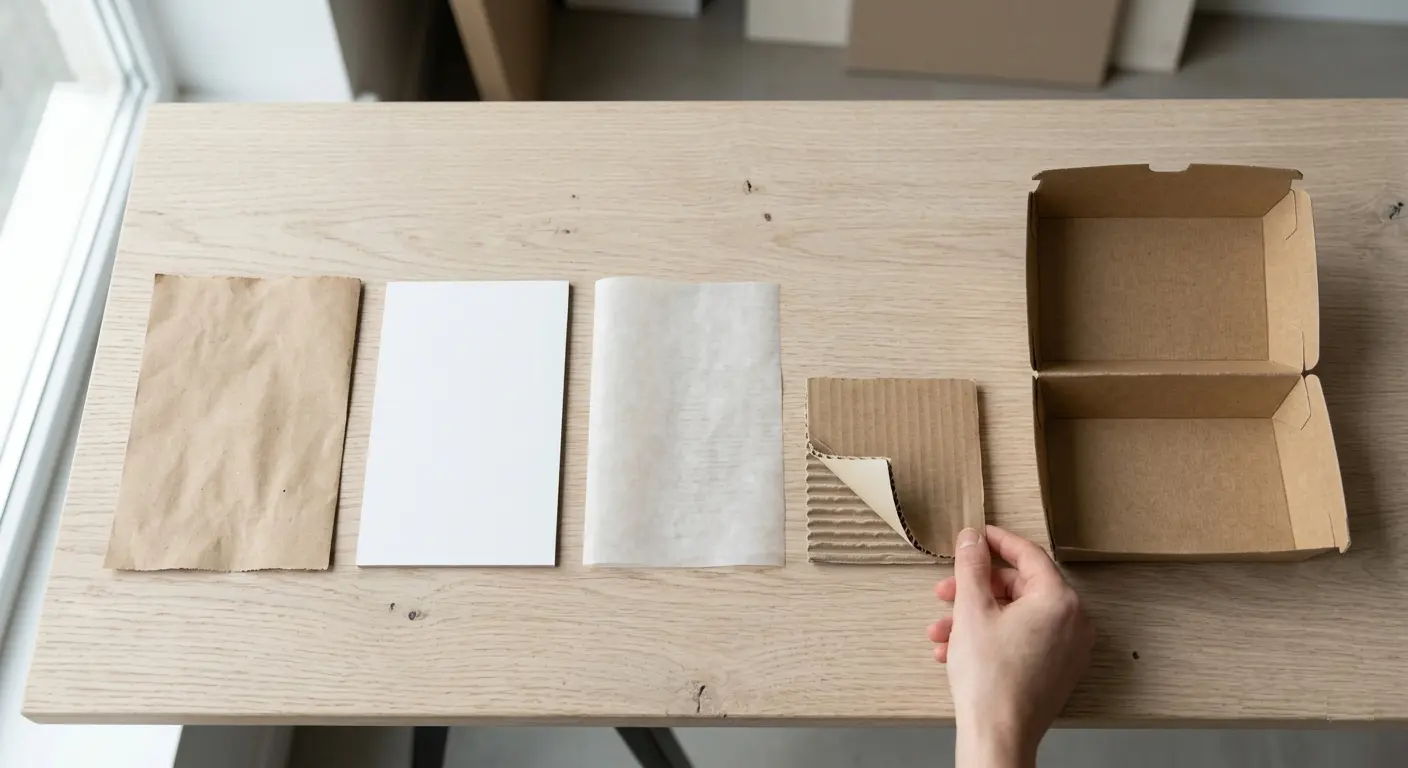
Paper, Grammage and Barriers: Which Material for Which Food
The same box holds a burger perfectly and fails under a curry. The difference is not the board, it is the layer on it. What grammage actually changes, which barrier suits which dish, and how to test material with your own food before you commit.
Sauce Cup Lids: Which Lid Fits Which Pot?
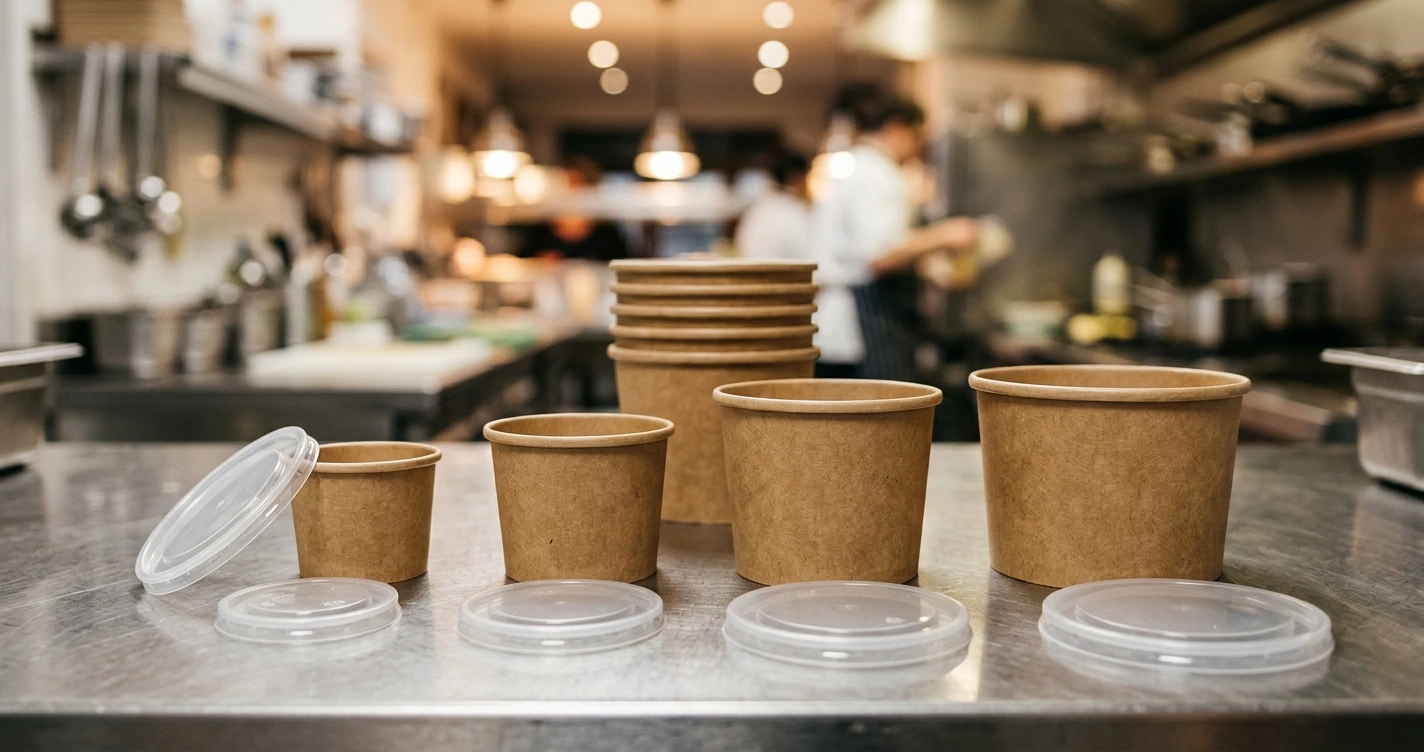
A lid has no idea how many millilitres your pot holds. All it sees is the rim. There are four standard capacities but only three rim diameters, and knowing that takes a line off your order.
Opening a Takeaway: The Packaging Checklist That Saves You Money
New operators buy packaging from a catalogue, end up with too many sizes and a year of the wrong box. This checklist works from your menu instead, covers how much to order, and ends with the seven lines that get you a real quote.