Deutsch
 Français
 Türkçe
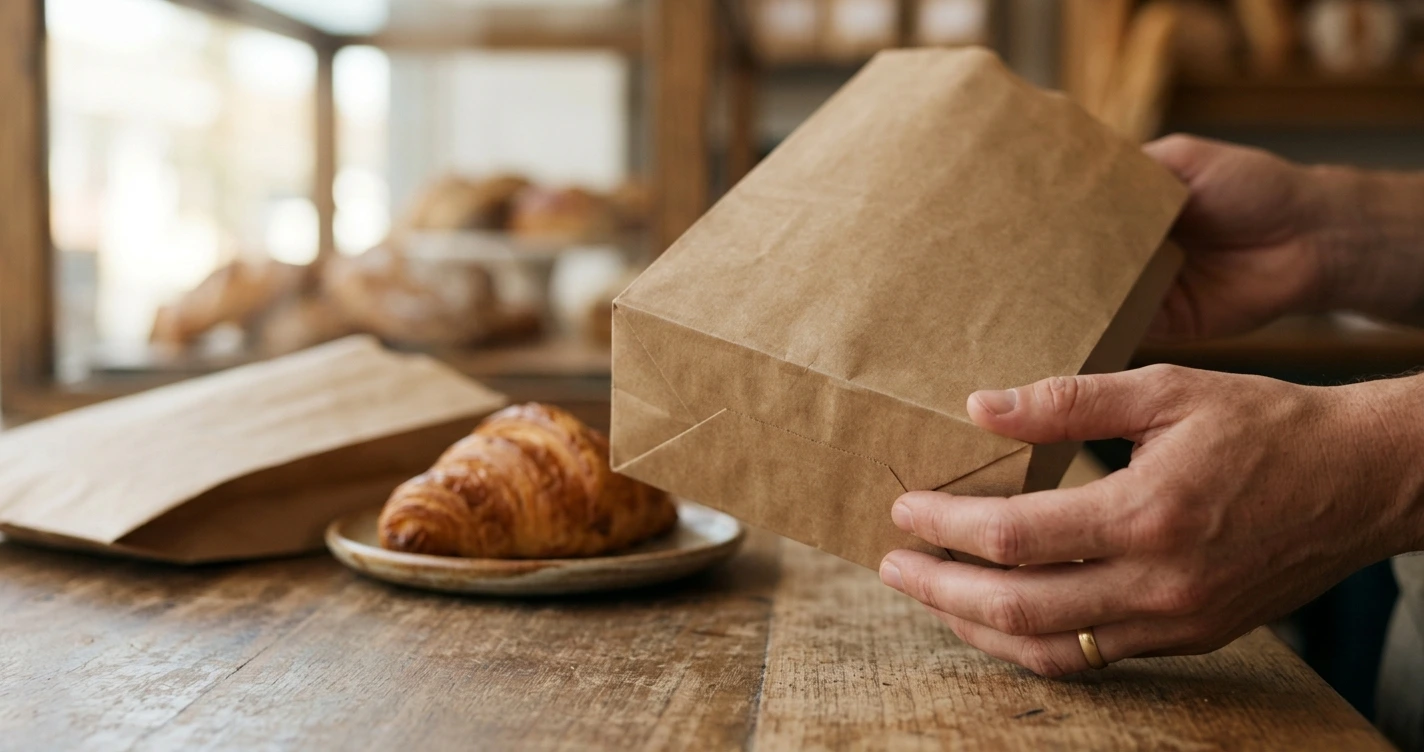
A coffee roaster in Manchester reorders the bags it has used for three years. Same paper, same artwork, same size. The order goes out as usual and stops at the supplier, because the artwork can no longer be produced as it stands.
Regulation (EU) 2025/40, the packaging and packaging waste regulation that most people call the PPWR, started applying on 12 August 2026. Most of what has been written about it is aimed at compliance managers and reads like a filing exercise. The part that reaches a small food business first is more physical than that: it changes the print file.
Who this actually applies to
Worth being precise, because a lot of the panic reading is aimed at the wrong people. This is EU law. It bites on packaging placed on the EU market. A British café serving British customers is not brought under it by reading about it.
It reaches you if your goods travel into the EU, if you run a site inside the EU, or if you buy packaging that is being placed on that market. For a UK business, the domestic reporting duty is a separate story with its own thresholds and its own registration, which we covered in our piece on who actually pays packaging EPR. The point of this article is what to expect if any part of your packaging goes into Europe.
The marking lands in the artwork, not in a folder
The regulation requires the packaging itself to show who made it: the manufacturer name, registered trade name or trade mark, and a postal address, along with electronic contact details where they exist. It also has to carry something that identifies the item, such as a type, batch or serial number. That information can be given through a QR code or another digital carrier instead, as long as it stays visible, legible and reachable.
On plain unprinted stock, that is a question of the outer case and the paperwork. On printed stock it is a layout question. A small functional area has to exist somewhere on the bag, the box or the cup, and on a lot of designs no such area was ever planned, because the artwork runs across the whole face.
In practice the mark sits where it disturbs the design least: on the base fold, along the glue seam, on the reverse, or at the bottom of a side gusset. It is small, it is not decorative, and nobody is meant to read it the way they read a strapline. If you are touching the artwork anyway, plan that area now rather than squeezing it in later between the logo and an allergen note.
Whose name goes there
This is where the confusion costs the most time, and it runs in both directions. It is not about your brand name. Your logo on the bag does not satisfy the requirement, because what is asked for concerns the maker of the packaging rather than the business filling it.
The opposite worry is just as common: that a supplier wants to stamp itself across your design. That is understandable and it misreads the thing. The mark is a mandatory line at footnote size, not a sender address on a letterhead. No serious manufacturer enlarges it voluntarily, because it eats the print area you paid for.
The case worth pausing on is the third one. Where packaging carrying your own name and brand comes in from outside the EU, the roles in the chain shift, and you may not be a straightforward buyer any more. Own-brand, direct import and anything printed with your own company logo are the three situations to settle in writing before the stock reaches a shelf, not after somebody asks.
Two declarations that keep getting mixed up
Ask a supplier for the certificate and you get whichever document is nearest to hand. There are two, and they answer different questions.
The food-contact declaration belongs to the material. It says, in effect, that this paper with this coating may touch food under the conditions described, whether that is hot, greasy, or in contact for a certain time. The European basis for it is Regulation (EC) 1935/2004.
The EU declaration of conformity under the packaging regulation belongs to the packaging as a product. It says the packaging meets the requirements of that regulation. Neither document replaces the other, and a supplier who offers one when you asked about both has not necessarily done anything wrong; they have simply answered a different question.
The practical version is short. Ask for both, for the exact material and format you are ordering rather than for the supplier range in general. A declaration that names the paper and the coating is a document. A badge on a website is not.
PFAS: the part that changes the material
Running alongside the marking, limits on PFAS in food-contact packaging also started applying on 12 August 2026: 25 µg/kg for an individually measured PFAS, 250 µg/kg as a sum, and 50 mg/kg for total fluorine. The formats caught by this are mostly the grease-resistant papers, which is to say the ones that go over a counter all day.
That is a material question rather than a layout question, but it comes up in the same conversation. If you are already talking to a supplier about the marking, settle both at once. What is genuinely worth checking when a grease-resistant paper changes is set out in our piece on the PFAS limits.
What is not due yet
This is the section that will save you money, because a certain amount of work is about to be sold that nobody needs this year. The regulation is staged. Some of it has applied since August 2026; other parts are dated to later years, and several of those dates hang on implementing acts, so they can still move.
- The harmonised material-composition label, the common sorting symbol on the pack, is dated to 2028.
- QR labelling for reusable packaging is dated to 2029.
- Recyclability grades and minimum recycled content are dated to 2030.
If somebody offers you a full redesign today on the grounds that something is about to hit, ask which article and which date. For the three points above the honest answer is that they are coming, but not this quarter. Reworking artwork so the manufacturer marking sits properly is sensible. Replacing a whole range in a hurry is not.
The reverse is also true. If your design is being touched in the next few months, leave room for the sorting symbol while you are in there. It costs almost nothing at the design stage and saves a second plate change in 2028.
What to ask your supplier
Five questions worth asking before the next reorder, none of which involve talking about money:
- What exactly will the manufacturer marking look like on my artwork, where does it sit, and how large is it?
- Will I see an updated layout before approval, or is the marking added during production?
- Can I have both declarations, food-contact and packaging, for this specific material and format?
- How is the identifying element handled, printed on the pack or through a digital carrier?
- If I buy own-brand or import directly, who counts as the manufacturer in this chain and what do you need from me?
What this does not settle
A correctly marked bag is evidence about the packaging and not a clean sheet for everything else. National registration duties sit separately and are not answered by a line of small print. Whether a paper is recyclable is not answered by it either; that still depends on the fibre content, the coating and what the local sorting system will take.
An honest word about the calendar as well. Several of the later deadlines are tied to implementing acts and can shift, so decisions taken now are best limited to what has applied since August, with the rest watched rather than pulled forward. This is a manufacturer's practical account and not legal advice for your situation.
The useful ending is an unglamorous one. Open the artwork file for whichever pack you order most, whether that is the natural kraft bakery bag on the counter or a delivery box, and settle two things before your next approval: where the manufacturer marking goes, and which two declarations arrive with the pallets. After that, reordering is routine again.
Frequently Asked Questions
- Do I have to throw away the packaging I already hold?
- No. The requirements apply to packaging newly placed on the market, so existing stock generally runs down as normal. What matters is the next production run, so agree with your supplier which order the updated artwork starts from.
- Does my own logo on the bag count as the marking?
- No. What is required concerns the manufacturer of the packaging: a name or registered trade mark, a postal address, and an element that identifies the item. Your brand logo does not satisfy that and is not replaced by it either; both sit on the same pack.
- How big is the manufacturer marking?
- It is a mandatory line at footnote size rather than a design element. In practice it sits on the base fold, the glue seam or the bottom edge. Ask to see the layout with the marking in place before you approve, and there is no surprise when the stock lands.
- What is the difference between the two declarations of conformity?
- One belongs to the material and says the paper and coating are suitable for food contact. The other belongs to the packaging as a product and refers to the packaging regulation. Request both, each for the specific material and format you are ordering.
- I am in the UK. Does any of this reach me?
- Only through the EU market. If your packaging is placed on that market, whether you export or run an EU site, these requirements follow the goods. Your domestic reporting obligations are a separate matter with their own thresholds and registration.
- Should I design in the 2028 sorting symbol now?
- Nobody has to print it today. If your artwork is being reworked anyway, leaving a clear area for it is worth doing, because it costs almost nothing at the design stage and avoids a second plate change later.
Related Articles

Food-Grade Packaging: What to Actually Check Before You Order
Food-grade is not a finish line — it is the floor. Here is what really decides whether printed cups, boxes and bags are safe for the food they hold, and the one document worth asking for every time.

Who Actually Pays Packaging EPR on Your Takeaway Boxes?
Most independent takeaways sit below the EPR thresholds and owe nothing in reports or fees. That does not mean the cost never reaches your invoice. Where the money actually lands, why recyclability is about to change your bill, and what to ask your supplier.

Paper sauce cups and the 2030 ban: the five per cent question
From 1 January 2030 single-use plastic portion packs leave the restaurant table across the EU, but not the delivery bag. Whether your paper cup is caught is decided by a number printed on no cup: its plastic share. Why the same coating counts for Germany’s plastic fund but only above five per cent for the ban, and what belongs in an order for 2027 to 2029.

The EU PFAS Ban on Food Packaging: What to Check Now
Since 12 August 2026 the EU has banned PFAS above strict limits in food-contact packaging. What it means if you sell into the EU, which packaging is actually at risk, and the five questions to put to your supplier.

PPWR conformity: the data your packaging supplier owes you
Since 12 August 2026 every pack placed on the EU market needs a declaration of conformity. For packaging that carries your brand, your supplier does not issue it; you do, and the supplier owes you the data it is built on. What that data set looks like, which test report belongs to the food-contact declaration, what a BRCGS certificate proves and what nobody can certify about recyclability yet.