Deutsch
 Français
 Türkçe

Tuesday morning, the weekly delivery lands on the counter, and tucked inside is a leaflet from the wholesaler: “Go PFAS-free now!” If that acronym keeps surfacing and you are not sure whether your boxes, wraps and trays are about to become a problem, this guide sorts it out calmly, from the perspective of a packaging manufacturer, not a law firm.
What has applied since 12 August 2026
Since 12 August 2026, the EU's new Packaging and Packaging Waste Regulation (PPWR) has applied. The headline for food businesses: food-contact packaging containing PFAS above defined limits can no longer be placed on the EU market. Alongside that come documentation duties (the Declaration of Compliance) and limits on heavy metals. One honest clarification first: this is EU law. If you trade only within the UK, it does not bite directly. But if you sell food into the EU, buy packaging from EU suppliers, or run sites on both sides, the packaging that carries your product into that market is in scope, and in practice the paperwork follows the goods.
PFAS in food packaging, in plain English
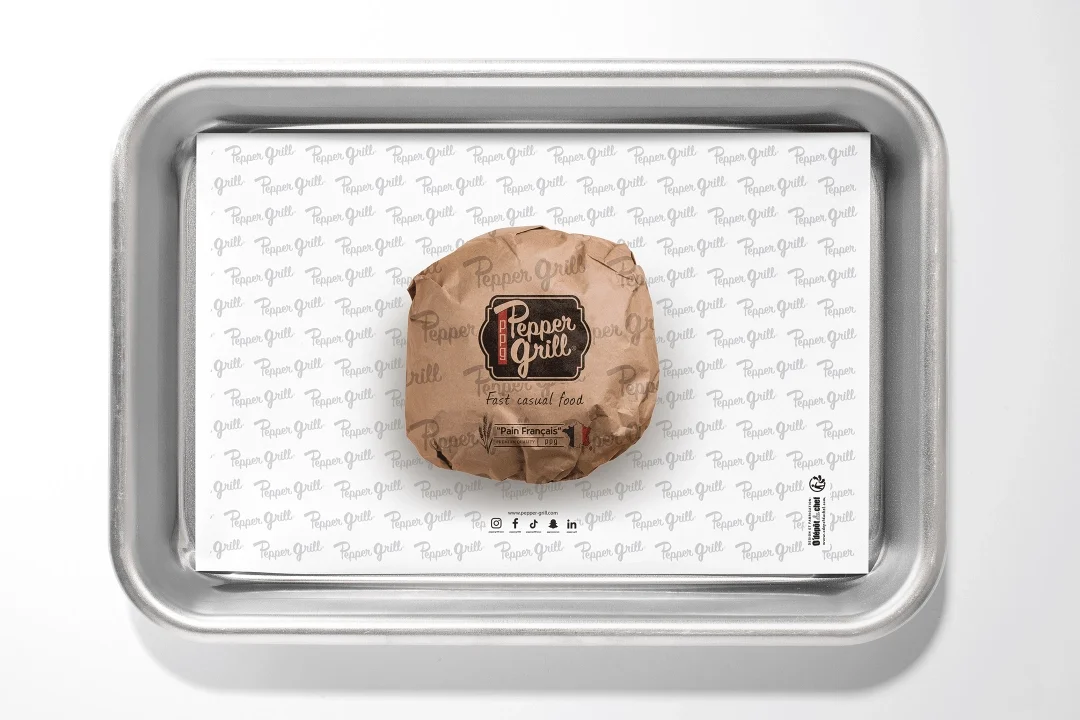
PFAS are per- and polyfluoroalkyl substances: a large family of chemicals that repel water and grease exceptionally well. That is exactly why they ended up where hot, oily food meets paper: burger wraps, chip bags, coated trays. The catch is that PFAS barely break down in the environment, which earned them the name “forever chemicals” and put them on the EU's list. None of this makes paper packaging a problem in itself. It simply means the grease barrier now has to be built without fluorochemistry.
The limits — and what they mean in practice
| Limit | Applies to |
|---|---|
| 25 ppb | any single PFAS substance |
| 250 ppb | the sum of measured PFAS |
| 50 ppm | total PFAS (total fluorine) |
Translated into buying terms: any deliberately applied PFAS coating fails these thresholds. The numbers are set low enough that this is not about environmental traces; it is about ending intentional use, full stop.
Which packaging is at risk — and which barely is
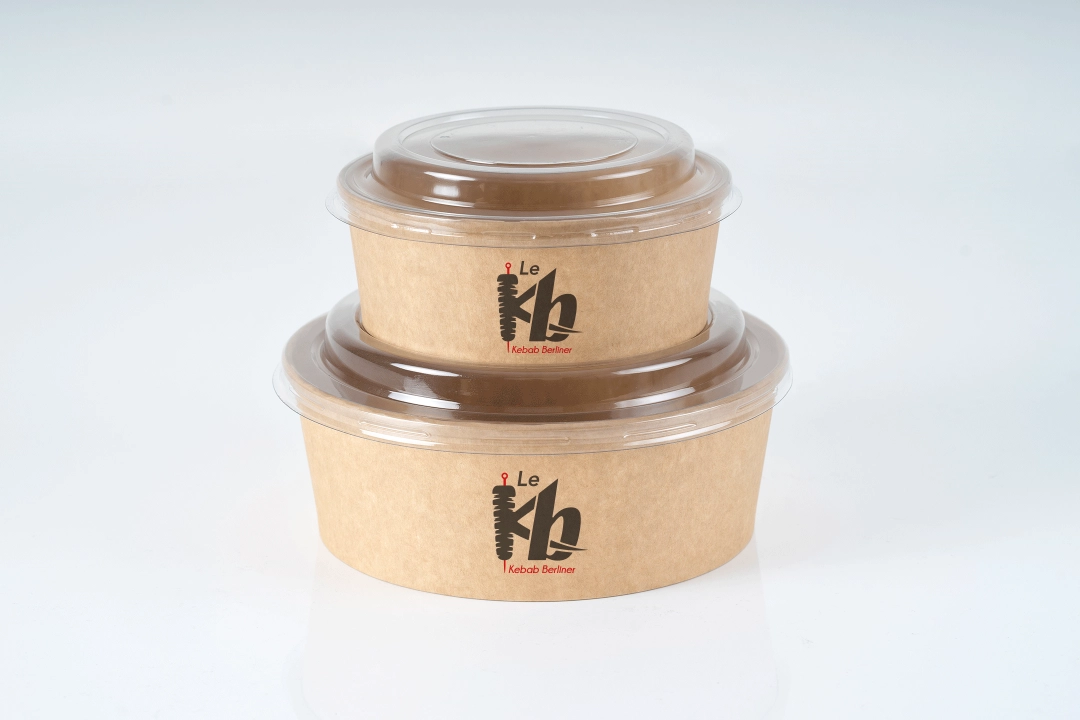
The risk sits mainly in packaging whose grease resistance comes from an invisible chemical treatment: older-style greaseproof wraps and tray papers, and some coated trays. Largely unaffected: uncoated kraft, and packaging whose barrier is a visible film or dispersion layer. PE linings and water-based coatings are not PFAS; they have their own debate around recycling, but it is a different debate. In our own production we see this daily: grease barriers today are solved with dispersion coatings or sealing films, no fluorochemistry involved, the approach used in heat-seal food trays and coated meal boxes. What matters is not the material as such, but what the manufacturer builds the barrier from.
Five questions to put to your supplier
You do not need to commission a lab. You need the right questions, in writing, so the answers are worth something later:
- Will you confirm in writing that the items supplied meet the PPWR's PFAS limits?
- Is there a Declaration of Compliance for each item — and can I see it on request?
- Which barrier technology replaces the grease resistance: dispersion coating, film, something else?
- Can the claims be traced batch by batch if an authority asks?
- How are you handling older stock: swapping, labelling, selling through?
A supplier who answers those five quickly and in writing has done the work. One who dodges them deserves a second look.
How to read a Declaration of Compliance in two minutes
The Declaration of Compliance is the document proving a packaging item is fit for food contact — under framework Regulation (EC) 1935/2004, now extended by the PPWR's requirements. You do not need to memorise it. Check two things: does it name the actual item you buy (not just “paper packaging in general”), and is it recently dated? If both hold, an audit finds a document in your hand rather than an excuse.
Do you need to bin existing stock?
Here is where leaflets get louder than the regulation. The rules govern the placing of packaging on the EU market — they do not retroactively outlaw every bag already on your shelf. What your particular stock means in practice depends on the case, and this is where a manufacturer's competence honestly ends: for larger stocks, talk to your supplier and, if in doubt, a trade body before throwing anything away. Panic-buying in July is not a compliance strategy.
The timeline to 2030: what comes next
The PFAS date is the start, not the finish. From 2030 the PPWR phases in further requirements, including recyclability standards and recycled-content targets. If you are sorting supplier paperwork anyway, think one step ahead: packaging that is cleanly documented in 2026 makes less work in 2030.
“PFAS-free” on the label — what the claim is worth
Since the deadline started making the rounds, “PFAS-free” has been appearing on more and more catalogue pages. That is good news in itself, but a printed claim is not evidence. We print packaging for a living and know how quickly a label is designed: it only means something when a document stands behind it. So take the promise at its word and ask for the basis: does “PFAS-free” refer to the exact item you buy, or to the range in general? Is there a Declaration of Compliance or a test report behind it? And does the claim appear on your order confirmation, not just in the brochure? A serious supplier has a short written answer to all three. One who advertises the badge but dodges the paperwork is selling you a feeling, not compliance.
A realistic 30-day switch plan
From what we see with businesses making the change, one month is enough for a clean switch, if it runs in order:
- Week 1: stocktake. Which of your items rely on grease-resistant treatment? List them, write to your supplier, ask the five questions.
- Week 2: order samples of the fluorine-free alternatives and test them in real service — with the greasiest dish on your menu, not the mildest.
- Week 3: collect and file the Declarations of Compliance; settle prices and minimum quantities.
- Week 4: place the first regular order of the new items; sell through or swap remaining stock to a plan.
The most common mistake we see: leaving everything to the final week before the deadline and then compromising on material because there was no time for a proper trial. The box that failed once in testing would have annoyed you every single evening of the August rush.
The bottom line: for a well-run business the PFAS ban is not a drama, it is a purchasing question. Check your greaseproof items, ask the five questions, insist on the Declaration of Compliance, and have a look at which food boxes already run on fluorine-free barriers. This is a manufacturer's practical view, not legal advice for your specific case.
Frequently Asked Questions
- Does the PFAS ban apply to packaging I bought before August 2026?
- The rules govern placing new packaging on the EU market; they do not retroactively outlaw stock on your shelf. For larger stocks, agree a plan with your supplier and check with a trade body before binning anything.
- Does the ban affect UK-only businesses?
- The PPWR is EU law, so purely domestic UK trade is not directly in scope. It does matter the moment your product or packaging enters the EU market — and many UK wholesalers will align their ranges anyway, so expect the paperwork to reach you either way.
- Are PE-lined cups and boxes caught by the PFAS limits?
- No. PE is a plastic, not a PFAS chemical. PE and water-based coatings have their own recycling debate, but it is a separate one from PFAS.
- How do I recognise PFAS-free packaging?
- Not by look, and not by the word greaseproof — that says nothing about the chemistry. What counts is a written supplier confirmation and a Declaration of Compliance naming the exact item.
- How do I switch without disrupting service?
- Order samples of the fluorine-free alternative, run them in real service for a week alongside your current stock, then phase the change batch by batch with your supplier. A clean switch takes weeks, not a year — ask for samples and a changeover plan.
- Is uncoated kraft paper affected by the PFAS limits?
- Barely. The risk sits with items whose grease resistance comes from a chemical treatment — not with plain, uncoated paper that has no barrier at all. If an item is neither greaseproof-treated nor coated, there is usually nothing to worry about; where in doubt, the Declaration of Compliance for that exact item settles it.
Related Articles

Buying Food Packaging from Turkey: An Honest Guide
A quote from a Turkish packaging manufacturer can look very attractive, and it can be exactly as good as it looks, if the paperwork holds up. The documents to demand, how sampling and customs work, and the red flags that separate a partner from a problem.

EU Packaging Rules Since 12 August: What Goes On the Pack
The EU packaging regulation started applying on 12 August 2026. If you sell into the EU, the first part that reaches you is not a filing task. It lands in the artwork of your next print run.

Why Kebab Boxes Go Soggy — a Packaging Guide for Kebab Shops
Grease, steam and the delivery-bag stack: why kebab boxes fail, what PE and water-based coatings really change, and a five-minute test any shop can run before ordering a pallet.

Germany's LUCID Packaging Register, Explained for Food Businesses
Selling food or running a site in Germany? Even businesses buying pre-licensed cups and boxes must register in LUCID, and since 12 August 2026 anyone ordering service packaging with their own logo is the producer. Who is affected, which checkbox counts, and which supplier paperwork you need.