Deutsch
 Français
 Türkçe
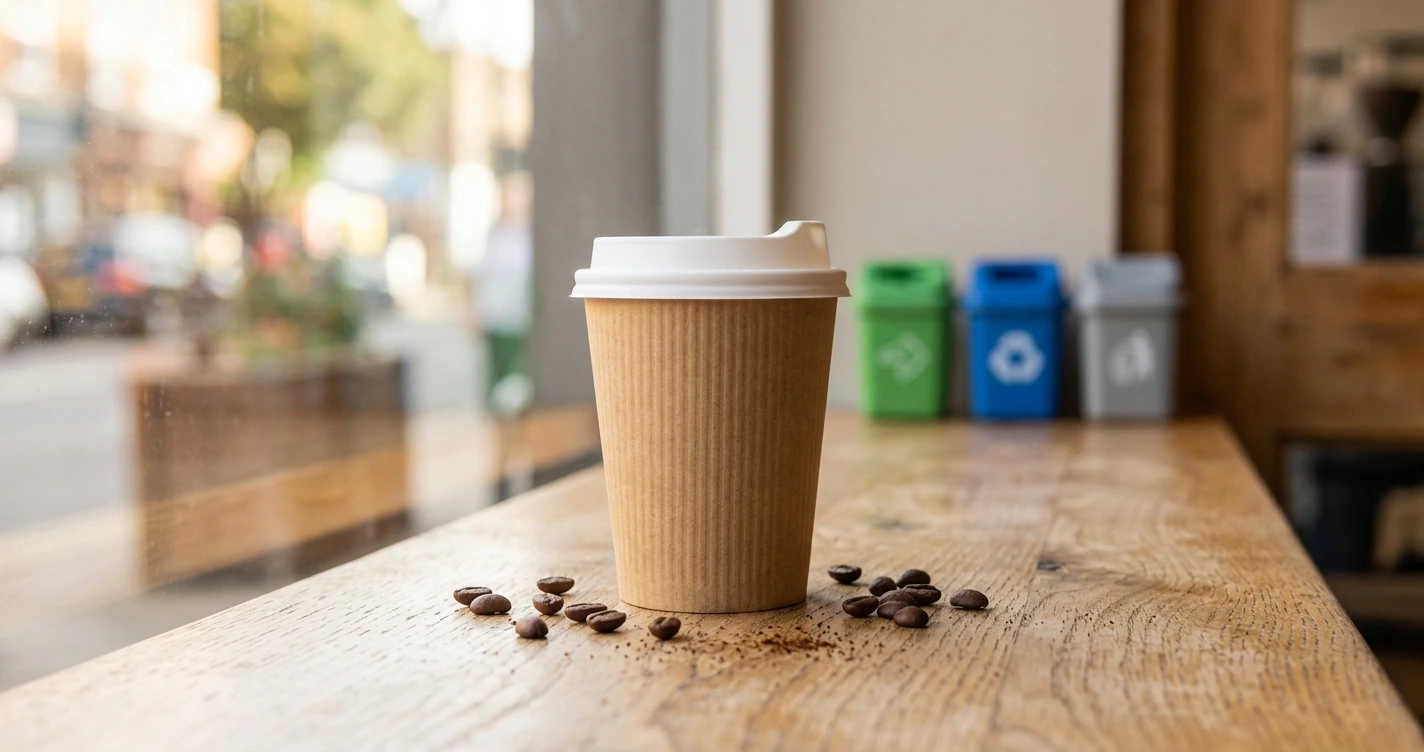
Saturday morning, and the café is busy. A customer picks up her flat white, spots the green leaf printed on the cup, and on her way out drops it into the food-waste caddy by the door. She means well. In much of the UK, that caddy has just been contaminated: the cup will be pulled out at the depot, and the owner who paid extra for “compostable” has bought a clear conscience rather than a clear outcome. If you run a café, a coffee van or an ice cream shop and you are weighing up eco cups, the useful question is not whether compostable is good — it is what actually happens to this cup after your counter. This guide answers that second question.
What “compostable” legally means
Nearly every serious compostable claim on a paper cup traces back to one standard: EN 13432. It certifies that packaging breaks down under industrial composting conditions, held at roughly 55-60°C, within a defined time and without harmful residues. Read that sentence slowly, because every part of it carries a condition. The certificate describes what happens inside a controlled facility. It says nothing about a garden heap, a park bin or the general waste sack behind your shop.
On a paper cup, the claim usually rests on the lining. Plain paperboard cannot hold a latte on its own, so every cup carries a thin inner layer; on cups sold as compostable this is usually PLA, a plant-based bioplastic. Two details matter when you order. Ask whether the certificate covers the finished cup rather than just the lining material, and keep a copy on file — that document is your answer when a customer or an inspector asks what the leaf logo actually means. We sorted the wider vocabulary in our guide to what recyclable, compostable and biodegradable really mean; this article stays on cups.
Industrial composting is not your customer's caddy
An industrial facility keeps material hot, moist and turned for weeks. A garden heap rarely holds 55-60°C for an afternoon. That gap is the whole story: a PLA-lined cup that would break down at an industrial site will sit in a home composter largely unchanged. For lined cups, home composting is not a realistic route, and a supplier who suggests otherwise without a specific home-compost certification is selling optimism.
The caddy at your counter sits somewhere in between. Whether it can take a certified cup depends entirely on who empties it and where that lorry goes, which brings us to the uncomfortable part.
Why your council may still say no
UK food-waste collections do not follow one national rule. Some accept certified compostable packaging. Many explicitly refuse it, because their processing sites, particularly anaerobic digestion plants, cannot break it down within their cycle and treat it as contamination. Several facilities screen out anything that looks like packaging regardless of what is printed on it. The same certified cup can therefore be genuinely compostable in one borough and a contaminant two miles down the road.
The fix is unglamorous. Before you order, put one question in writing to your council or your commercial waste contractor: do you accept EN 13432 certified compostable packaging in food waste, yes or no? In sample requests we see the same pattern again and again — the lining gets chosen within a week, and nobody has asked the waste contractor a single question. The order should run the other way round.
PLA, water-based or PE: an honest comparison
There is no lining that is simply the green one. Each wins in a specific situation and fails politely in the others.
| Lining | Where it wins | The honest limit |
|---|---|---|
| PLA (compostable) | Where your collection genuinely accepts certified packaging, the cup gets a real second life | Without that route it travels with general waste, and it does not belong in paper recycling either |
| Water-based dispersion | Designed to repulp in standard paper streams, so it suits areas with cup recycling | Acceptance still depends on your local collection; the claim must stay conditional |
| PE (polyethylene) | Proven barrier, consistent on long hot service and high volume | Kerbside recycling rarely takes it; recovery relies on dedicated cup schemes |
Notice what decides each row: not the material, the route. A lining choice is really a decision about your local waste system, which is why a comparison table alone cannot settle it.
A decision path for your café
Start with the bin, not the cup.
- Get your council's or contractor's answer on certified compostable packaging in writing.
- If the answer is yes: PLA-lined cups make sense. File the EN 13432 certificate for the finished cup and label the bin at your counter, so the cup actually reaches the right stream.
- If the answer is no: choose for the route you do have. Where cup recycling exists, a water-based lining keeps the fibre usable; where it does not, a well-specified standard cup presented honestly beats a compostable label nobody can fulfil.
- Selling gelato or sundaes? The same logic covers ice cream cups: the lining question does not change because the product is cold.
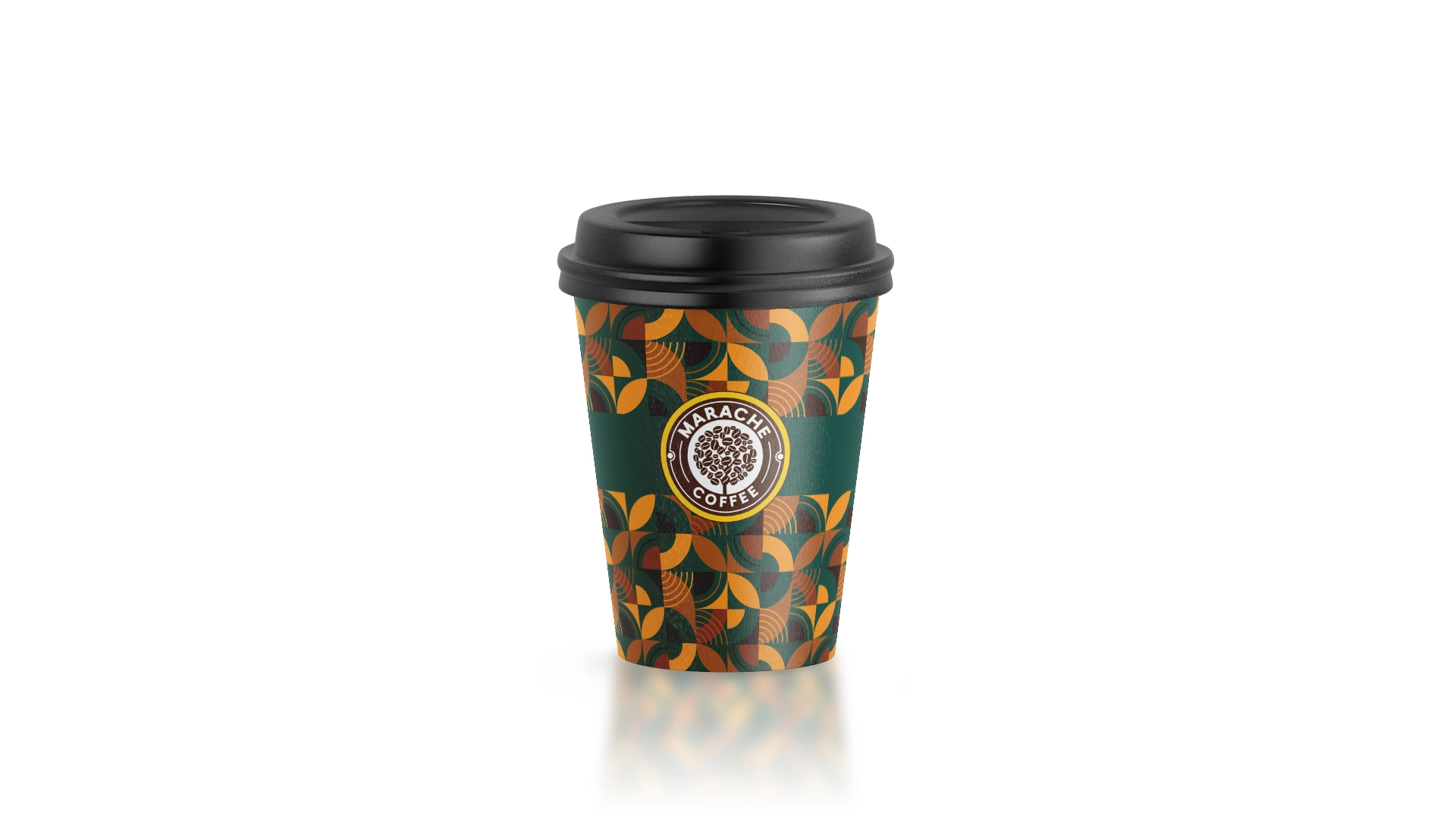
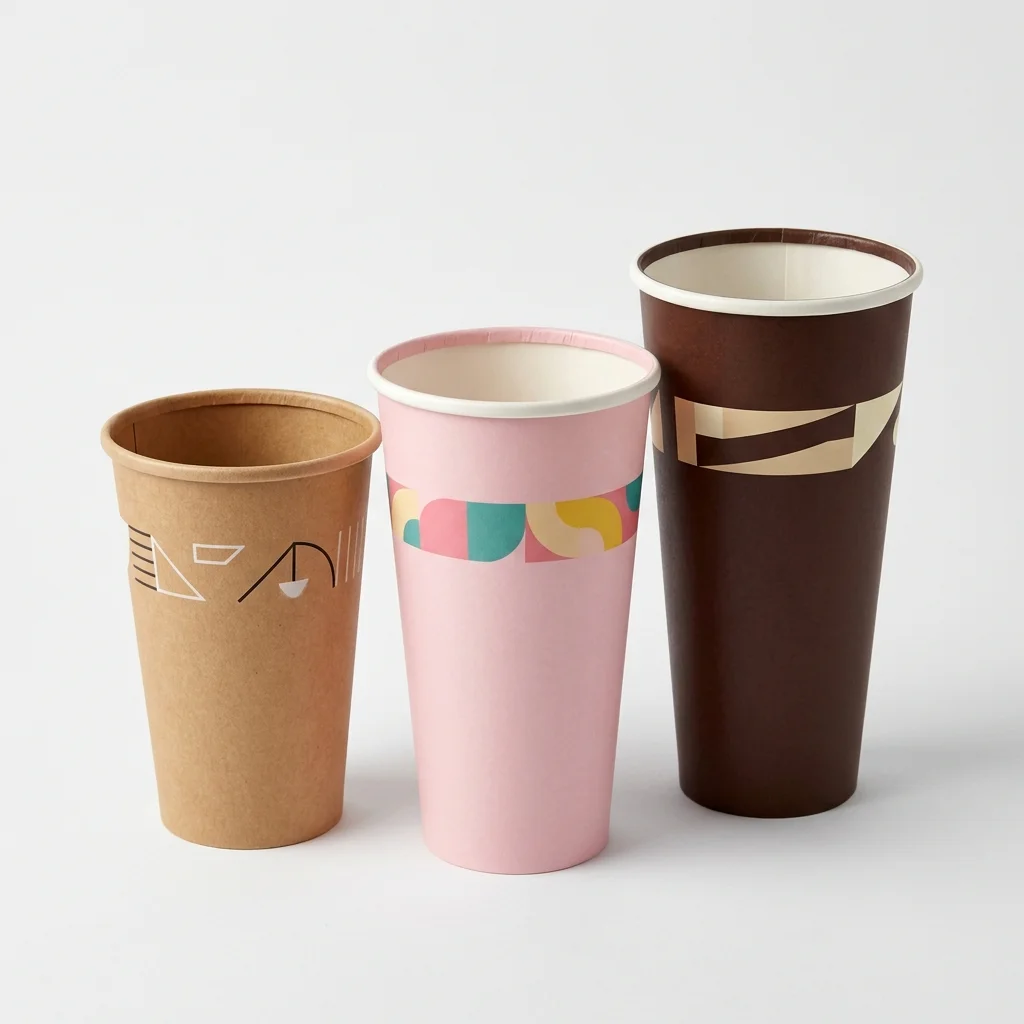
If you are comparing formats at the same time, sizes and wall options for custom printed paper cups stay the same whichever lining you pick, so the waste answer can lead the decision rather than follow it.
What you can honestly print on the cup
Green claims on packaging are under real scrutiny in the UK, and unconditional wording is the fastest way into trouble. Eco-friendly, printed alone, promises everything and specifies nothing. A claim of one hundred percent compostable promises a route you do not control. The defensible version always carries its condition: compostable where industrial composting is accepted, with the certificate available on request.
In truth, the most effective message is usually not printed on the cup at all. A clear label on your bin, telling customers exactly where this cup goes in your shop, does more for your waste stream than any slogan on the sleeve. And one hard truth belongs in every eco-cup conversation: a compostable cup that ends up incinerated is not a greener cup, just a dearer one. The label only pays for itself when the route exists.
Questions to ask any cup supplier
Five questions quickly separate a supplier who understands end-of-life from one who just prints green logos:
- Is the finished cup certified to EN 13432, and can you send the certificate rather than just the lining datasheet?
- Which lining exactly is on this cup, and does the specification cover my hottest drink at my longest hold time?
- Does full-coverage printing change anything about the certification or the recyclability?
- Can I get samples of the same cup with different linings to test with my drinks before committing to a print run?
- Given the waste route I have just described, which lining would you specify, and why?
That last question is the revealing one. A supplier who asks about your bins before recommending a lining is thinking about your outcome; one who answers instantly without asking is thinking about their stock. The greenest cup on your menu is the one whose ending you can name: which bin, which lorry, which site. Answer that first, in writing, and you will not need to defend a logo you cannot back up.
Frequently Asked Questions
- Can PLA cups go in my home compost or food caddy?
- Home composting is not realistic for PLA-lined cups: the certification assumes industrial conditions at around 55-60°C. Whether a food-waste caddy works depends on your council or contractor, so ask them in writing before you order.
- Is a recyclable cup better than a compostable one?
- Neither wins in the abstract. The better cup is the one your local system can actually process: PLA where certified packaging is collected, a recyclable lining where cup recycling exists. A label without a route does not improve anything.
- Can I print eco-friendly on my cups?
- Unconditional claims are risky under UK green-claims scrutiny and easy to challenge. State the condition instead, for example compostable where industrial composting is accepted, and keep the certificate available.
- Do PLA-lined cups handle hot drinks?
- Yes, PLA-lined hot cups are made for normal serving temperatures. For very hot drinks held for a long time, check the supplier's specification for your exact use rather than assuming.
- What should I ask before ordering compostable cups?
- Ask for the EN 13432 certificate for the finished cup, the exact lining name, and samples with different linings to test with your drinks. Quantities and print options vary by size and design, so describe your menu and volumes when you enquire.
Related Articles

Why Coffee Cup Lids Leak and What Actually Fixes It
The lid clicked on, the customer got ten steps away, and coffee ran down the sleeve. What causes it nearly every time, the counter habit that fixes it for free, and what to settle with your supplier before the next pallet arrives.
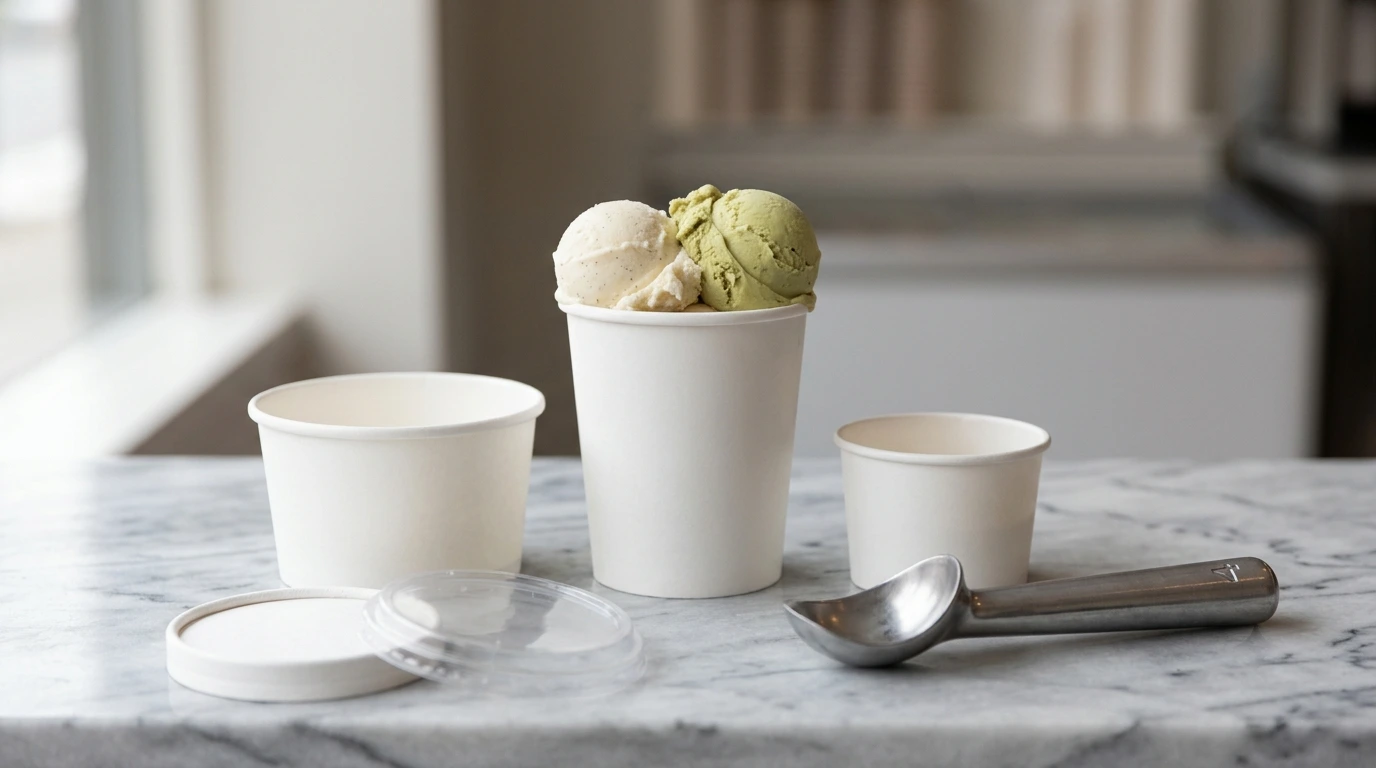
Printed ice cream cups: a scoop is not an order size
Ice cream is sold in scoops, but cups are built in millilitres. Order “cups for two scoops” and you are ordering the number on your scoop without saying it. How to convert scoops into millilitres, why 250 and 300 ml are two completely different cups, what the lid does to the bin, and when the order has to leave so the cups are on the counter in March.
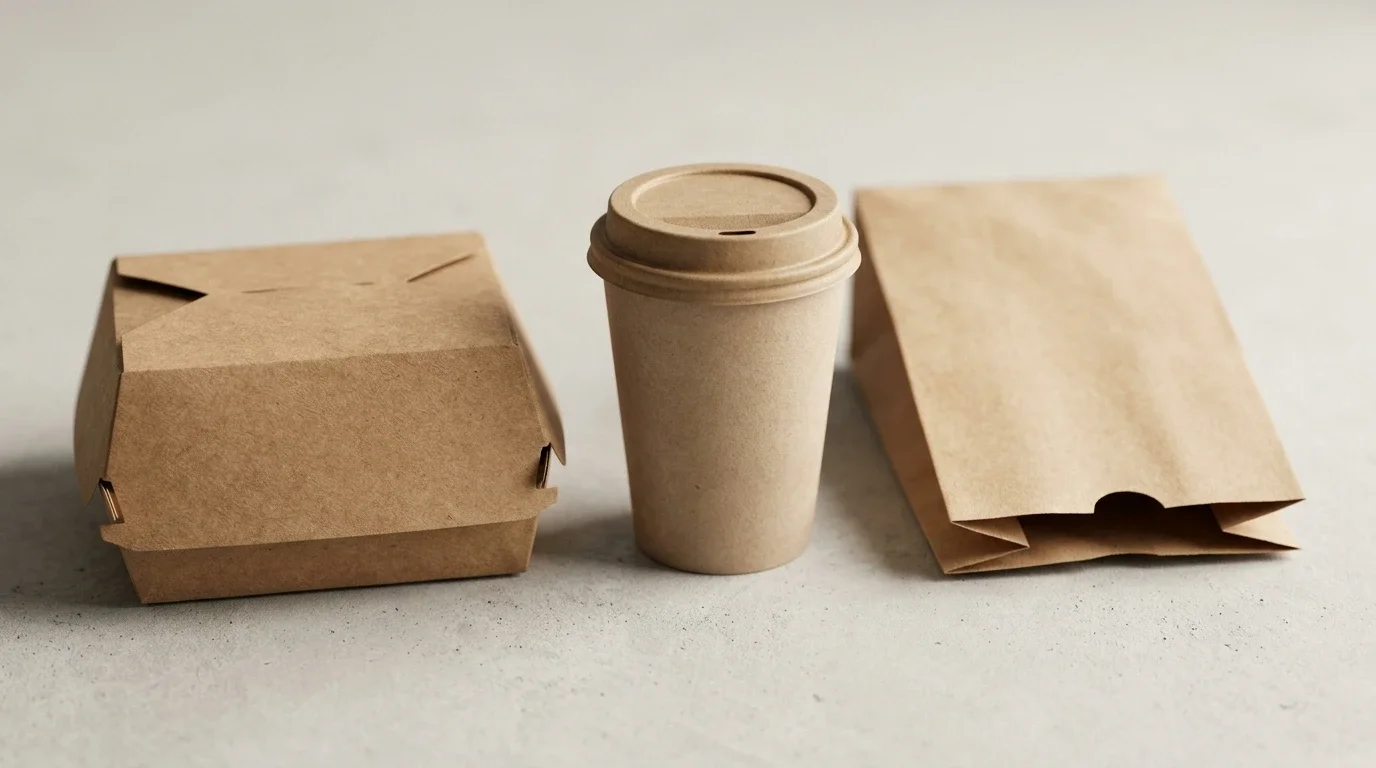
Recyclable, Compostable or Biodegradable Packaging: What the Labels Actually Mean
Recyclable, compostable and biodegradable are not the same promise. Here is what each really means — and how to match the right one to how your packaging is actually used and binned.