Deutsch
 Français
 Türkçe
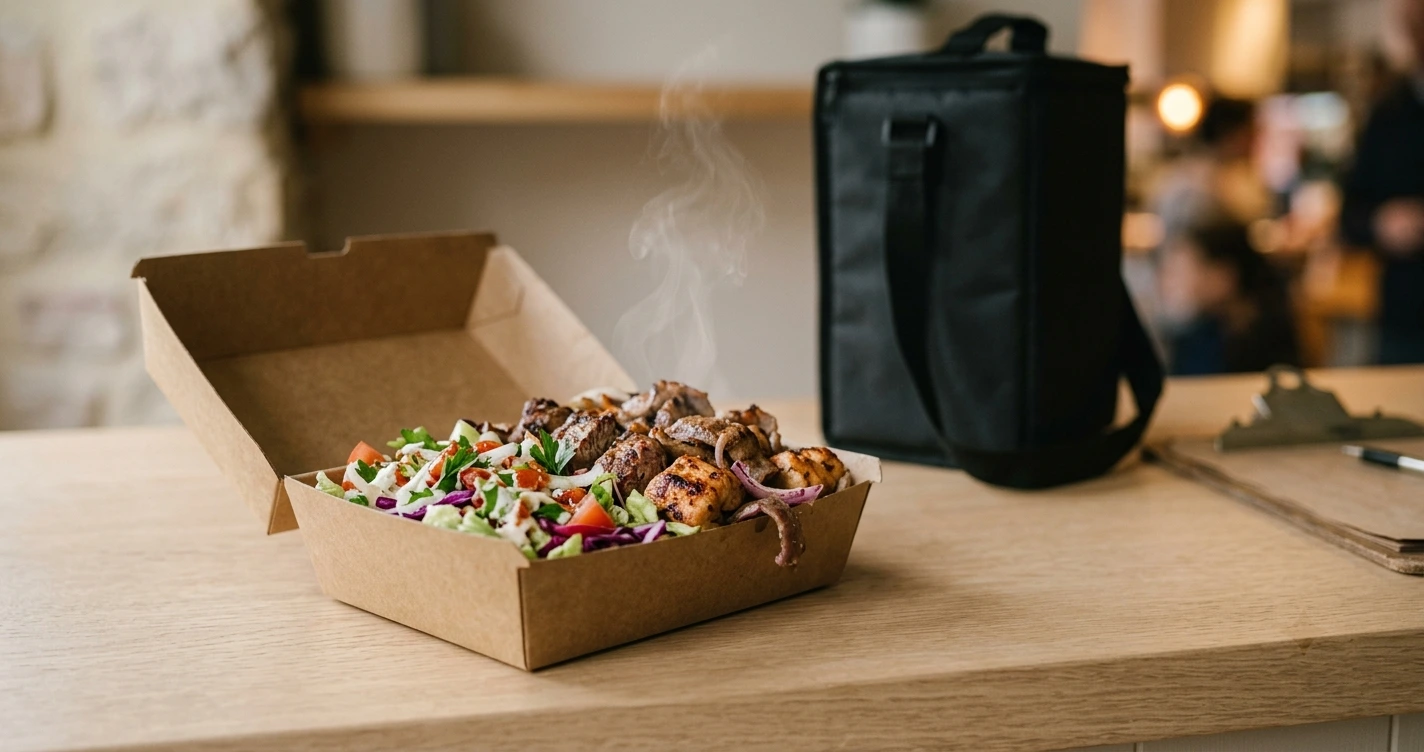
Saturday night, the third delivery wave is out, and the app pings with a one-star review: box arrived collapsed, bread soggy, sauce everywhere. Anyone running a kebab shop knows that message, and knows the kebab is rarely the culprit. Almost always, it is the box. Here is why it happens and how to tell a good kebab box from a cheap one before you commit to a pallet, written from the floor of a packaging factory, with the details catalogues tend to leave out.
Why the box fails: grease, steam and the stack
Three forces hit a kebab box at once, and it is the combination that makes this one of the hardest-working formats in takeaway. First, grease: hot meat and sauce attack uncoated board within minutes. Second, steam: a freshly filled kebab gives off moisture that condenses inside a sealed box and soaks back into the bread and the board. Third, the stack: in a courier's bag your box rarely travels alone; two or three orders sit on top of it, pressing on lid and walls. A box that copes with one of these forces and not the others still fails. That is why the usual greaseproof question only covers a third of the job.
PE coating or water-based — an honest comparison
The grease barrier in a kebab box usually comes from one of two techniques. A PE coating (a thin plastic layer on the inside) is the classic: very tight, very robust, reliable even on long runs. Its weakness is not performance but end-of-life, since the plastic-paper combination makes paper recycling harder. Water-based dispersion coatings are the newer answer: properly executed, they hold grease and moisture across a normal delivery window, and the board separates more cleanly at end-of-life. What we see daily in production, though, is that execution beats technology: board weight, coating coverage and clean corner folds decide more than the label does. A thinly coated eco box loses every real-world test against a well-made PE box; a well-made dispersion box gives up very little. So do not buy the sticker: ask to see the execution, ideally by testing samples of both builds side by side, as we offer with our doner and kebab boxes.
Vented or sealed? Depends what goes in the box
Opinions split here, and both camps are right, just for different dishes. A dry wrap or a rice-based box tolerates a largely sealed container: little steam, no pool of sauce, everything stays warm. A classic kebab plate with plenty of sauce and hot meat needs controlled venting, or its own steam rains back onto the bread. The most practical setup we recommend to shops: choose the box per dish rather than one box for everything, and run heavily sauced orders with separate sauce cups. The box works less hard, and the customer gets crisp bread plus full sauce instead of a blend of the two.
The delivery-bag test: five minutes, no lab
All you need is a sample and your own food. Fill the box with the greasiest, sauciest dish on your menu, not the mildest. Lid on, second filled box on top, wait 25 minutes; that is a realistic delivery plus waiting time. Then four checks: is the base stained from the outside? Do the corners give when pressed? Is the bread stuck to the lid? Can you still carry the box one-handed without it sagging? A box that passes this will survive a Saturday night. One that fails will not improve in daily use, however good the price per thousand looked.
Size and fill level: the underrated cause
Here is a point almost no catalogue mentions: many leaky boxes are simply the wrong size. In an oversized box the contents slide with every corner, sauce sloshes against the walls and finds every weak point in the folds. In an undersized one the lid presses onto the bread and pushes moisture into it. The box fits when the food fills roughly three quarters of it and the lid closes without pressure. If you sell two portion sizes, stocking two box sizes saves more grief than the extra line item costs.
Recycling: what really happens to a greasy box
Honesty belongs in this guide: a heavily grease-soaked box is a problem in paper recycling regardless of the coating: grease disrupts the process, and badly soiled board gets sorted out. A well-built box still helps twice over: it keeps the grease inside, so the outer shell and lid stay recoverable, and water-based coatings separate more easily where the box does make it into paper recycling. Treat any flat claim of full recyclability on greasy formats with suspicion; the serious version of that sentence always states its conditions.
Print and logo: what works on a kebab box — and what smudges
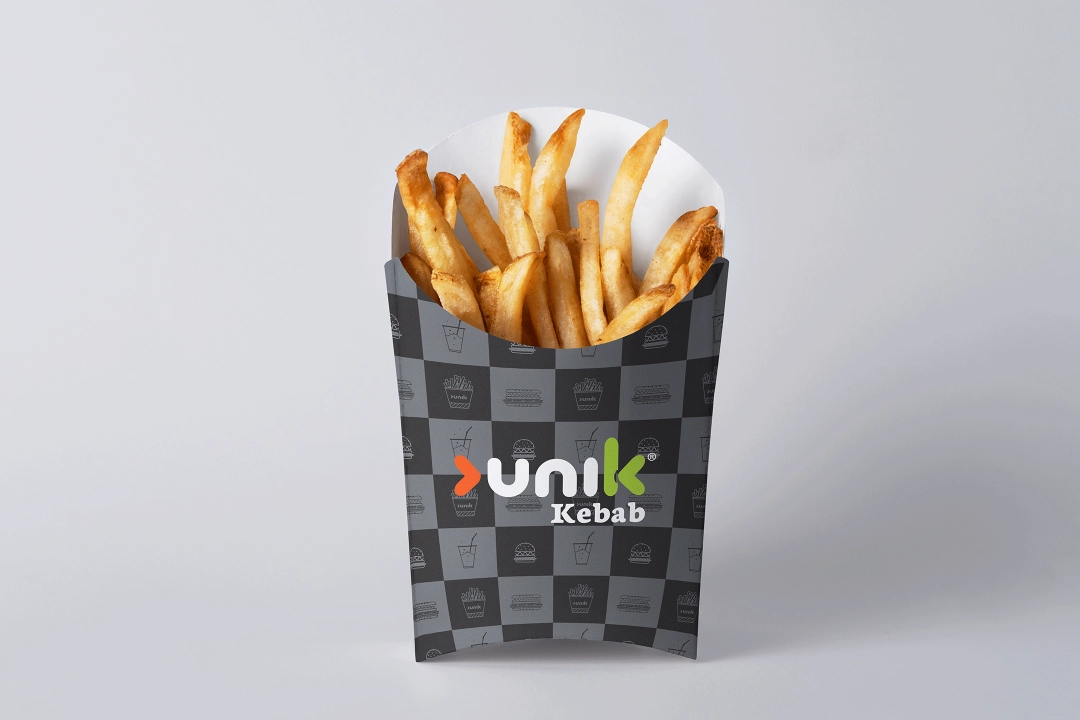
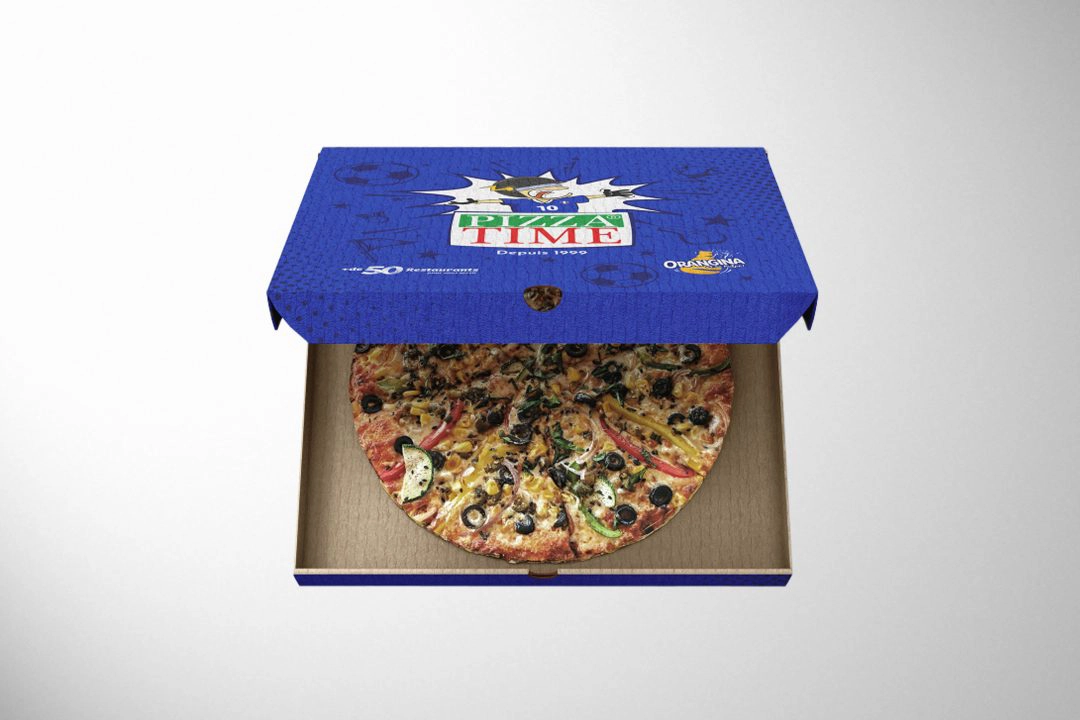
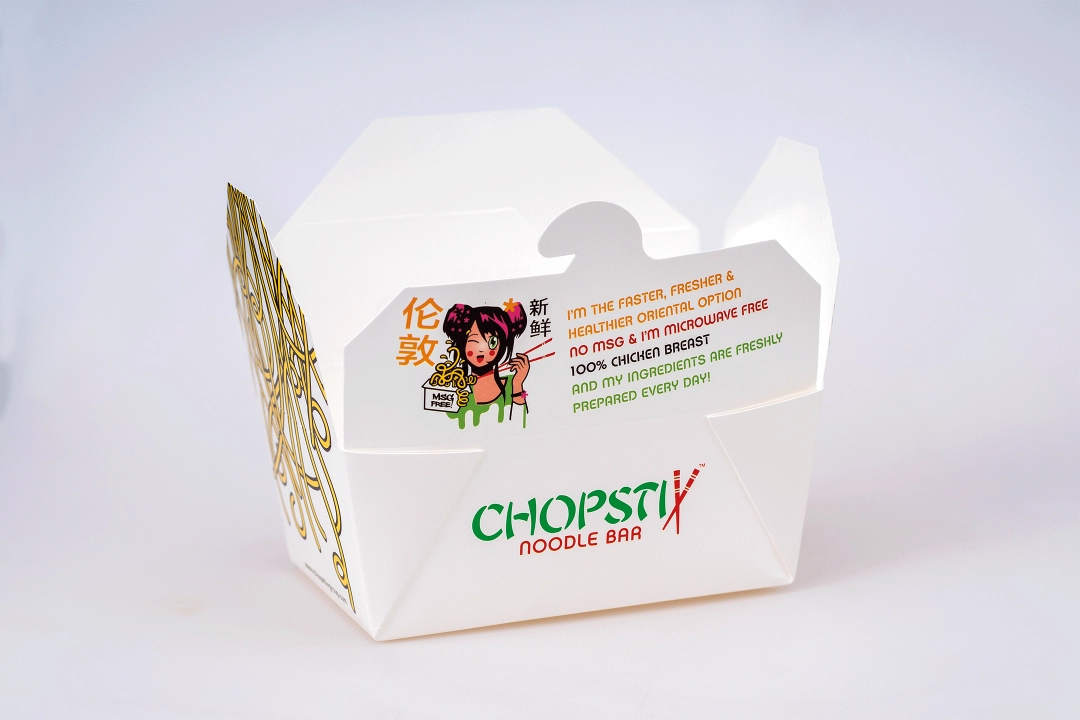
The kebab box doubles as your cheapest advertising space: it sits on the customer's table, rides across half the town and shows up in every delivery photo. For that to work in your favour, the print has to survive the service — and the service is greasy, hot and rushed. Three rules from the print floor: first, one or two bold colours on brown kraft or white-lined board read better across a counter than a delicate four-colour design, which quickly turns busy on textured board. Second, the logo belongs on the lid and the side wall — the base is the first surface to draw grease. Third, ask for a proof on the actual board, not just a PDF: colour reads warmer and darker on kraft than on screen, and artwork that looked crisp in the file can print muddy. And inks that may touch the food must be food-contact safe — that part is never optional.
A buying checklist for your shop
- Ask what the barrier is: PE or water-based — and in what execution?
- Demand samples and run the delivery-bag test with your own food.
- Match box size to your actual portion, not to the catalogue default.
- Plan separate sauce cups for heavily sauced dishes.
- Check stacking: does the lid carry two filled boxes on top?
- Ask for the food-contact Declaration of Compliance.
- Only then negotiate the price per thousand.
Five questions for your supplier
Anyone selling packaging should answer these quickly and in writing:
- Which coating does the box carry — and how is it executed?
- What holding time is it designed for: counter, a 20-minute delivery, longer?
- Can I get samples in both barrier builds to test myself?
- Is there a Declaration of Compliance for food contact?
- What would you recommend for my actual menu — and why?
The last question matters most. A supplier who asks about your menu before recommending a box is selling you a solution. One who fires back a price without a single question has not really looked at your menu.
The bottom line: a soggy kebab box is not fate — it is almost always the sum of the wrong barrier, the wrong size or missing ventilation, and all three can be settled at the buying stage, before the first one-star review lands. Take the five minutes for the test; your Saturday nights will get quieter.
Frequently Asked Questions
- Cardboard or plastic box — which stays sealed longer for kebabs?
- A well-coated cardboard box comfortably survives a normal delivery window and feels better in the customer's hands. Plastic seals tighter but loses on waste and image. For most shops, properly executed coated board is the better compromise.
- Why does my box soak through even though it says greaseproof?
- Because greaseproof covers only a third of the load. Often the moisture is not grease at all but steam condensing inside — or the box is oversized, so sauce sloshes into the corners at every turn. Judge coating, size and venting together, not the label alone.
- Does wrapping the box in foil or paper help?
- It keeps warmth a little longer but worsens the steam problem: moisture escapes even less and soaks into the bread. A box with the right venting — and sauce in a separate cup — works better.
- What box size is right for a kebab meal?
- The one your actual portion fills to about three quarters, with the lid closing without pressure. That depends on your menu, which is why the honest route is testing samples in two sizes with your own dish before ordering.
- Can greasy boxes go in paper recycling?
- Heavily soaked board is usually sorted out of paper recycling whatever the coating. Clean parts like the lid can go in; the badly soiled rest belongs in general waste. Serious recycling claims always state those conditions.
- At what volume does a printed box with our logo make sense?
- It depends on format and print method, and starts lower than many expect. The practical step is to ask directly with your portion sizes and rough monthly volume — and to request a printed sample before committing.
Related Articles
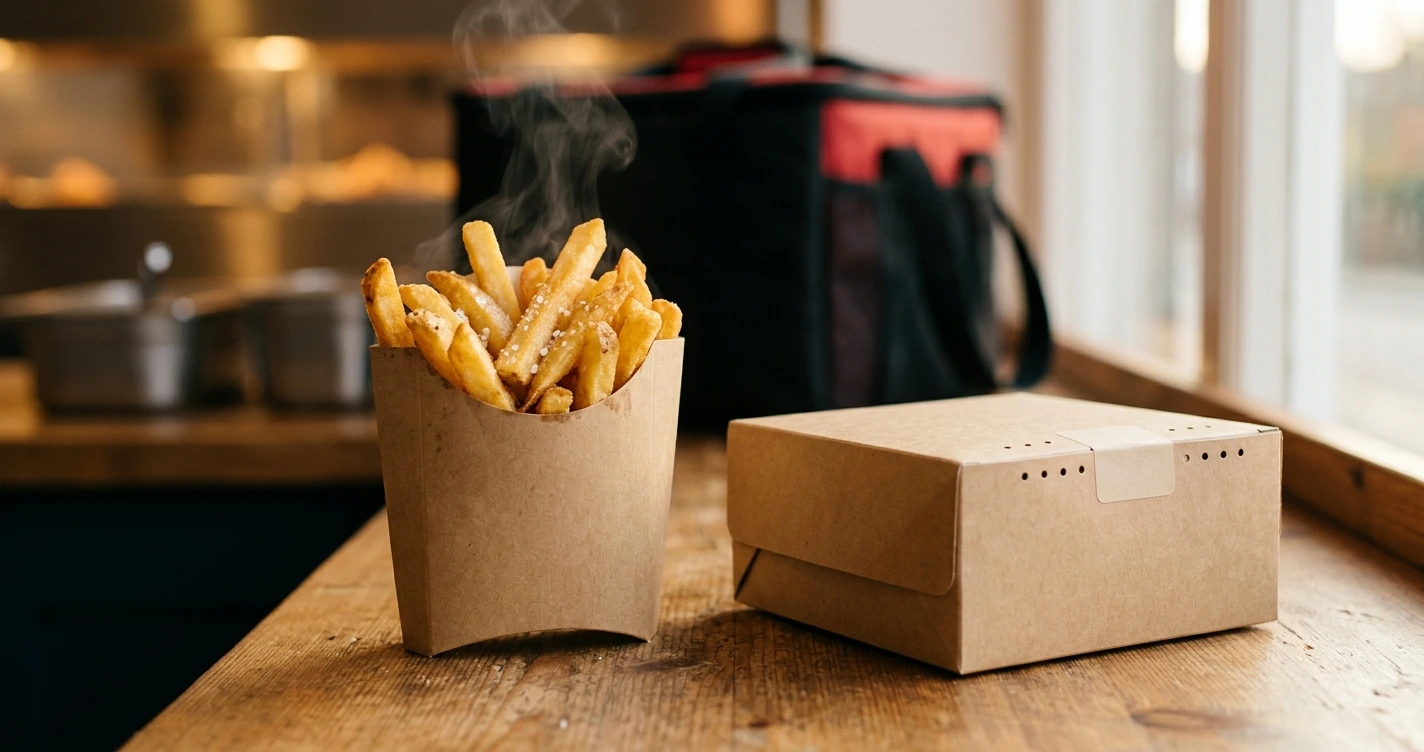
How to Keep Fries Crispy for Delivery: It's the Steam, Not the Cold
Why chips turn soggy on the delivery run, which packaging actually helps — open scoop or vented box — and the 20-minute test any shop can run before committing to a pallet.
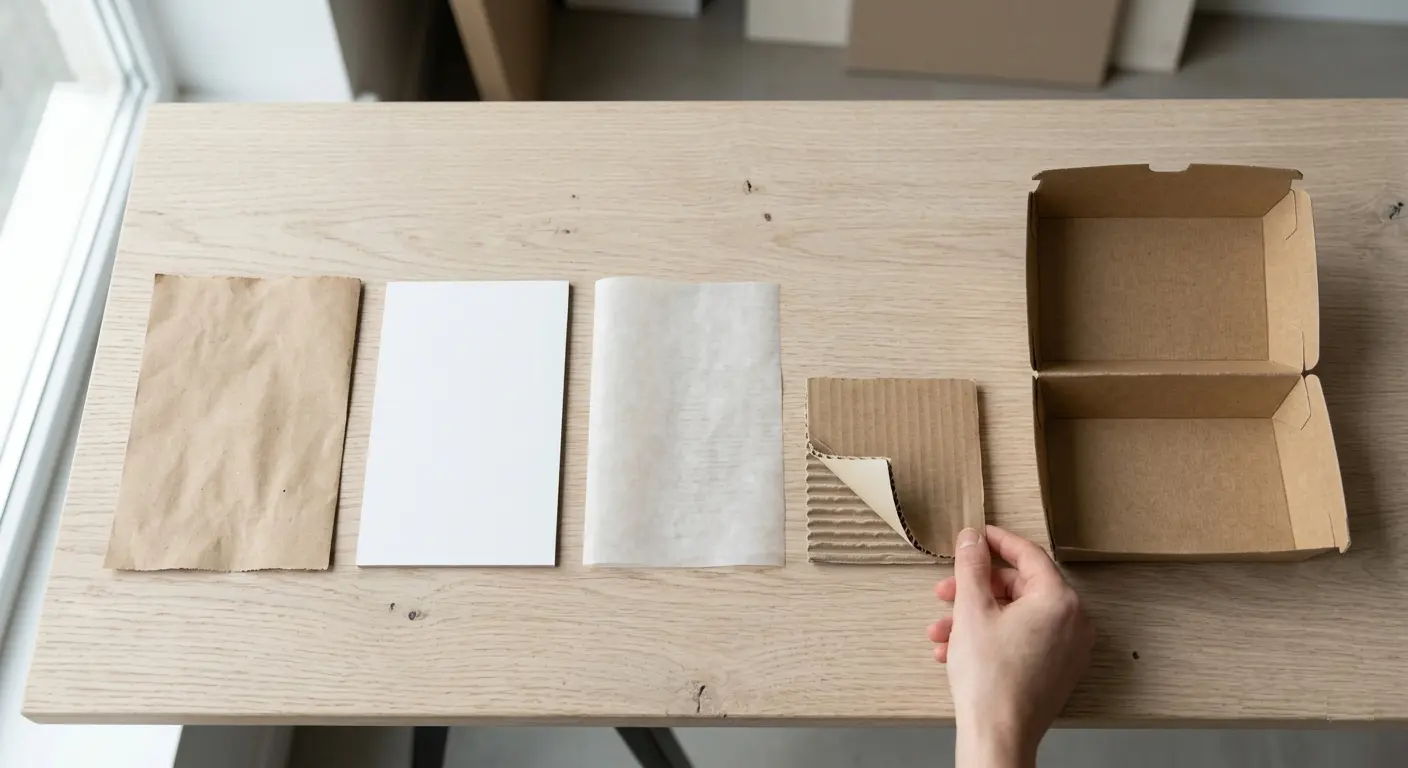
Paper, Grammage and Barriers: Which Material for Which Food
The same box holds a burger perfectly and fails under a curry. The difference is not the board, it is the layer on it. What grammage actually changes, which barrier suits which dish, and how to test material with your own food before you commit.
The EU PFAS Ban on Food Packaging: What to Check Now
Since 12 August 2026 the EU has banned PFAS above strict limits in food-contact packaging. What it means if you sell into the EU, which packaging is actually at risk, and the five questions to put to your supplier.
Opening a Takeaway: The Packaging Checklist That Saves You Money
New operators buy packaging from a catalogue, end up with too many sizes and a year of the wrong box. This checklist works from your menu instead, covers how much to order, and ends with the seven lines that get you a real quote.