Deutsch
 Français
 Türkçe
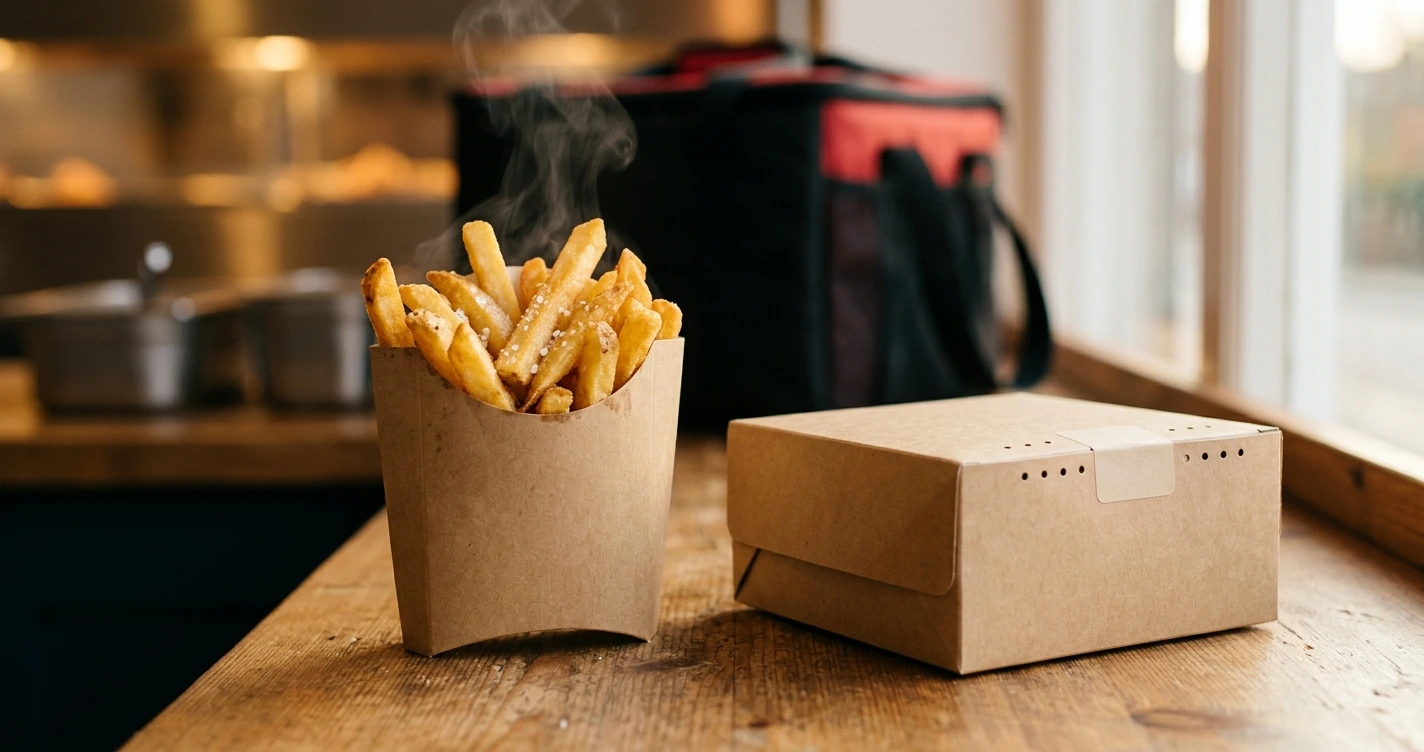
Saturday night, the review lands: three stars, “food great, chips arrived soggy.” Anyone running a chippy, chicken shop or delivery kitchen knows the line, and knows the frustration, because those chips left the fryer crisp. What happens in between is not bad luck; it is physics. The better news: with the right packaging, that physics can largely be managed. Here is a packaging manufacturer's practical take on the soggy-chips problem — with the details that actually decide the game between fryer and front door.
Why fries go soft: steam, not cold
The common assumption runs: the chips got cold, so they went soft. It is actually the other way round. Hot fries release moisture continuously after frying: warm steam you can see rising whenever a box is opened. In a sealed container that steam has nowhere to go: it condenses on the lid and walls, drips back down and soaks into the very crust that was crisp a moment ago. After a twenty-minute ride the fries have not gone cold; they have taken a bath in their own steam. Once that clicks, you judge packaging differently: the question is not how tightly a box seals, but how controlledly it breathes.
The sealed-box trap
The sealed box feels like the professional choice: stacks neatly, nothing spills, everything stays warm. For rice dishes, pasta and curries, that is true. For fries, that very tightness is the problem: the better the box closes, the faster the condensation builds. Every delivery customer knows the result: immaculate packaging outside, a soft clump inside. The well-intentioned upgrade to the premium sealed box reliably produces the three-star review. Fried food follows different rules from stewed food.
Open scoop or vented box — decided by the journey, not by taste
For the counter and eat-in service, the open chip scoop is unbeatable: maximum airflow, the crust stays dry, and the format sits well in the hand. For delivery, the open scoop usually rules itself out, because it tips in the courier bag and thirty chips redistribute themselves across the order. That is where the vented box earns its place: closed enough to stack and travel, with targeted openings that let steam escape before it condenses. So the choice is not a matter of philosophy but of distance: counter and short walks — open; app delivery over twenty minutes — vented and closed. Many shops sensibly run both, choosing between chip scoops and vented fry boxes by order channel.
Venting done right: it is not about more holes
Venting does not mean perforating the box. Too many or oversized openings genuinely cool the food and let frying smells into the courier bag. Too few achieve nothing. What matters is position: openings towards the top let the rising steam out while the heat stays low in the box with the food. The portion loses moisture but barely loses temperature: exactly the balance that keeps a crust crisp. When you compare samples, look at where the vents sit, not just whether they exist.
The small counter habits that undo everything
Three well-meant habits keep showing up. Top of the list is the napkin in the box: it soaks up steam and then lies on the crust like a damp cloth. Napkins belong in the carrier bag, not in the box. Just as well-meant is the bread roll or dip pot resting on hot chips: both cap the steam in. The third classic is the wait: letting the finished order sit closed on the counter for five minutes until the rider arrives. Where the workflow allows, fry the chips last and close them last. Every minute of closed standing time counts double.
Honestly: what packaging cannot fix
One thing belongs in this guide even though we sell packaging: the best vented box will not turn the wrong chip into a delivery chip. Thin-cut, uncoated fries lose their crust faster than any venting can carry the steam away. Thicker cuts and coated varieties survive the trip noticeably better. That is a kitchen decision, not a packaging one. The realistic division of labour: the kitchen produces a crust that can hold twenty minutes, and the packaging makes sure steam does not soften it early. Work only one end of that equation and the reviews stay at three stars.
The 20-minute test before you commit to a pallet
No lab needed — just samples and an honest trial. Fill the candidate box with a normal portion straight from the fryer, close it, and let it stand for twenty minutes: a truthful delivery window including the wait. Then open it and check three things: how much condensation hangs on the lid? Are the top chips still firm or already rubbery? Does the portion smell fresh or steamed? Run the same trial with two or three packaging options side by side and the decision makes itself. Twenty minutes of testing saves a pallet-sized mistake and months of quiet one-star damage.
A side note: the scoop is your cheapest advertising
Fries get photographed, posted and held up to cameras more than almost any other dish. A cleanly printed scoop with your logo rides along in every one of those pictures. It does not take an elaborate design: one or two bold colours on kraft or white board read best, with the logo on the outside where a holding hand does not cover it. If you are testing new packaging anyway, it is worth pricing the print at the same time; the step up costs less than most shops expect.
A buying checklist for fry packaging
- Map your order channels: counter, delivery or both; then choose open or vented accordingly.
- Check vent position: does it sit high, where the steam goes?
- Match size to the real portion: overfilled boxes steam harder.
- Test the base for grease resistance so the courier bag stays clean.
- Compare samples with the 20-minute test, not by catalogue photo.
- Confirm stacking behaviour in a delivery bag.
- Talk price per thousand only after all of the above.
Five questions for your supplier
A packaging supplier who understands fries answers these without detours: What holding time is the box designed for — counter service or a twenty-minute run? Where do the vents sit, and why there? Can I get samples of both the open and the vented build for my own trial? How does the base behave with greasy content? And: what would you recommend for my actual order mix — with what reasoning? The answer to that last one tells you quickly whether the person opposite has understood your menu or is simply reading you a price list.
The bottom line: soggy chips are almost never a kitchen failure and almost always a steam problem — and steam can be managed. Pick the format by order channel, check where the vents sit, keep the napkin out of the box and run the 20-minute test before binding a pallet. And if your menu also runs kebab plates, the box has its own failure modes — grease, sauce and stacking pressure — which we covered in our guide to why kebab boxes go soggy.
Frequently Asked Questions
- Don't vent holes let the heat out?
- Barely, when they sit in the right place. Openings towards the top release the rising steam while the warmth stays low with the food. Too many holes, or holes set low, do cool the portion — position and measure matter, not quantity.
- Why should the napkin stay out of the chip box?
- Because it works like a sponge: it soaks up the steam and then lies on the crust as a damp cloth. Napkins belong in the carrier bag, never in the box.
- Open scoop or closed box — which is better?
- Open scoop for counter service and short walks; vented closed box for app deliveries. Many shops run both side by side depending on the order channel — that is not indecision, it is the cleanest setup.
- Does wrapping the box in paper or a second bag help?
- Usually the opposite. Extra layers hold warmth briefly but trap the steam even more tightly, so the core problem grows. A box that breathes at the top does the job better.
- Can greasy chip scoops go in paper recycling?
- Only if they have stayed largely clean. Heavily grease-soaked packaging gets sorted out of paper recycling and belongs in general waste; clean lids and outer parts can go in. Honest recycling claims always state that condition.
- When does a printed scoop with our logo start to make sense?
- Earlier than most shops think — especially if your fries already show up in customer photos and stories. Exact minimums depend on format and colour count; ask with your rough monthly volume and request a printed sample before you commit.
Related Articles
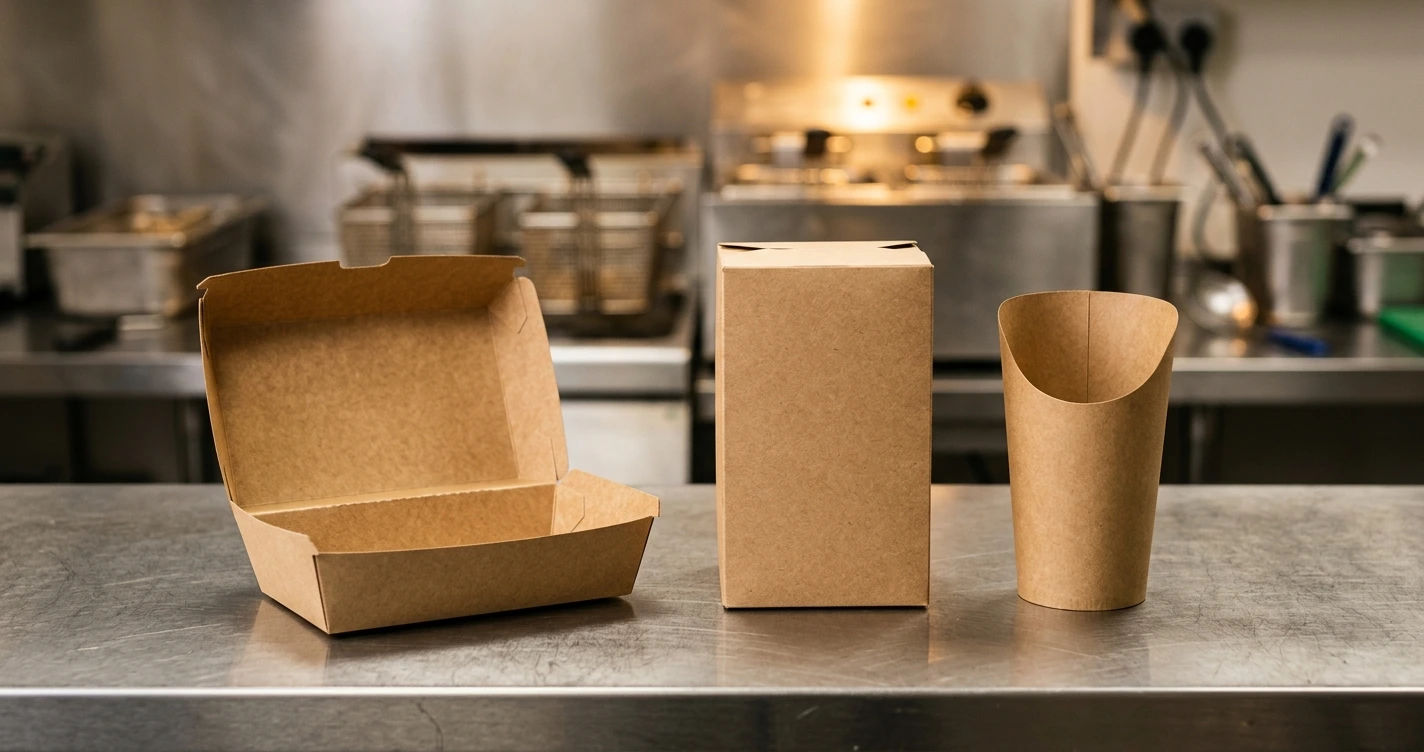
Chicken Box Sizes Beyond Piece Count
Sizing a fried chicken box usually starts with six pieces or nine, and stops there. Weight of a bone-in portion, what the coating does with its own steam, and whether the food gets eaten one-handed matter just as much.
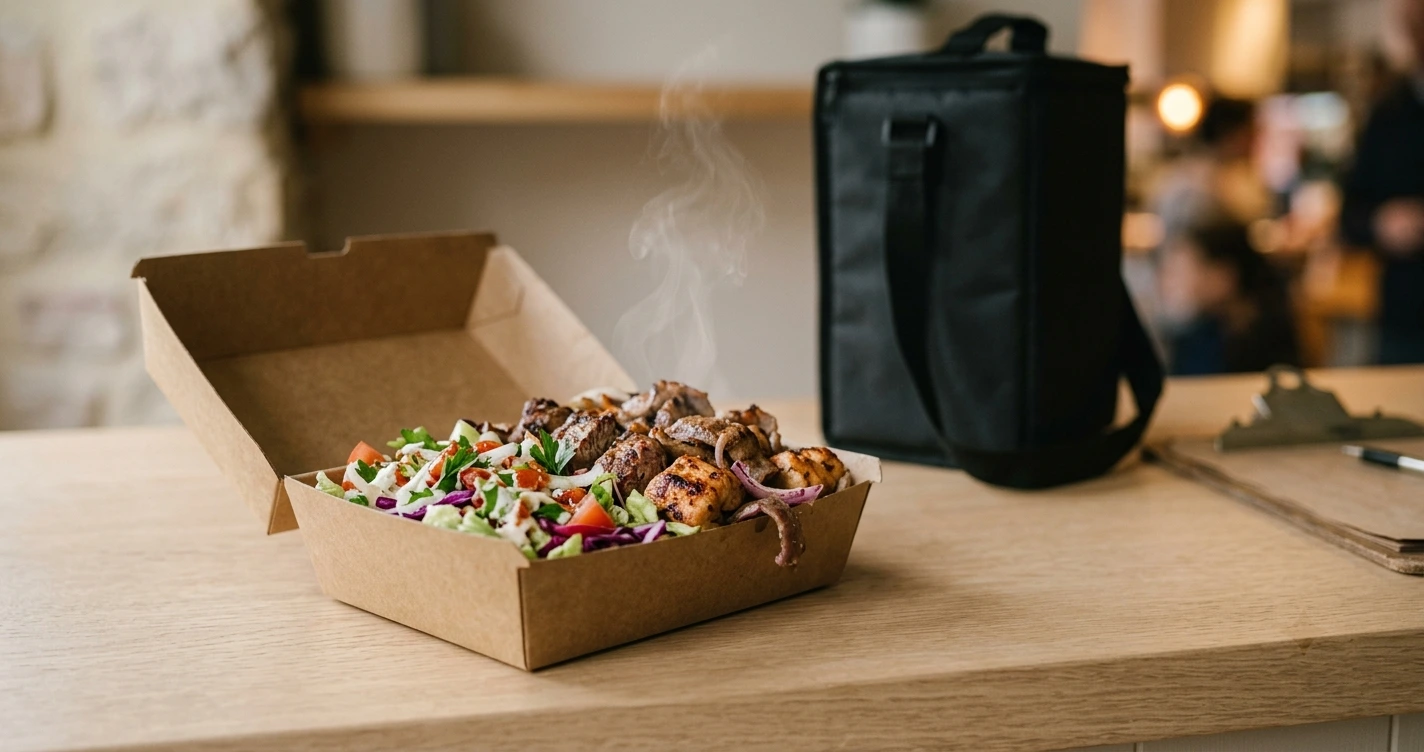
Why Kebab Boxes Go Soggy — a Packaging Guide for Kebab Shops
Grease, steam and the delivery-bag stack: why kebab boxes fail, what PE and water-based coatings really change, and a five-minute test any shop can run before ordering a pallet.
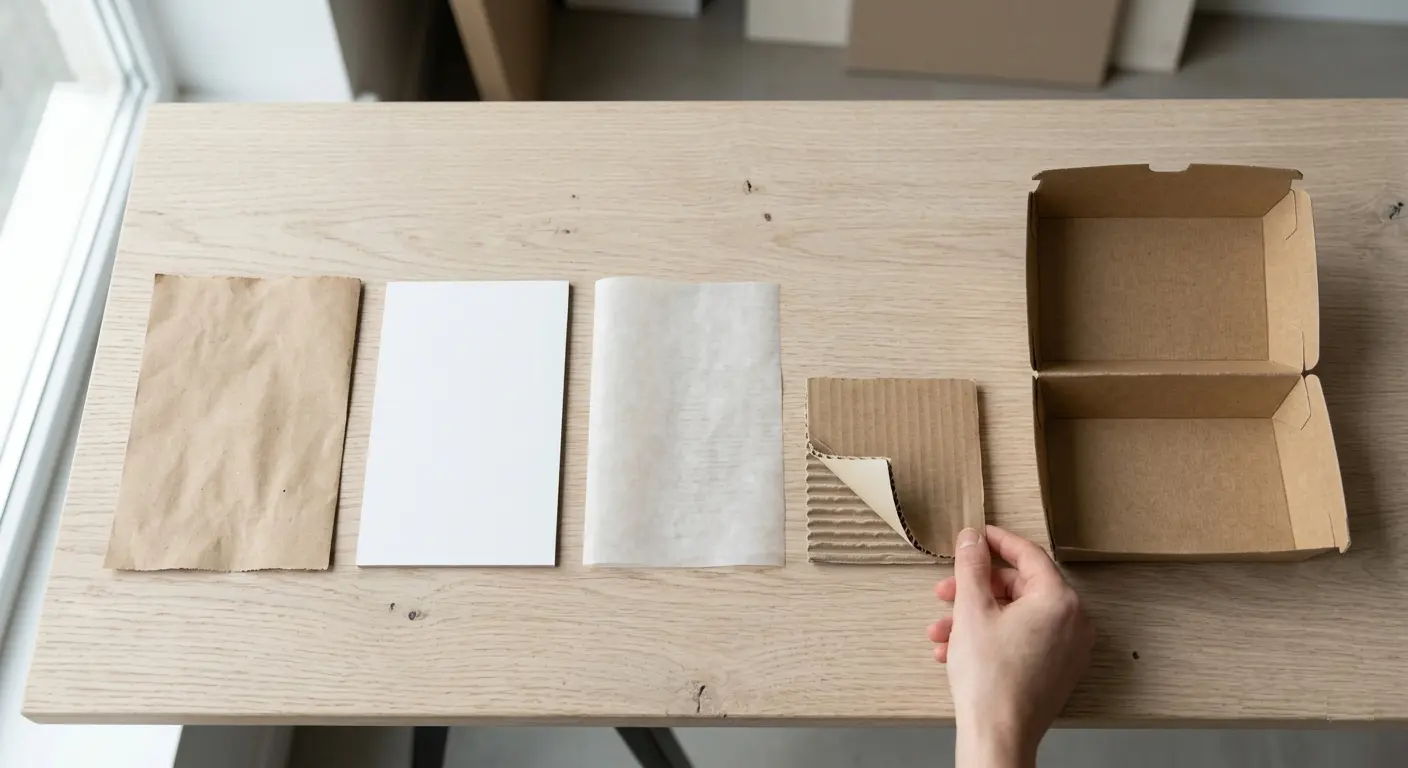
Paper, Grammage and Barriers: Which Material for Which Food
The same box holds a burger perfectly and fails under a curry. The difference is not the board, it is the layer on it. What grammage actually changes, which barrier suits which dish, and how to test material with your own food before you commit.
Pizza Box Sizes Without the Guesswork
The number printed on a pizza box is the inside of the box, not the width of your pizza. Skip the clearance and the first delivery run comes back with cheese stuck to the lid.