Deutsch
 Français
 Türkçe
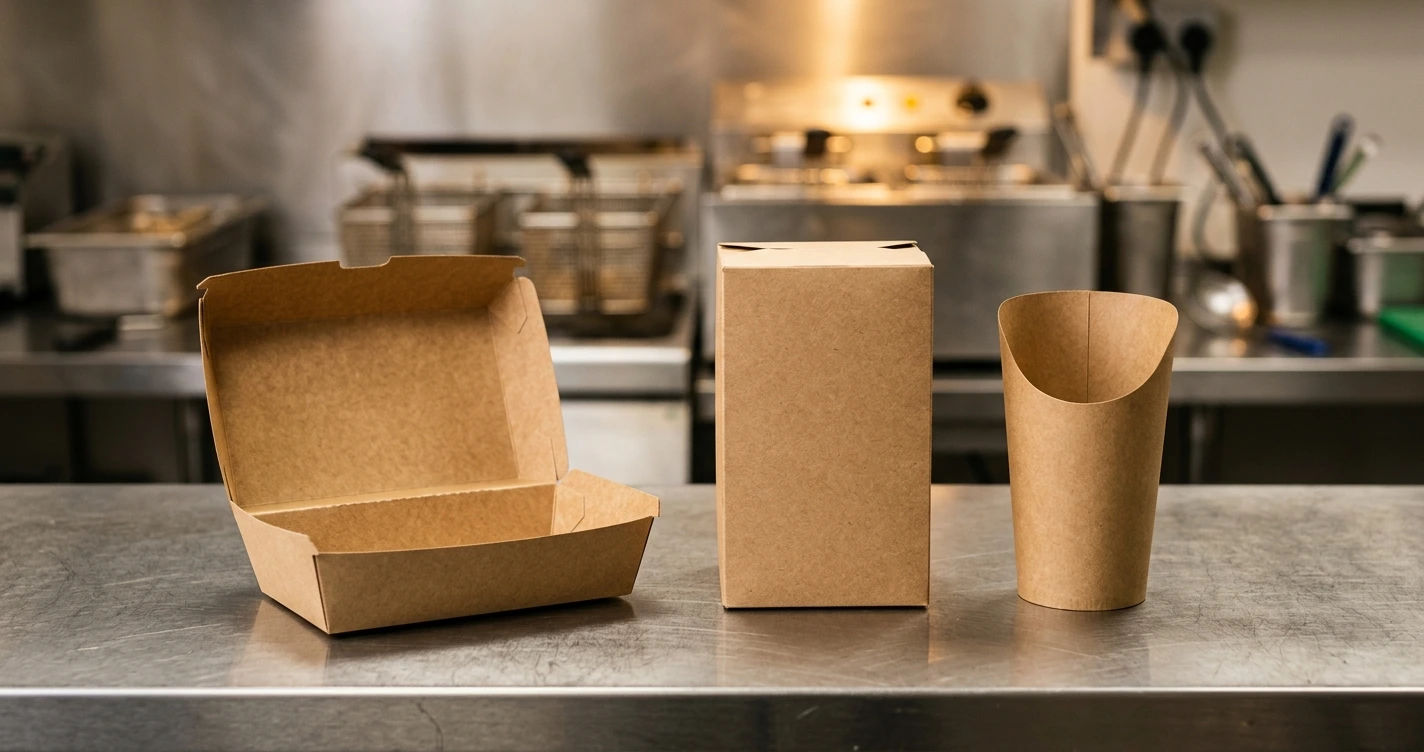
Short answer: on fried chicken the box size is decided by the weight of the portion, what the coating does with its own steam, and whether the food is eaten one-handed. Piece count gives you volume and nothing else. It will not tell you whether the base holds or whether the crust survives the journey.
We are writing this because of a conversation that keeps repeating. A chicken chain calls and asks for a six-piece box. Later it turns out six pieces sometimes means thighs and breast, sometimes wings. Neither the weight nor the volume matches. One sits comfortably in a given box; the other pushes at the lid.
None of the pages you find in a search draw that distinction. There is a size list, there is a heading that says chicken box, and not one line about what is going into it.
What actually sets a fried chicken box size
Three questions, and all three are about the portion rather than the packaging.
- Bone-in or boneless? A bone-in portion weighs more at the same volume and it has sharp ends that press into the base and the corners.
- How long does it stay shut? A box handed over a counter and a box riding twenty minutes in a courier bag do not want the same ventilation.
- How is it eaten? Put on a table and opened, or carried in one hand while walking? That question changes the container type outright.
With those three answered the size list narrows to about three options on its own. Without them it stays twenty lines long and the choice turns into a guess.
Two different geometries sit in the same list
Standard sizes on our chicken boxes run width × length × height, in millimetres:
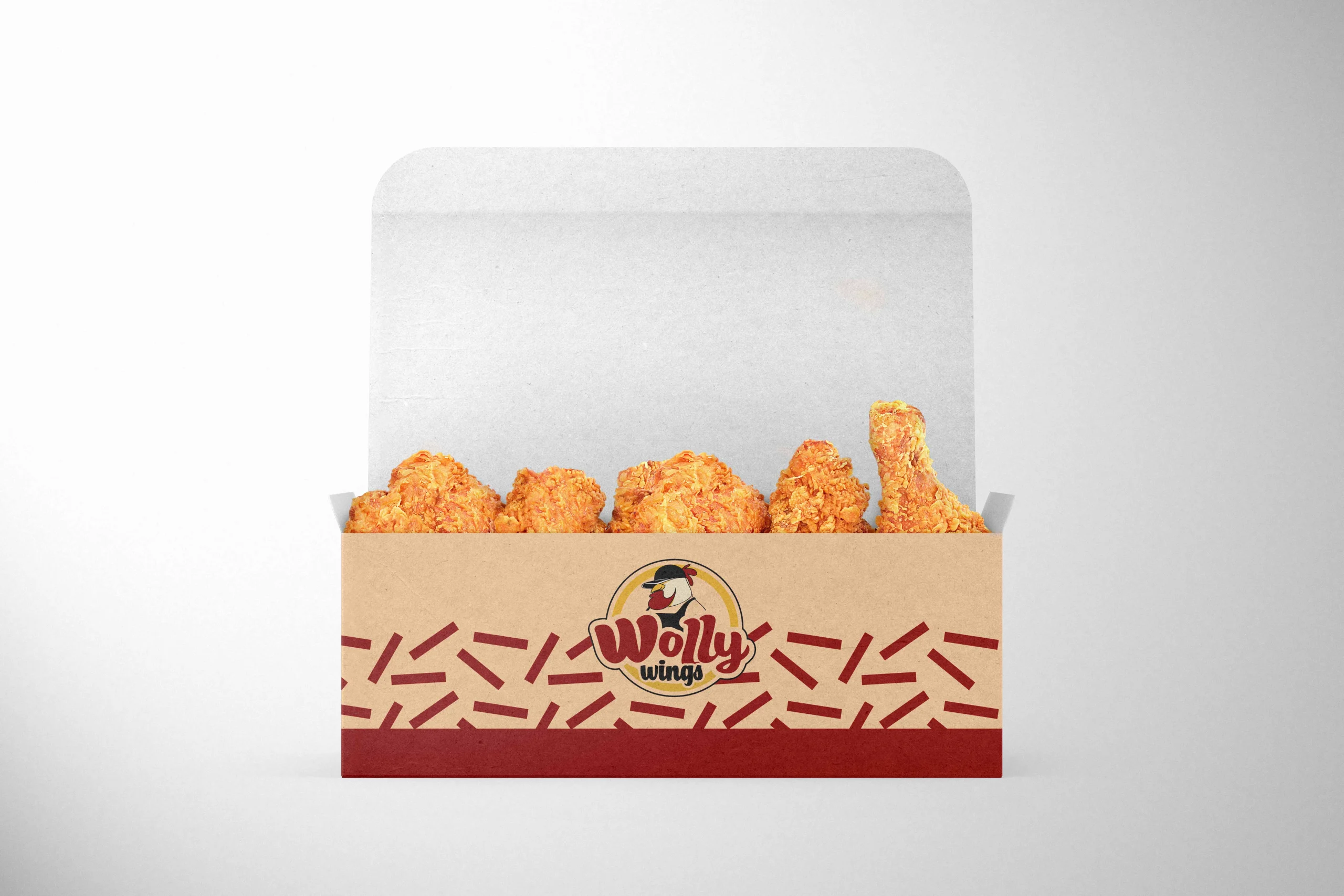
- FC 0: 140 × 84 × 55
- FC 1: 170 × 100 × 65
- FC 3: 220 × 120 × 76
- FC 4: 158 × 158 × 200
The first three grow into one another. The base widens, the height climbs gently from 55 to 76. Shallow boxes, in other words, that lay the portion out flat in front of whoever opens them.
FC 4 is not the next rung on that ladder. It has a square base and stands 200 mm tall, close to three times the height of FC 3. This one holds the portion upright rather than flat. It exists for bucket-style service, shared portions and deeper stacking.
Plenty of operators read four codes, take them for a size sequence, decide to go large and land on FC 4. Then they find the box behaves nothing like the others on a counter. The numbering skipping FC 2 reinforces the impression. The right reading: FC 0, 1 and 3 are one family, FC 4 is a separate format.
What board strength fixes on a bone-in portion, and what it does not
Bone-in chicken puts two separate loads on packaging. One is plain weight. The other is point pressure, where bone ends press into a single spot on the board.
Boxes can be produced in a reinforced board construction for exactly that. The base holds, the corners stay shut, and a box underneath another one in a stack does not crush.
One thing needs saying plainly, because it is the most expensive misunderstanding here: board strength does not fix a soggy base. Reinforcement works against weight, not against moisture. If your base is going soft from grease and condensation, the answer sits in the barrier and in the ventilation rather than in a thicker board. We have watched several operators pay for heavier board and keep the same problem.
Ventilation for coating: the number of holes is not the point
The enemy of fried food is not the cold. It is the steam it produces. Hot coating gives off moisture, that moisture rises inside a closed box, condenses on the ceiling of it and falls back down. The return trip is what ends the crunch.
Controlled ventilation can be added, and the deciding question is short: how many minutes does the food stay shut in? Over a five-minute counter handover, vents earn nothing and cool the food. Over a twenty-minute delivery, the coating does not survive without them.
There is a second factor, and it belongs to filling rather than packaging: depth of stacking. Pile wings three layers deep and the bottom layer eats the steam of everything above it, vented box or not. A shallow, wide box beats a narrow, deep one for that reason. The same physics governs fries in delivery. On chicken the tolerance is narrower, because a thicker coating holds its moisture longer.
Sides do not travel in the main box
A chicken menu is never one item. Fries, onion rings or a side go in a separate container, and that container tends to be an afterthought.
Our food serving trays come in three sizes: 72.5×108×42.5, 85×138×51 and 85×165×50 mm. Something stands out in that ladder. The medium and the large share the same 85 mm width, and the difference between them is length, 138 against 165. Height barely moves, and the large is actually a millimetre lower than the medium.
That lands directly in the courier bag. Both sizes line up side by side at the same width. An operator running two portion sizes sets the bag layout up once and uses it for both.
Food eaten one-handed needs its own container
Where wings, nuggets and strips get eaten without sitting down, an open container works better. The lid-opening step disappears and the steam was never trapped in the first place.
Our snack boxes come in two: top Ø76, bottom Ø51, height 124 mm, and top Ø85, bottom Ø62, height 144 mm. Both are narrow at the base and tall. That proportion is deliberate, since a narrow base sits in a palm and the height carries the portion without spreading it flat.
The limit belongs here too. An open container holds heat less well than a closed box. On a long delivery this is the wrong choice. It is right for customers on foot, festivals, stadiums and counter-front sales, and wrong for a twenty-minute courier route.
Four lines to send before ordering
The list that shortens a quote round stays short:
- A description of the portion: how many pieces, bone-in or not, roughly what weight. Piece count alone will not do it.
- Average and longest delivery time. The ventilation decision comes out of those.
- How it is served: to a table, or in the hand. This sets the container type.
- The sides on your menu. Trays and snack containers are separate lines with their own minimums.
Minimum order is 10,000 units on chicken boxes and serving trays, and 25,000 on snack boxes. Production takes roughly 15 to 20 working days after artwork approval. Planning all three at once puts them on one schedule; run separately they hand you three delivery dates.
When samples arrive, do not judge them empty. Put your own portion in, close it, sit it in a courier bag and leave it fifteen minutes. How the coating comes out and what state the base is in gets answered by those fifteen minutes, not by a specification table.
Frequently Asked Questions
- Is a chicken box sized by piece count?
- Piece count only gives volume, not the whole decision. A bone-in portion weighs more at the same volume and applies point pressure to the board, while a coated product needs steam management. Give the piece count together with whether it is bone-in and a rough weight, and the right size comes out on the first round.
- Is FC 4 simply the large version of the other chicken boxes?
- No, FC 4 is a separate format. FC 0 (140×84×55), FC 1 (170×100×65) and FC 3 (220×120×76) are shallow boxes that hold a portion flat. FC 4 measures 158×158×200 mm, has a square base and stands close to three times taller, built for upright bucket-style service.
- Does heavier board stop a chicken box going soggy?
- No, those are two separate properties. Reinforced board works against weight and against the point pressure of bone ends, not against moisture. If the base is softening from grease and condensation, the answer lies in the barrier and the ventilation; heavier board gives you the same problem in a thicker box.
- Do fried chicken boxes need ventilation?
- Delivery time decides it. In a closed box the moisture from the coating condenses on the underside of the lid and drips back, which ends the crunch, so vents matter on longer runs. Over a five-minute counter handover they simply cool the food. Not stacking pieces too deep matters just as much as the vents.
- What container should sides go in?
- Fries and sides do not travel in the main box; they need their own container. Food serving trays run 72.5×108×42.5, 85×138×51 and 85×165×50 mm, and because the medium and large share the same 85 mm width they line up identically in a courier bag. For wings and nuggets eaten one-handed, open snack boxes work better.
- What is the minimum order on these products?
- Chicken boxes and food serving trays carry a minimum order of 10,000 units, snack boxes 25,000, and each applies separately. Production takes roughly 15 to 20 working days after artwork approval. Planning the three together puts them on a single delivery schedule.
Related Articles
How to Keep Fries Crispy for Delivery: It's the Steam, Not the Cold
Why chips turn soggy on the delivery run, which packaging actually helps — open scoop or vented box — and the 20-minute test any shop can run before committing to a pallet.

What Your Packaging Supplier Needs Before They Can Quote
Three suppliers, three prices, three different bags. Most packaging quotes are unusable because the enquiry described a logo instead of a product. Here is the brief that gets you comparable numbers.
Pizza Box Sizes Without the Guesswork
The number printed on a pizza box is the inside of the box, not the width of your pizza. Skip the clearance and the first delivery run comes back with cheese stuck to the lid.