Deutsch
 Français
 Türkçe
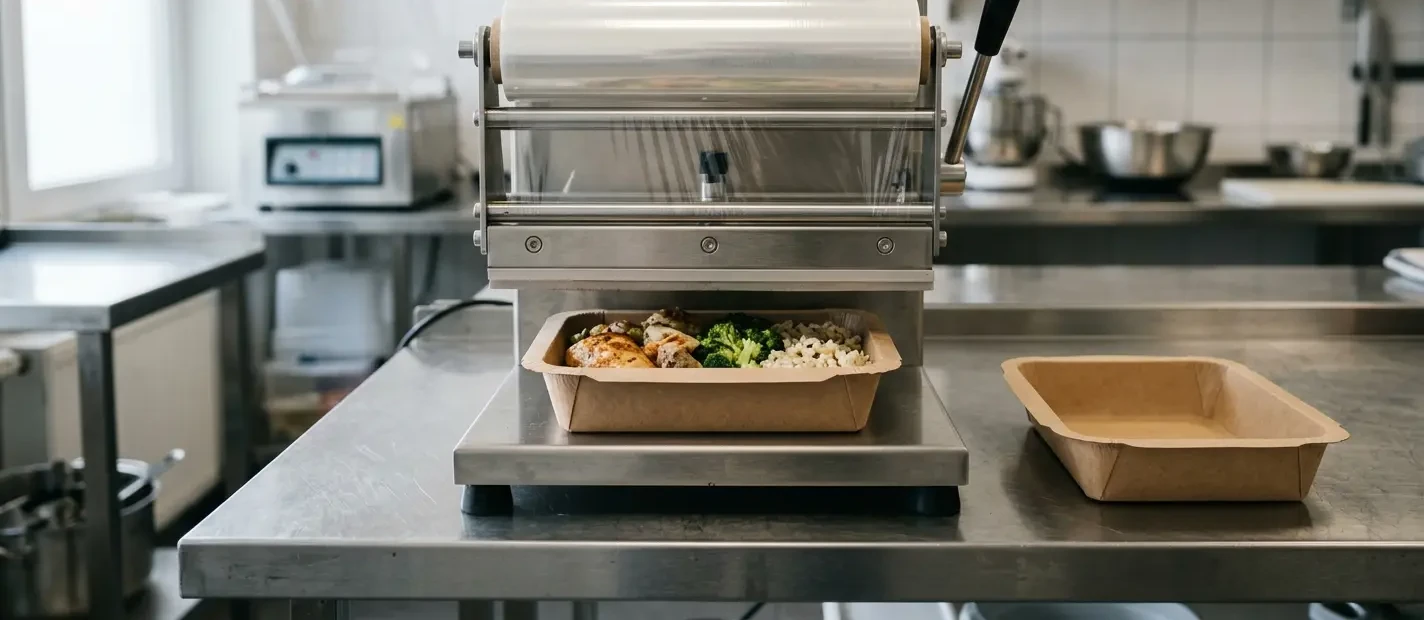
Tuesday morning, end of the line. The sealer runs, the film comes down, the tray comes out. Then someone lifts the corner and the lid does not peel: it takes the top layer of board with it. The sample had been sitting in the office for a fortnight and nobody had run it until today.
Moving from plastic trays to board gets discussed in a meeting as a material change. In production it starts somewhere else, at the sealing tool.
The decision sits in the tooling, not in the tray
Your tray sealer runs a tool cut for the outer profile of the tray you use today. Change the tray and there are two outcomes: the new one drops into that tool, or a new tool has to be made. The gap between those two outcomes matters more than any difference in the board itself.
That is why our first question never changes: make, machine model and tool dimensions. With those three, a supplier can either propose a profile that fits or say plainly that it will not. An observation from our side: most sample requests name the product and not the machine. Yet a sample does not answer a question about board thickness. It answers whether the pack seals on your line.
A benchtop sealer and an in-line machine also ask different questions. On a benchtop, changing tooling is manageable. On an integrated line, changing the tray profile stops being a purchasing matter and becomes an engineering one.
The reasons for switching are rarely technical. Retailers ask, customers ask, and on the plastic side cost and regulation have arrived together. Whatever triggers it, the pattern repeats: the decision is taken upstairs and lands at the end of the line. Which is why the first call from a producer considering board should go to their own engineering team rather than to a packaging supplier.
Lidding film and flange: this is where the seal lives
Sealing happens on a narrow band around the rim, not across the tray. That surface is prepared to bond with film, and not every film bonds to every surface. Get the pair wrong and two faults show up: the lid does not hold at all, or it holds so well that it tears the board surface on opening.
The second one looks like good news and is not. If a customer is left holding a furred rim, the pack fails at the exact moment it was supposed to impress. So the question to ask about the film is not whether it sticks but how it opens. A clean peel and a permanent weld answer two different briefs; say early which one you want.
The flange itself is the quiet variable. Its width, how flat it sits and whether it stays clean during filling decide seal quality directly. A few splashes of sauce on the rim are enough for the film to miss in that spot. That is true of plastic too; on board it simply shows sooner.
The tray does not set the shelf life
The question comes up in nearly every conversation: does shelf life shorten on board? The honest answer is that the tray does not set it alone. That date comes out of the product, the inner barrier, the lidding film, seal quality and the cold chain together. The tray is one link in that chain, not the chain.
In practice it runs like this. You state the number of days you are targeting and the water and fat content of the product, then barrier and film get chosen together. Validation happens with your own product afterwards, and a packaging manufacturer cannot do that part for you, because you are the one who knows the food. How material and barrier actually relate is set out in our guide to paper, grammage and barriers.
If you want MAP, say so in the first sentence
Modified atmosphere makes sealing harder. The tray has to hold shape after gas flushing, the seal has to close along its whole length, and film permeability has to suit the product. All of it is solvable. Raised late, though, solving it means going back and reselecting both tray and film.
So the useful order is: we run MAP, this is our gas mix, our machine can flush. Three sentences at the start of a conversation narrow the options early, and narrow them in the right direction.
One compartment or several
Compartment count is an operations decision rather than a packaging one. A three-compartment tray looks better on shelf and asks for three filling stations, which costs line speed. A single compartment simplifies the line and removes your ability to keep sauce off the side dish.
The number of fill volumes behaves the same way. Holding a size for every recipe makes the range look generous and gets expensive in stock and in minimums. Producers who cover most of the menu with three or four volumes simplify both ordering and filling set-up. Which sizes run as standard and what volume each holds is listed item by item on the heat-seal food trays page. And since every different profile is its own production set-up, compartment count feeds back into the minimum as well.
Where you print moves the minimum
There is a detail here that many producers do not know and that visibly relaxes the conversation. Printing can go on the lid only, the tray only, or both. The minimum order follows that choice: printing the lid alone starts lower than printing both at once.
In practice a lot of businesses take exactly that route. The brand shows on shelf through the lid while the tray stays plain and does its job. Once volumes settle, the tray goes to print as well. It is the most practical way to get a product onto a shelf without committing further than necessary on a first order.
Where board is not the answer
Without this section the piece would be an advert rather than an assessment.
Board will not give you a clear base; if the customer has to see the food through the bottom, the answer lies elsewhere. Where shelf life is very long and barrier demands are high, board alone may not carry it, and every extra layer trims the advantage on the recycling side. Nor is "it is board, so it recycles" automatically true: fibre content, inner coating, lidding film and the sorting system in the destination market decide it together. Board also responds to moisture and impact differently from plastic, and a tray that stays wet for a long time can lose its shape.
We say this because when a switch disappoints, the tray is rarely the problem. The expectation was usually written differently from the product.
What the sample actually has to prove
When the sample lands, do not stop at the board thickness. Give it half an hour at the machine:
- Seal it on your line, with your tooling, using real product at normal fill height rather than water.
- Open the lid by hand and watch whether it peels cleanly or lifts fibres.
- Put a little sauce on the flange deliberately and seal again; that is the daily reality, not the exception.
- Tilt a filled tray and leave it standing; if it leaks, note exactly where on the rim.
- Stack five, move them, then leave them overnight in the chiller.
- Stick a label on the lid and peel it off: does the surface survive it?
Those six steps replace a fortnight of emails. Write the results down and send them with your enquiry, because there is a great deal of daylight between "it did not work" and "the third tray drew air at the right-hand corner".
This is not a decision taken in a meeting room. It is taken in half an hour at the sealer, with ten trays filled from your own production.
Frequently Asked Questions
- Will board trays run on my existing tray sealer?
- Usually yes, and the deciding factor is the tooling rather than the machine. The tool was cut for the profile of your current tray, so the new tray has to drop into that profile. Send the make, model and tool dimensions and the answer comes back in the first exchange.
- Does shelf life get shorter on a board tray?
- The tray does not set shelf life on its own. Product, inner barrier, lidding film, seal quality and cold chain all work together. Give the number of days you are targeting plus water and fat content, and barrier and film are specified around that, then validated with your own product.
- Can board trays be used for modified atmosphere packing?
- Suitable configurations can be evaluated, but the requirement belongs at the start of the conversation. MAP touches shape retention, seal integrity and film permeability at the same time, so raising it late usually reopens the whole selection.
- Can I print only the lid to begin with?
- Yes, and it is a common route. Printing can cover the lid, the tray or both, and the minimum order follows that choice. Printing the lid alone lowers the entry point while still putting the brand in front of the shopper on shelf.
- Does a multi-compartment tray make sealing harder?
- Sealing happens on the flange, so compartment count does not complicate it directly. The effort shows up in filling and in the tooling, since every different profile is a separate production set-up. That makes it a range-planning question rather than a sealing one.
- What size does the sample come in and what does it prove?
- It comes in the standard size closest to your target volume and shows you the board, the shape and how the flange behaves. Seal performance can only be confirmed on your own line, which is why the machine details are worth sending with the sample request.
Related Articles
Food-Grade Packaging: What to Actually Check Before You Order
Food-grade is not a finish line — it is the floor. Here is what really decides whether printed cups, boxes and bags are safe for the food they hold, and the one document worth asking for every time.
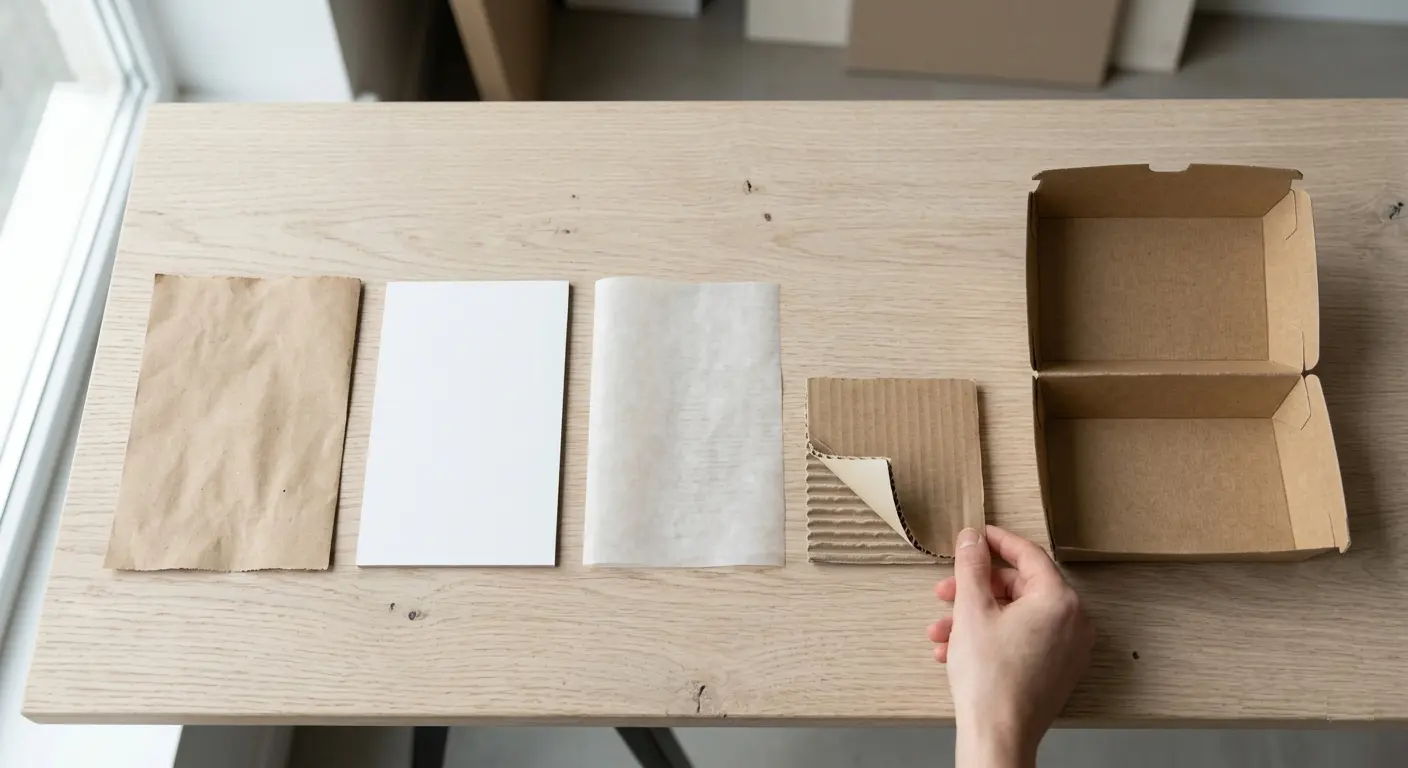
Paper, Grammage and Barriers: Which Material for Which Food
The same box holds a burger perfectly and fails under a curry. The difference is not the board, it is the layer on it. What grammage actually changes, which barrier suits which dish, and how to test material with your own food before you commit.
What Your Packaging Supplier Needs Before They Can Quote
Three suppliers, three prices, three different bags. Most packaging quotes are unusable because the enquiry described a logo instead of a product. Here is the brief that gets you comparable numbers.