Deutsch
 Français
 Türkçe

The lead time line on our product page reads “Approximately 15–20 working days after artwork approval”. The buyer for a bakery chain with 14 shops in Bristol read it on 2 November, counted twenty working days to 30 November, added a week for the lorry and expected the Christmas bags in mid-December. They arrived on 23 December.
Nothing in that sum was wrong except where it started. The twenty working days did not begin on 2 November. They began on 12 November, the day the proof was signed.
The lead time for printed packaging starts at artwork approval; the order, the order confirmation and the payment come before it. With us it is around 10 to 15 or 15 to 20 working days, depending on the product, from the day you sign off the proof or the sample in writing, and transit follows on its own calendar. The figure on the product page is a duration; it becomes a lead time only once it has a starting point. This article shows where that point sits, what happens before it, how production, transit and public holidays in two countries add up, and how to count back from the day the goods must be in the shop to the last possible approval date.
When does the lead time start: order, confirmation, payment or artwork approval?
With us, at artwork approval. A manufacturer can start the clock at four points: at receipt of the order, which few do for printed goods because the artwork is usually still missing; at order confirmation, which is normal for stock items; on receipt of a deposit; or at artwork approval. That is why every lead time on our product pages carries the same wording: “after artwork approval”. The approval day is day zero; the first working day is the next one. Whether a deposit is due before production starts should be written on the quote; if it is, the clock starts on the later of the two days, approval or receipt of payment.
Ask every quote for the starting point, not only the number. “20 working days” from one manufacturer compares with “20 working days” from another only if both start at the same point. A quote that counts from the order has to contain the approval days already; a quote that counts from approval asks you to add them yourself. Both belong on the quote, next to the unit price and the Incoterm.
What happens before approval, and how long does it take?
Between order and artwork approval there are, in our experience, one to three weeks, nearer three on a first order. They appear on no quote because they happen at your end. First the print-ready artwork from your agency or your designer; for a new format the cutter guide comes first, and we send it as a template. Then our file check and the proof, a soft proof on screen or a printed sample, depending on the product and how exacting the colour is. Then the approval, and that is almost always held up at the customer’s end, usually by colour: a Pantone reference missing from the file, an agency on holiday, a director who wants to hold the sample. Which proof binds in the end and what a sign-off should contain is in our article on print approval for packaging.
For the Bristol chain it went like this. Order on 2 November. Artwork from the agency on 6 November, a Friday. Proof from us on 9 November, with a query on the Pantone reference for the red, because the file only carried a CMYK value. Answer and approval on 12 November, a Thursday. The twenty working days begin on the 13th and end on 10 December. Eight working days of approval became eight working days at goods-in. On a repeat order with no change at all the proof falls away; the order confirmation is then the approval and the clock starts on the day of confirmation. A small change, a phone number or a colour, means a few days for a new proof.
What happens in 15 to 20 working days of production?
Plates, material, printing, converting, packing and palletising, in that order and with waiting time in between. The figure on the product page is not machine running time; 10,000 carrier bags go through the press in hours. It is the time an order needs until it has had its turn at every station between other orders. After approval the plates for flexo printing are made, one per colour; the paper is ordered in the specified grammage, with us between 70 and 110 g/m² for carrier bags. Then the printing, from the reel. Then converting: carrier bags are cut, folded, glued and fitted with handles; folding boxes are die-cut, creased and glued; cups are cut and formed. Then counting, boxing, palletising and labelling cartons and pallets.
That explains the difference between our products. Greaseproof bakery bags and wrapping papers have few steps behind the press and sit at “Approximately 10–15 working days after artwork approval”. Paper carrier bags, folding boxes and cups need converting and sit at “Approximately 15–20 working days after artwork approval”; napkins and cutlery sets at around 15. If you order several products, plan with the longest, because the delivery is meant to go on the pallet together; if you would rather not, agree split deliveries and pay for a second shipment. The figures are on every product page, and the page for flat-handle paper bags, the bag in this example, also lists “Custom printed or unprinted production available”; we come back to that at the end.
How many working days does the lorry from Turkey need?
For the UK there is no single door figure. The reference leg to Germany takes around five to seven working days as a full load and seven to ten as groupage; the leg to the Channel, the crossing and clearance come on top. The route runs across the Balkans, Bulgaria, Serbia, Croatia, Slovenia, into Austria and Germany and on to the Channel ports. Goods for the UK are not cleared into the EU; they cross it under transit and are cleared once, in the UK, under the UK–Turkey trade agreement against an origin declaration on the invoice. There is no A.TR for the UK; that certificate belongs to EU consignments. Import VAT can go through postponed VAT accounting on your return, and under EXW your business is the importer of record and your forwarder gives the door date. The figures above are what we see on our own shipments, not a promise.
For Pizza Time and Ben’s Cookies, two customers we supply in France, the figures are 20 working days of production and an average of eight working days of transit. For 10,000 carrier bags, a few pallets, your goods travel as groupage, and the groupage timetable decides the day more than the distance does: the lorry leaves Istanbul for your region on fixed days and the goods are transhipped on the way. If you need a firm goods-in date, ask your forwarder for the departure days before you approve. It is no use being ready on Wednesday if the groupage lorry leaves on Tuesdays.
Which public holidays move the calendar?
In Turkey Eid al-Fitr (Ramazan Bayramı) and Eid al-Adha (Kurban Bayramı); in the UK the bank holidays. Christmas Day and Boxing Day sit right where a December delivery lands. Working days are the same term in both countries but not the same days: production counts Turkish working days, transit counts those on the route, your goods-in counts British ones. The official holiday lasts three and a half days at Eid al-Fitr and four and a half at Eid al-Adha, and both fall about eleven days earlier every year; when a Bayram lands midweek the break is often extended to nine days. Fixed days such as 29 October come on top. Twenty working days across a Bayram are up to a week longer on the calendar than twenty working days in a month without one.
For goods-in your own calendar applies, and a pallet that reaches the depot on 23 December is not in the shops before the 29th. Between the two sits the route, with its own holidays and driving bans. For the Bristol chain there was no Turkish holiday between 13 November and 10 December; an order approved in spring can run into Eid al-Fitr. Ask for the holidays of the production month when you approve; ask for the Bayram dates of the period together with the quote.
The sum: approval + production + transit = goods-in
Goods-in is the approval date plus the production time in working days plus the transit time, and each of the three has its own calendar. For the Bristol chain: approval on 12 November. Twenty working days with no holiday: ready on 10 December, a Thursday. Groupage to Germany seven to ten working days, then the Channel and clearance: at the depot on 23 December. From the depot to the 14 shops: your own distribution, one or two days, across Christmas. Had the approval been on 2 November, the day of the order, the goods would have been ready on 30 November and at the depot around 11 December. The eight working days between order and approval are the eight working days the Christmas trade ran without bags.
For planning you need the sum in weeks, and on a first order with new artwork it looks like this:
- Order to artwork: nought to one week, depending on whether the agency is ready.
- Artwork to approval: one to two weeks, with file check, proof and your signature.
- Production: two to four weeks, 10 to 15 or 15 to 20 working days depending on the product.
- Transit: one to two weeks as groupage to the EU, plus the Channel and clearance for the UK.
- Depot to shop: your own distribution.
On paper that is four to nine weeks, in practice usually six to eight from order to shop; on an unchanged repeat order the first two lines fall away and it is three to six. That is the number to plan a season around. Plan your Christmas, Easter or seasonal trade backwards from the day the goods must be in the shop; an order placed in November for December has lost the approval before the proof arrives.
When it has to be faster: call-off, unprinted stock, split delivery
The production time for printed goods can hardly be shortened; what can be shortened is the time before it and the time after it. Before: artwork with Pantone references ready before the order, one person with authority to approve, approval by email on the day the proof arrives. There is almost always a week in there. After: a call-off from a framework agreement under which your annual volume is already made and a call-off is a loading, not a production; how that is agreed is in our guide to a framework agreement for printed packaging. Or a split delivery of the first pallets, with a second shipment. Or the unprinted version, for which our product page lists “Custom printed or unprinted production available”: plates and approval fall away, the production itself remains.
One limit follows from the sum itself: a printed run that has to stand at your goods-in within a week cannot be planned, because production alone takes two to four weeks. An order that arrives in November for 1 December gets the same 15 to 20 working days plus transit as any other. Four things to have in writing before you approve: the starting point of the clock; whether a deposit sits in between; the holidays of the production month; the departure days of your forwarder. Tell us the day the goods must be in the shop, the product, the quantity and the delivery address; ask for the last possible approval date in writing with the quote.
In short
- The lead time for printed packaging at Bas Packaging starts at artwork approval; the approval day is day zero, and the order and its confirmation come before it.
- Greaseproof bakery bags and wrapping papers take around 10 to 15 working days, paper carrier bags, folding boxes and cups around 15 to 20, each after artwork approval.
- Between order and approval there are, in our experience, one to three weeks; on an unchanged repeat order the proof falls away.
- Transit to Germany takes around five to seven working days as a full load and seven to ten as groupage; for the UK the Channel and clearance come on top, under the UK–Turkey agreement with an origin declaration and no A.TR.
- Production counts Turkish working days: Eid al-Fitr and Eid al-Adha fall about eleven days earlier every year and lengthen twenty working days by up to a week on the calendar.
- Goods-in = approval date + production time + transit; from order to shop a first order takes six to nine weeks.
Frequently Asked Questions
- When does the lead time for printed packaging start?
- With us at artwork approval, the day you sign off the proof or the sample in writing; the approval day is day zero and the next working day is day one. The order and the order confirmation come before it and do not count towards production time. Whether a deposit is due before production starts is written on the quote; if it is, the later of the two days applies.
- Why do bakery bags take 10 to 15 working days and carrier bags 15 to 20?
- Because the operations differ. Greaseproof bakery bags and wrapping papers run from the reel in flexo with few steps behind the press, with us around 10 to 15 working days. Paper carrier bags, boxes and cups need cutting, folding, gluing or forming and sit at around 15 to 20 working days. Both figures count from artwork approval.
- How long does transit from Turkey to the UK take?
- For the UK we quote no door figure; the reference leg to Germany takes around five to seven working days as a full load and seven to ten as groupage, and the Channel crossing and UK clearance come on top. Goods for the UK cross the EU under transit and are cleared once, in the UK, under the UK–Turkey agreement against an origin declaration on the invoice; there is no A.TR for the UK. Under EXW your forwarder gives the door date and your business is the importer of record.
- Which public holidays lengthen the production time?
- The Turkish ones. At Eid al-Fitr (Ramazan Bayramı) and Eid al-Adha (Kurban Bayramı) the official holiday lasts several days, and both fall about eleven days earlier every year; fixed days such as 29 October come on top. Twenty working days across a Bayram are up to a week longer on the calendar than twenty working days in a month without one. Ask for the holidays of the production month when you approve.
- How do I get the goods sooner?
- Shorten the time before and after production. Before: artwork with Pantone references ready before the order, one person with authority to approve, approval by email on the day the proof arrives. After: a call-off from a framework agreement under which the goods are already made, or a split delivery of the first pallets. The production time itself can hardly be shortened for printed goods.
Related Articles

Framework agreement for packaging: call-offs, stock, leftovers
A framework agreement does not lower the minimum run; it spreads it over twelve months. Whoever does not call off still buys in the end, and whoever leaves the leftover unregulated pays for the next menu change with a pallet. What the agreement settles and what only the call-off does, why the supplier prints the annual volume in one run, who stores and bears the risk, how many call-offs a chain needs and which lead time the contract actually means.
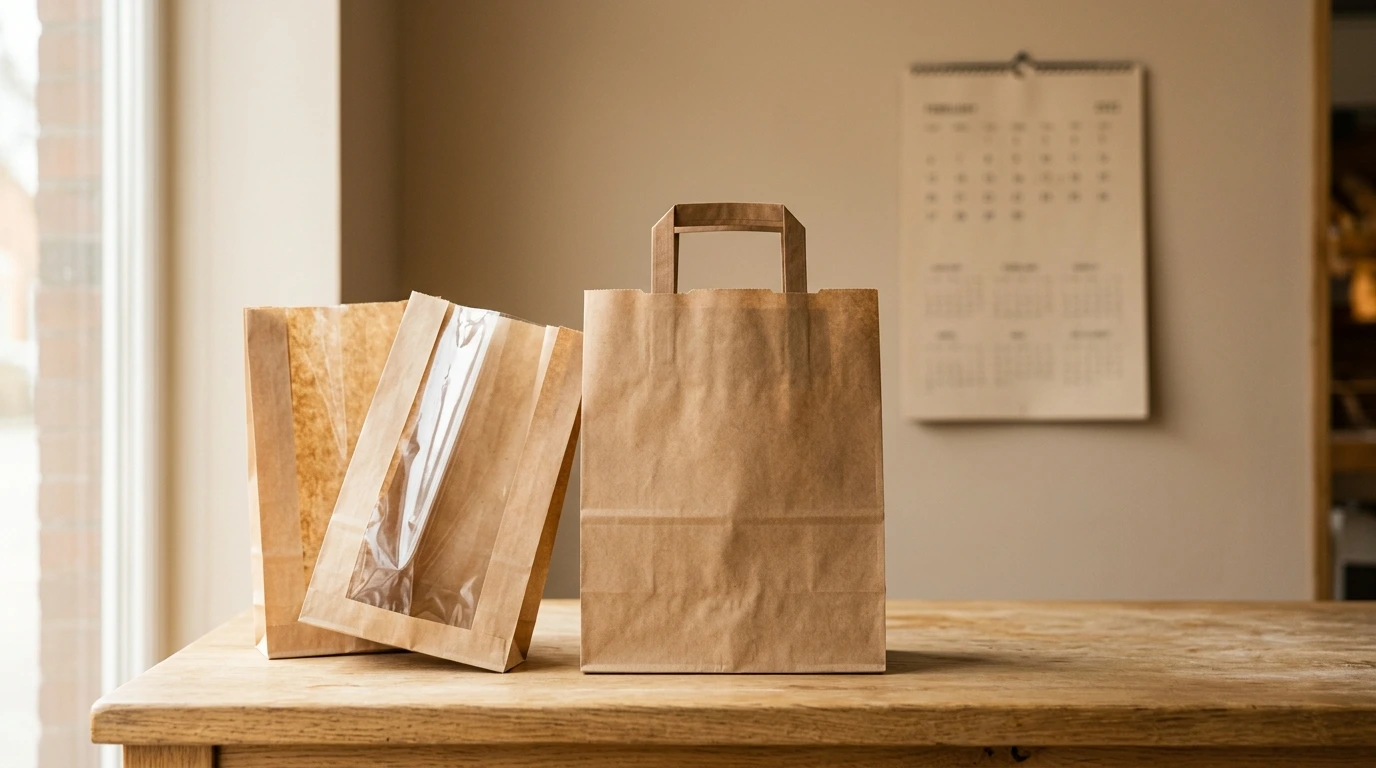
Planning Seasonal Packaging Backwards
On a seasonal line the date that matters is not when you order, it is the day the stock has to be on the shelf. Count back from there and the last sensible order date moves forward by weeks.
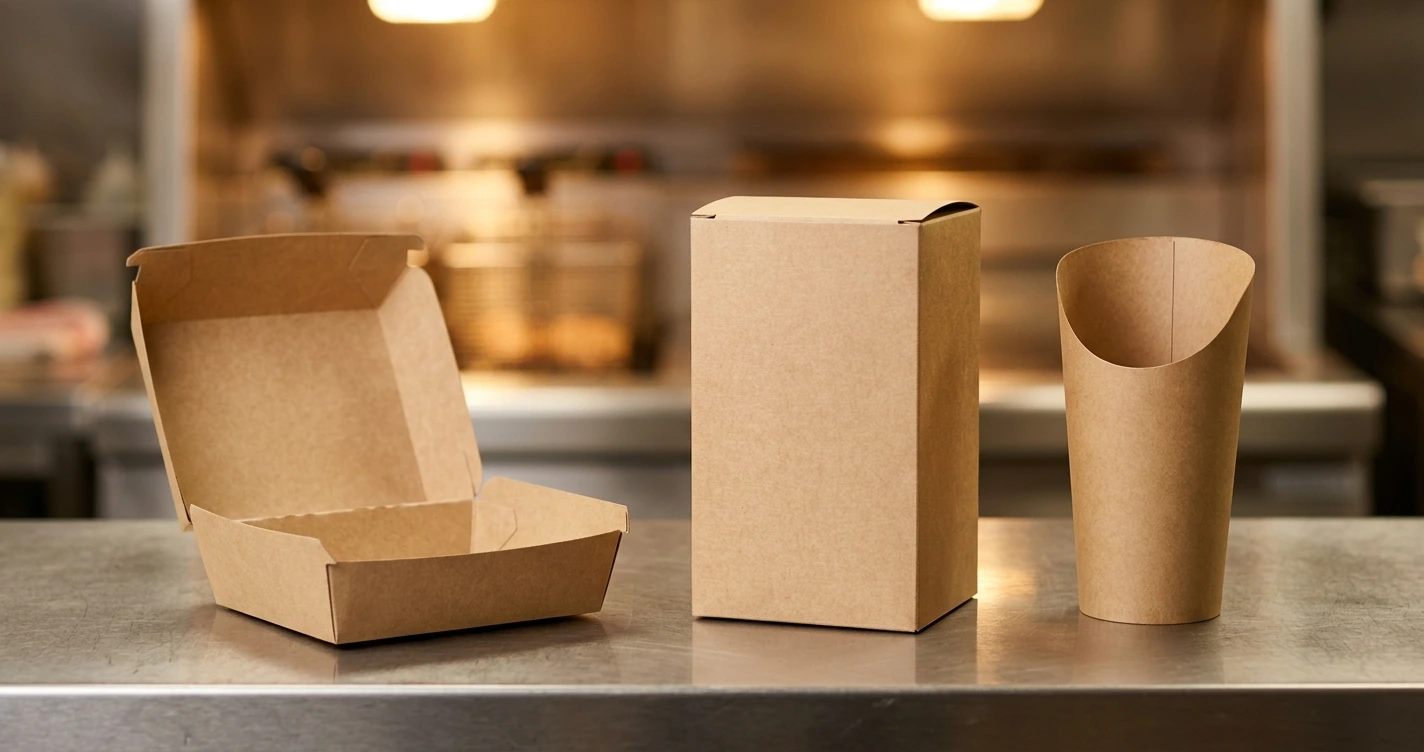
Print approval for packaging: which proof actually binds?
The approval PDF binds position, size and content; it does not bind colour. Whoever signs off printed packaging for a chain therefore signs not once but four times: soft proof, contract proof or press proof, first-article sample, limit sample. What each stage states, who signs where in the chain, what still holds on a repeat order and why a paper wrapper needs an approval of its own.