Deutsch
 Français
 Türkçe
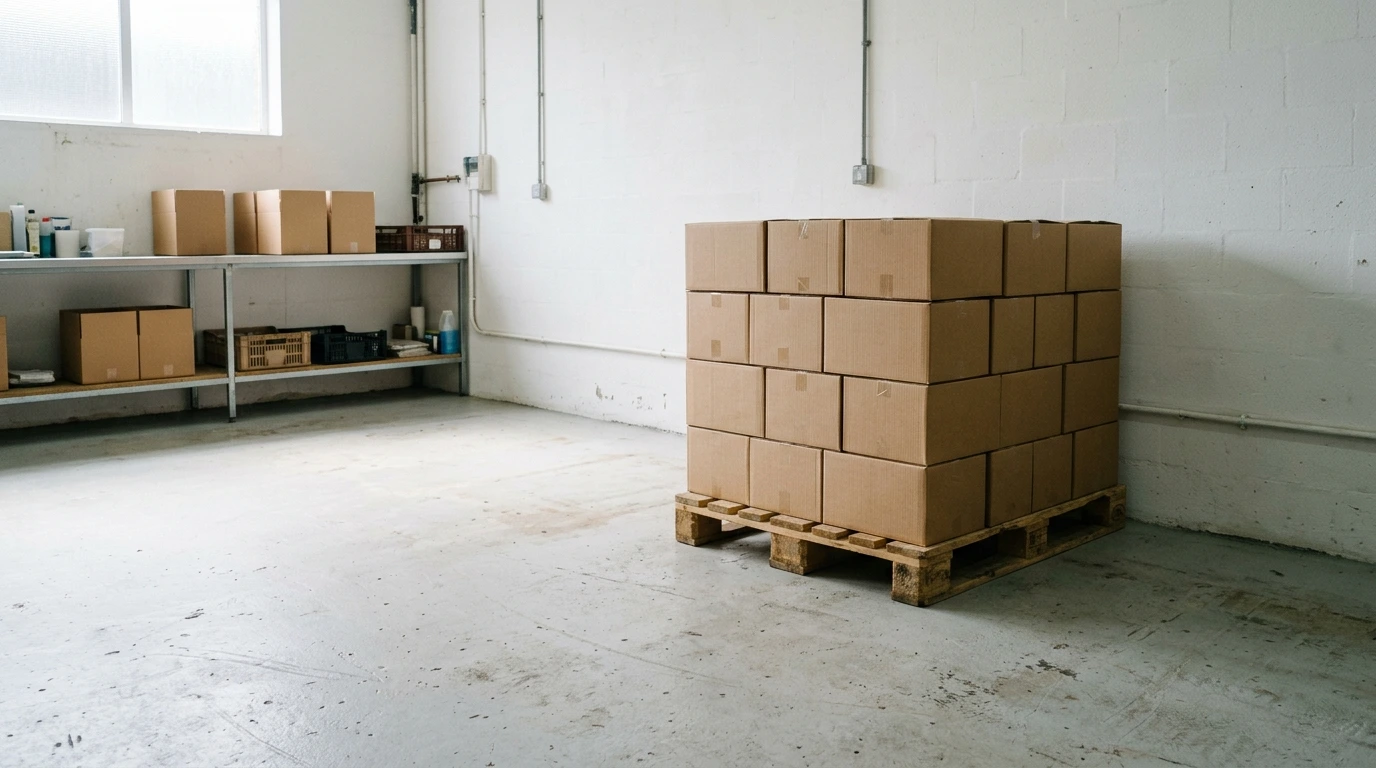
Short answer: the most common reason a business does not order direct from a manufacturer is not the MOQ itself. It is not knowing where the pallet will stand. That question can be worked out before you order rather than guessed at.
A Monday morning in the yard, the lorry pulls up, and suddenly there is a pallet in the corridor that cannot stay there. The chiller is full, the shelf is full, and the goods have to go somewhere anyway. Anyone who has lived through that orders less next time than they actually needed.
The reflex afterwards is always the same and usually expensive: smaller quantities from a wholesaler, more often, on different terms. The decision is not really made against the manufacturer. It is made against a number nobody worked out.
Plenty gets written about minimum quantities, nearly all of it from the production side. What almost nobody writes down is how much floor space a minimum quantity actually takes, and how long the material is allowed to sit there. That is what this piece is about.
Why 10,000 units tells you nothing about space
Unit count says almost nothing about volume. Two items with the same minimum can differ in the stockroom by a factor rather than a percentage.
What decides it is the construction, and three classes cover it:
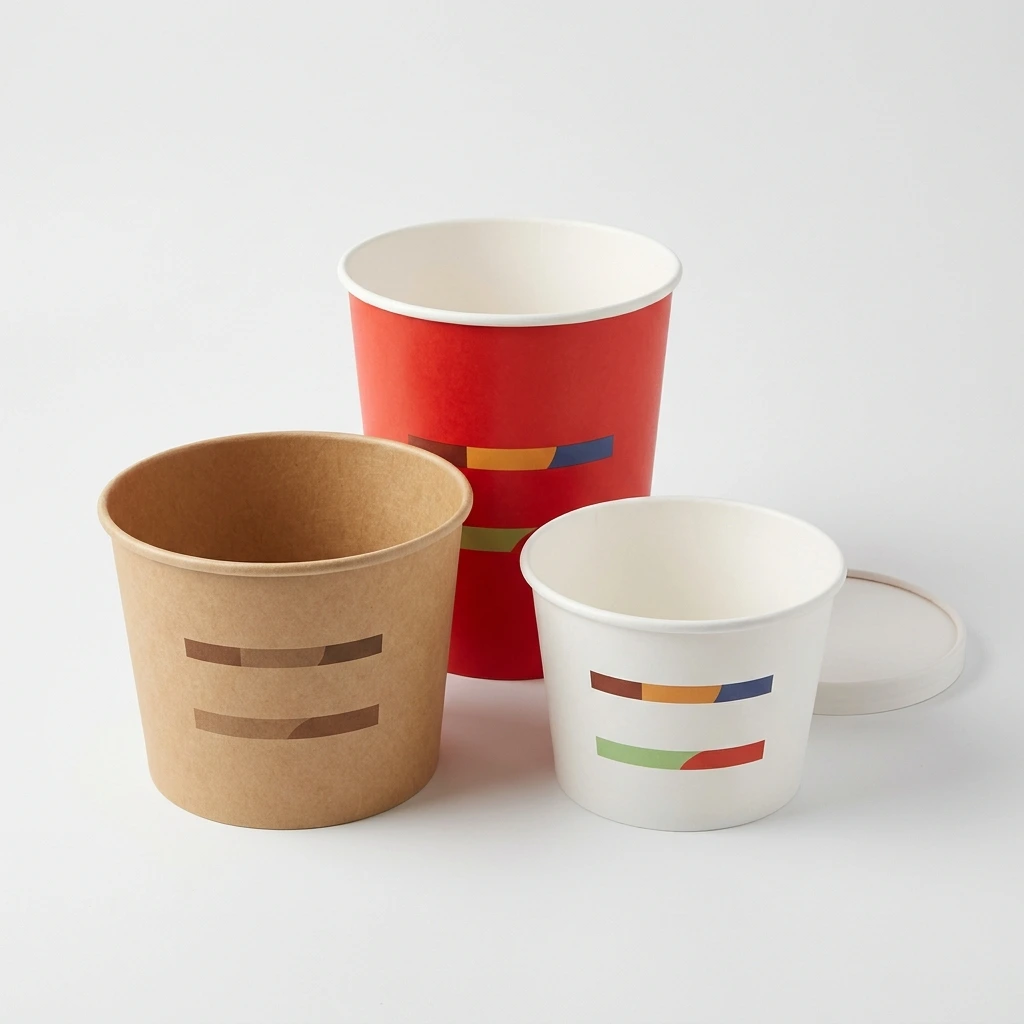
- Nesting: cups and bowls sit inside one another. Ten thousand take up remarkably little, because each piece adds only a few millimetres to the stack.
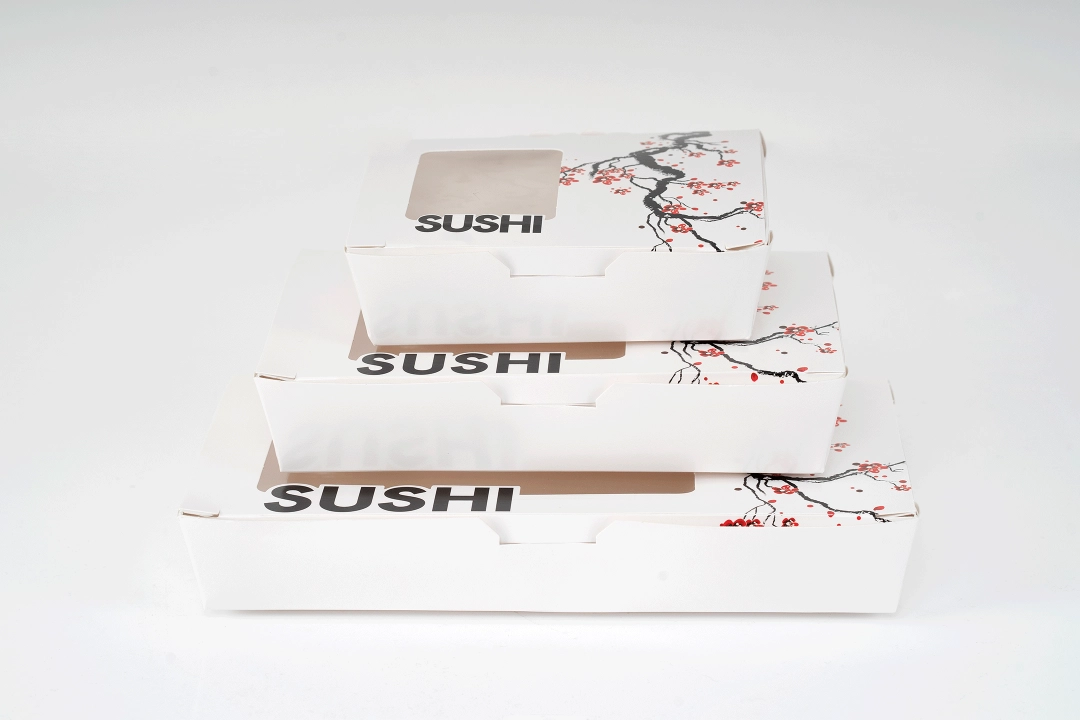
- Delivered flat: folding cartons arrive as blanks and get erected on site. Bags lie flat too. This is the most space-efficient form per unit of usable volume.
- Already formed: anything that arrives in its final shape and will not nest. Here you transport air and then store air.
On sauce and dip cups the property is stated on the data sheet: designed for tight nesting and efficient storage at high throughput. That explains something which sounds contradictory at first. The line with the highest minimum in the range is among the most space-efficient, because fifty cups stacked stand barely taller than ten.
The reverse holds too. An item with a low minimum can load your stockroom more heavily than one with a high minimum. Anyone reading only the unit count is planning against the wrong quantity.
The spread runs wide inside a single group as well. On kraft food boxes the folding construction is on the data sheet: the blank arrives flat and is erected in the kitchen. The same quantity of the same box takes several times the room once erected. Measure the space against the finished container rather than the delivery and you will conclude that ordering direct is impossible, while being out by an order of magnitude.
The pallet as a unit of arithmetic
You do not need software for the estimate. You need two dimensions and a multiplication.
A Euro pallet has a footprint of 1,200 × 800 mm; the UK standard pallet runs 1,200 × 1,000 mm. In practice stacks go to roughly 1.8 m. Depending on carton size that gives anywhere between eight and well over two hundred outer cartons per pallet, and that spread alone shows how little a unit count reveals.
The sum you can do yourself has three lines. How many units in an outer carton? How many outer cartons on a pallet? And how many pallets does my order quantity make? The first number is printed on the carton or comes from the supplier. The other two follow.
Translated into the building, that is something very ordinary: a pallet needs about a square metre of standing room, plus space to get at it. Lay that square mentally across your corridor and you know in two minutes whether an order quantity is realistic.
Two numbers are worth writing into the ordering folder, because they do not change: units per outer carton and outer cartons per pallet for the lines you run. Note them once and every future order quantity takes two minutes to check. In most businesses this is a half page nobody has written.
One side effect gets underestimated. Part-used pallets cost more floor space than full ones, because they can no longer be stacked. Two half pallets occupy the footprint of two whole ones. If space is tight, finish one pallet before breaking into the next.
How long can paper actually sit?
There is no fixed maximum storage life, but there are conditions under which board ages and conditions under which it barely does.
Around 15 to 20 °C and relative humidity below 60 per cent count as favourable. More important than the absolute figures is that they hold steady: fluctuating temperature encourages condensation, and condensation softens board and attacks adhesives. Direct sun is the second enemy, because UV makes the material brittle.
Which means the usual overflow spots are the worst ones. The corridor by the back door where cold air sits in winter. The outside wall where moisture settles. The shelf by the window, because that is where there happened to be room.
Two rules deal with most of it, and both cost nothing:
- Not directly on the floor. A pallet or a rack underneath keeps rising damp off and makes access harder for pests.
- Not against an outside wall. A hand's width of clearance is usually enough to keep condensation off the stack.
Printed stock deserves more care than plain. Colours fade in direct sun, and artwork that looks different after eight months on a window shelf than the new delivery shows up immediately on the counter. Store printed lines at the back and neutral stock at the front.
There is an order to it as well. Packaging that came first should be used first, not because paper spoils but because otherwise a remnant sits at the back of the stack and quietly becomes an old version of your own artwork. A date in pencil on the outer carton solves that more cheaply than any system.
Hold those conditions and paper packaging keeps for months without trouble. Fail to hold them and it is better to call off smaller quantities more often, even where the unit rate looks worse. A pallet that has gone wavy by spring was never cheap.
Goods-in matters more than the stockroom
Here is a point that rarely comes up in buying conversations and regularly comes up in hygiene inspections.
Pests often enter a business on transport packaging: on outer cartons, crates and pallets that have been in someone else's warehouse. When a suspect carton is spotted at delivery, the problem gets solved at the door rather than later in the stockroom.
The routine that works is unspectacular. Outer cartons get opened where the goods arrive, not where they are used. The outer stays outside, the contents come in. That separates two worlds which otherwise share a shelf.
For order quantity this carries an uncomfortable truth. The bigger the delivery, the more space you have to keep clear for exactly this operation. A business with nowhere to unpack unpacks in the corridor, and then the outer carton ends up inside after all.
The question almost nobody asks
And now the point where the whole sum can change. The minimum is a production quantity, not a delivery quantity.
Production runs in one go because the tooling gets set up once and the machine started once. Whether the finished goods then travel to you in one delivery or several is a separate question, one of logistics and of storage at the supplier rather than of production.
That question almost never appears in an enquiry. Businesses weigh the minimum against their shelf metres, arrive at an impossible answer and go to a wholesaler for smaller lots. The detour grows out of an assumption that was never tested.
So ask explicitly whether a staged delivery is possible and on what terms. The answer depends on the item, the quantity and the supplier, and it may well be no. But a no you know is a planning basis. An assumption you never voiced is not.
What the answer depends on is fairly predictable, incidentally. The larger the quantity, the more standard the item and the more regular your call-offs, the more likely something can be arranged. For a one-off special in a small quantity, storage at the supplier costs more than storage at your place, and the answer turns out differently. Understanding that lets you ask a sharper question and get a sharper answer.
On pizza boxes the effect is especially visible, because the construction is delivered folded and erected on site. Stacked flat, a substantial quantity fits into one outer carton; erected, the same quantity would take several times the room. Plan such items by their erected size rather than their delivered size and you will misjudge in the wrong direction.
What to settle before you order
Five details turn an estimate into a calculation, and all five arrive in one message:
- How many units per outer carton, and what are that carton's outer dimensions?
- How many outer cartons per pallet at normal stack height?
- Does the item arrive flat or formed?
- Is a staged delivery possible, and what changes if it is?
- Are there storage notes for the material beyond dry and dark?
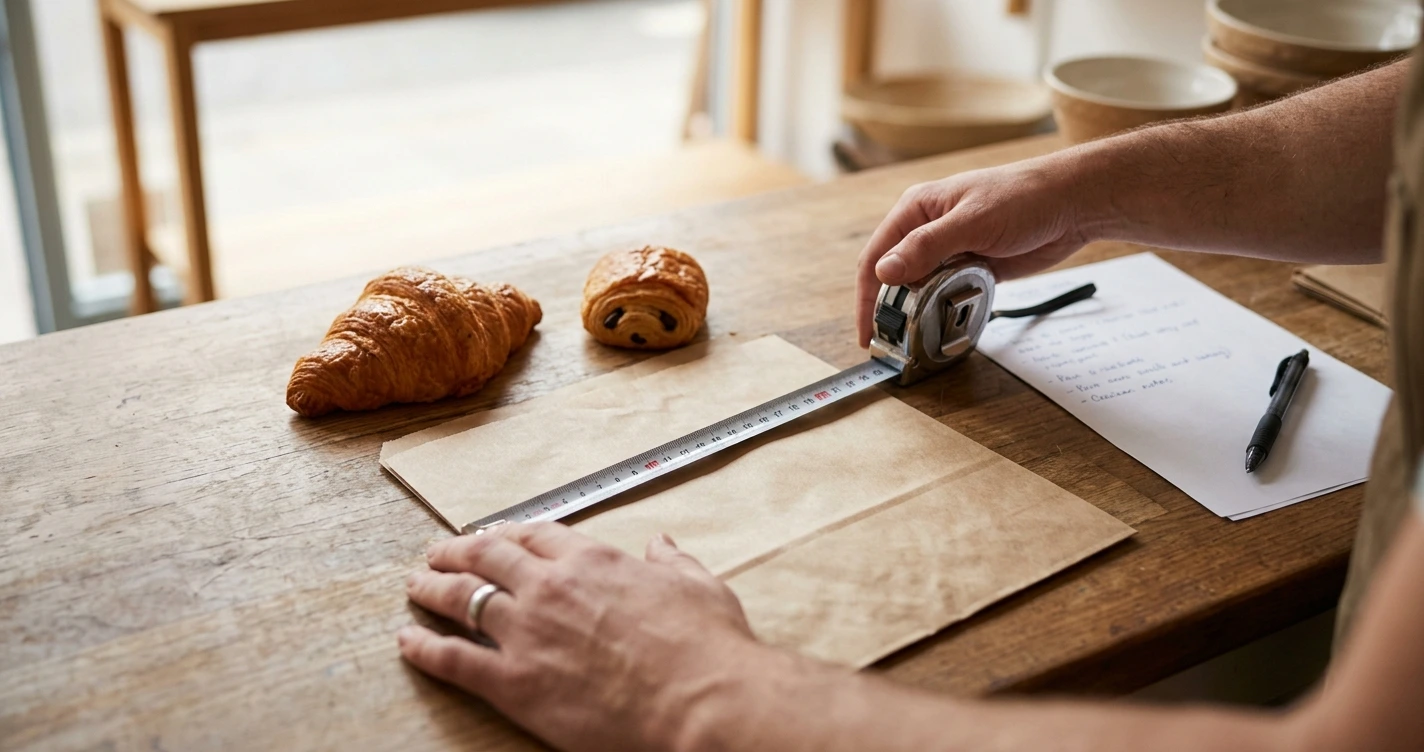
Take the answers into the corridor with a tape measure before you commit. Two minutes at the spot where the pallet will actually stand beats any spreadsheet, and it surfaces the obstacles no data sheet carries: the door width, the step at the entrance, the radiator on the wall.
With those five answers, "that would never fit here" becomes either a workable number or a reasoned decision to order differently. Either beats the gut figure most enquiries start from. One note on framing: this describes practice from a manufacturer's perspective rather than your own calculation. What fits in your corridor depends on your measurements. A tape measure in the corridor answers it in five minutes; the lorry takes weeks.
In short
- Unit count says almost nothing about space; construction decides it — nesting, delivered flat, or already formed.
- A Euro pallet measures 1,200 × 800 mm and the UK standard pallet 1,200 × 1,000 mm, with stacks typically to 1.8 m and between eight and over two hundred outer cartons on top.
- Part-used pallets take as much floor space as full ones, because they can no longer be stacked.
- Around 15 to 20 °C and under 60 per cent humidity are favourable, and holding steady matters more than the figures themselves.
- Packaging belongs off the floor and away from outside walls, partly because pests arrive on outer cartons.
- The minimum is a production quantity rather than a delivery quantity, and whether it can be delivered in stages is almost never asked.
Frequently Asked Questions
- How much space does 10,000 units of packaging take?
- That depends on the construction rather than the count. Nesting cups and flat-delivered folding cartons need a fraction of the room that already-formed items do. For a usable figure you need units per outer carton and outer cartons per pallet.
- How do I work out the space an order will take?
- In three steps: units per outer carton, outer cartons per pallet, and from that the number of pallets. A Euro pallet measures 1,200 × 800 mm and the UK standard pallet 1,200 × 1,000 mm, with stacks usually going to about 1.8 m.
- How long can paper packaging be stored?
- There is no fixed maximum; the conditions decide. Around 15 to 20 °C and relative humidity below 60 per cent count as favourable, and steadiness matters more than the numbers. Fluctuating temperature encourages condensation, which softens board and attacks adhesives.
- Why should packaging not sit on the floor?
- Because of damp and pests. A pallet or rack underneath keeps rising moisture off and makes access harder. Clearance from outside walls matters for the same reason, since condensation settles there and draws into the stack.
- Does the whole minimum have to be delivered at once?
- Not necessarily. The minimum is a production quantity, because tooling and machine are set up once; delivery is technically separate from that. Whether a staged delivery is possible depends on item, quantity and supplier, and it is worth asking explicitly in the enquiry.
- Where do stockroom pests usually come from?
- Often on transport packaging from other warehouses, meaning outer cartons, crates and pallets. That is why it pays to open outer cartons where goods arrive and take only the contents further in. Anything suspect then shows up at the door rather than later on a shelf.
Related Articles

Framework agreement for packaging: call-offs, stock, leftovers
A framework agreement does not lower the minimum run; it spreads it over twelve months. Whoever does not call off still buys in the end, and whoever leaves the leftover unregulated pays for the next menu change with a pallet. What the agreement settles and what only the call-off does, why the supplier prints the annual volume in one run, who stores and bears the risk, how many call-offs a chain needs and which lead time the contract actually means.
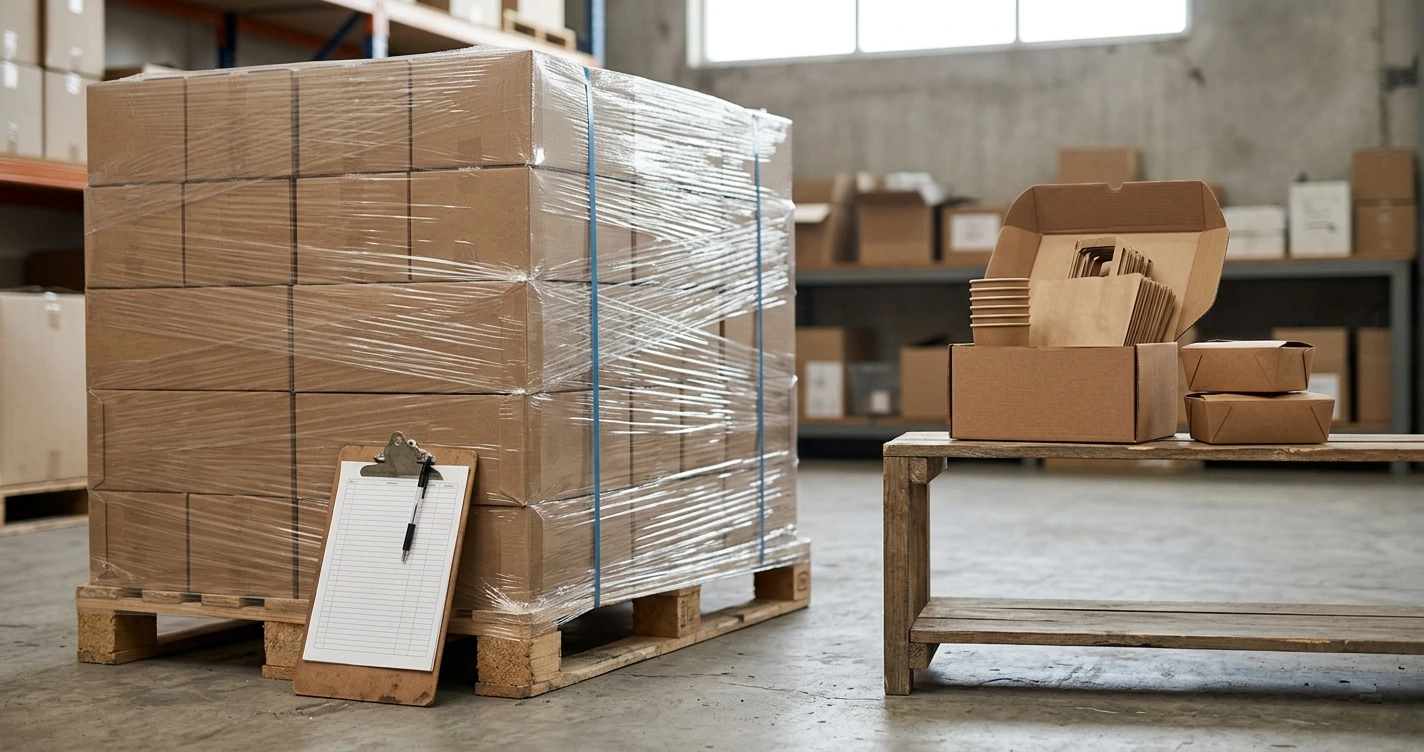
Packaging: Buy Direct From the Manufacturer or Through a Wholesaler?
The cash and carry is convenient and the manufacturer is cheaper per unit, which makes them look comparable. They are not. When going direct genuinely pays, why minimum quantities exist, and the split most operators never think to ask for.
What Your Packaging Supplier Needs Before They Can Quote
Three suppliers, three prices, three different bags. Most packaging quotes are unusable because the enquiry described a logo instead of a product. Here is the brief that gets you comparable numbers.
Planning Seasonal Packaging Backwards
On a seasonal line the date that matters is not when you order, it is the day the stock has to be on the shelf. Count back from there and the last sensible order date moves forward by weeks.