Deutsch
 Français
 Türkçe
Short answer: if there is a polymer anywhere in the build, paper packaging stops counting as paper in several European markets. What decides the classification is not what the pack is mostly made of, but whether plastic is present at all. A thin lacquer or an inner layer you cannot see is enough to change the answer.
The mistake we hear most often sounds reasonable enough: it is paper, so it is fine. That reading has become expensive, because obligations now attach to the presence of a polymer rather than to the proportion of one.
Search for this and almost everything you find is written for consumers. Which bin does the bakery bag go in? For the business that orders the same bag and answers for it, hardly anyone writes it down. That is the gap this piece fills, from a producer's point of view rather than as legal advice.
Why coatings are there in the first place
Coatings are not decoration. They do three jobs paper cannot do on its own.
- Holding back grease and moisture: so the product does not come through and the base does not soften.
- Heat sealability: the plastic layer melts under heat and gives a tight seal. Without it a great deal simply cannot be closed.
- Tear resistance: in a laminate the plastic component stabilises the paper and makes it less prone to mechanical failure.
That is why a large share of food-facing paper packaging carries a plastic component, usually without anyone having asked for it by name. So the question is not whether coating is bad. It is whether you actually need it on this product.
What changes the moment a polymer is present
For a German customer, three separate things change at once, and few people connect them.
The single-use plastic fund. Germany's scheme covers to-go food containers, drinks cups and flexible packaging including bags. On bags and film the levy falls on whoever fills them and hands them to the end customer, which means the bakery, the butcher or the takeaway itself rather than the paper supplier. The charge is calculated on the weight placed on the market and reported annually.
The obligation to offer reusables. It bites on single-use plastic containers and cups. Plain paper packaging with no plastic component stays outside it, as long as there is no plastic lid and no plastic lamination. Board cups for drinks routinely contain a plastic component and therefore fall inside.
Disposal. A coated bag does not belong in organic waste and often does not go cleanly into paper collection either. That is the point at which customers ask, and staff need an answer.
Which of those actually binds whom depends on company size and on who first places the goods on the market. Settling that is a matter for your own advisers rather than for us. The material question, though, is ours, and until it is answered everything downstream is guesswork.
The two-minute test on the sample
Before you go near a datasheet, work on the sample in your hand. Three checks usually sort it.
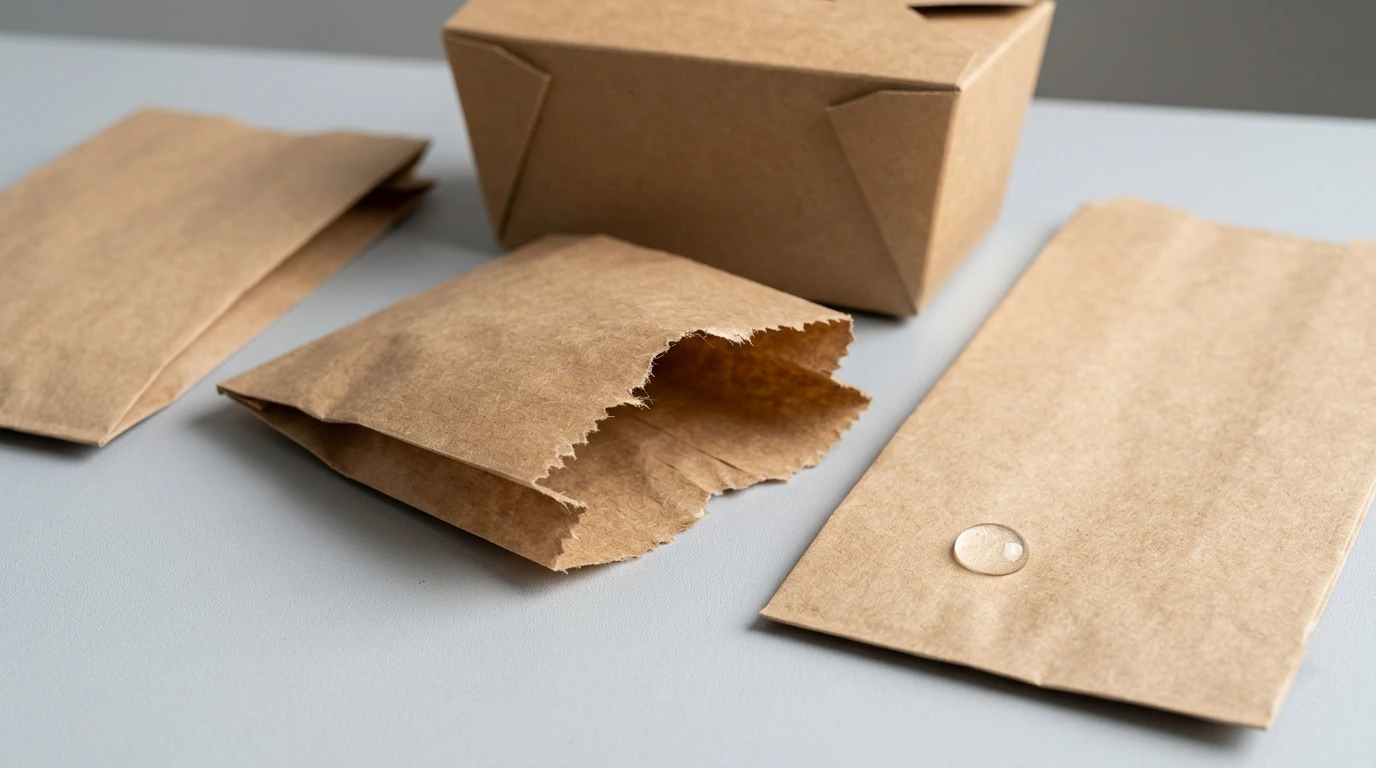
- Tear it: tear the bag at the edge and look at the torn face. If a layer separates or a film stretches out, there is plastic in there.
- Rub it: rub between thumb and finger. A smooth, slightly squeaky surface points to a coating; uncoated paper feels dull and drags.
- Wet it: put a drop of water on the inside face. If it does not soak in, a barrier is present.
These tests do not replace a specification. They sort the pile, and we still recommend them, because five minutes tells you whether you are even asking the right question. From our side: most operators who send us their current bag do not know themselves whether it is coated. The previous supplier never mentioned it, and nobody ever asked.
What the datasheet has to say
It only becomes reliable in writing. Ask for the material specification and look for polymers by name. Words like coated, treated or barrier-finished tell you nothing on their own about whether plastic is involved.
The entries that matter: the full build layer by layer, each coating named together with the polymer type, a statement on whether a plastic-free version of the same article exists, and the declaration of compliance for food contact, which has to be on file regardless.
One thing gets missed a lot. Lids, windows and adhesives are part of the build too. A container with a plastic-free body and a plastic lid is not plastic-free when you look at it as a unit.
Where the coating earns its place, and where it is habit
The cases that genuinely need it are clear enough: anything heat-sealed, high-fat product in long contact, and anything holding liquid. A drinks cup does not work without an inner barrier and there is no point pretending otherwise.
On dry product with a short dwell time, the coating is often just inherited. A roll, a biscuit, a slice of cake, a sandwich eaten within minutes: uncoated paper covers most of that. For greasy product the route runs to greaseproof paper, which gets its resistance from the way the paper is built rather than from a plastic layer. That is why our range keeps items such as white sulphite paper bags and plastic-free board constructions like the burger boxes as their own specification alongside the coated versions.
Being straight about it: plastic-free is not automatically the better answer. Carry hot, greasy product for twenty minutes in uncoated paper and you have traded an obligation for a product failure. The order that works is product, then build, then obligations.
Wrapping papers are their own case
The fresh counter deserves a separate look, because laminated papers are especially common there. Traditional butcher papers are frequently cellulose combined with a plastic film, and that build is exactly what keeps the goods dry.
So split the decision by product group rather than by counter. Dry, short-dwell items run on uncoated paper; greasy and chilled goods often keep the laminate as the answer that works. On wrapping and tray papers both routes sit side by side, PE and PP coated grades as well as uncoated ones.
Questions for your supplier
Four questions move this forward, and they fit in one email:
- Does this article contain a polymer, and if so in which layer and of which type?
- Is the same article available in a plastic-free build, and what changes functionally?
- Does that answer cover lids, windows and adhesives as well?
- Is the declaration of compliance for food contact available?
If a supplier answers with "food-safe" or "eco-friendly", you have not been given an answer. Those words address a different question entirely.
Frequently Asked Questions
- Does paper with a plastic coating count as single-use plastic?
- In several European markets, yes. What decides it is not what the pack is mostly made of but whether a polymer is present. A thin lacquer or an inner layer you cannot see can be enough for a paper article to be classified as a single-use plastic product, which is why the datasheet has to be checked for polymers by name.
- How do I spot a coating on a sample?
- Three checks sort most of it: tear the bag at the edge and look at the torn face, rub the surface between your fingers, and place a drop of water on the inside. A layer that separates, a smooth squeaky feel, or water that does not soak in all point to plastic. The tests screen the options; they do not replace a specification.
- What has to appear in the material specification?
- The full build layer by layer, each coating named with its polymer type, a statement on whether a plastic-free version of the same article is available, and the declaration of compliance for food contact. The answer has to cover lids, windows and adhesives too, since those form part of the build.
- Is plastic-free always the better choice?
- No. Where packaging is heat-sealed, where liquid stands in it, or where high-fat product stays in contact for a long time, the coating does a job paper cannot do alone. The order that works is product, then build, then obligations: establish what the product needs before fixing the construction.
- Why does a German buyer ask for this information?
- Because the build determines obligations on their side: whether the item falls into the single-use plastic fund, and whether the requirement to offer reusable alternatives applies. The buyer has to make that assessment in their own name, which is why they want the material build in writing rather than as a verbal assurance.
- Are butcher and deli papers different?
- Laminates are especially common in that group; traditional butcher papers often combine cellulose with a plastic film, and that build is precisely what keeps the goods dry. Split the decision by product group rather than by counter: uncoated paper works for dry, short-dwell items, while greasy and chilled goods frequently keep the laminate.
Related Articles
Food-Grade Packaging: What to Actually Check Before You Order
Food-grade is not a finish line — it is the floor. Here is what really decides whether printed cups, boxes and bags are safe for the food they hold, and the one document worth asking for every time.
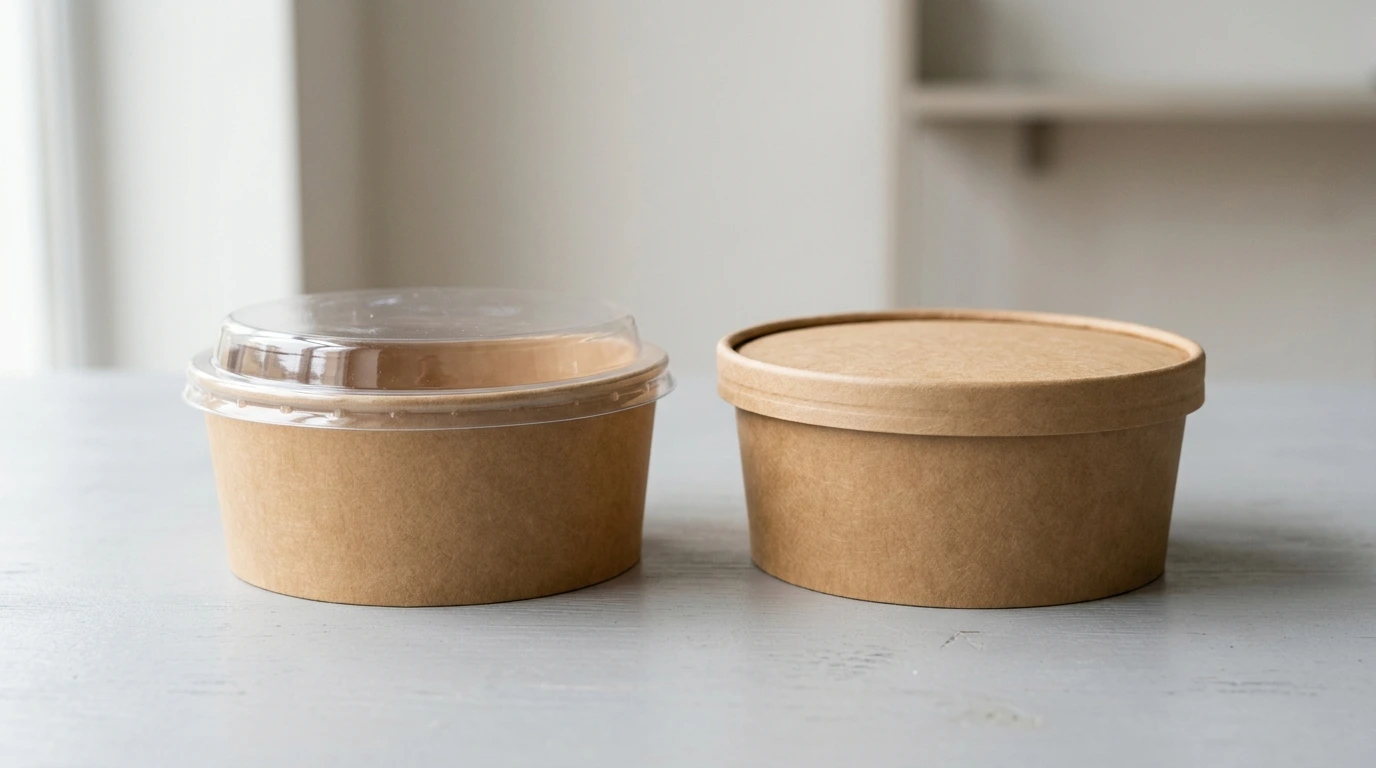
In Germany, Your Coating Decides the Reuse Rule
Whether you have to offer a reusable alternative in Germany is not settled by your menu or your floor area alone. It is settled by two lines in your packaging order: the barrier and the lid.
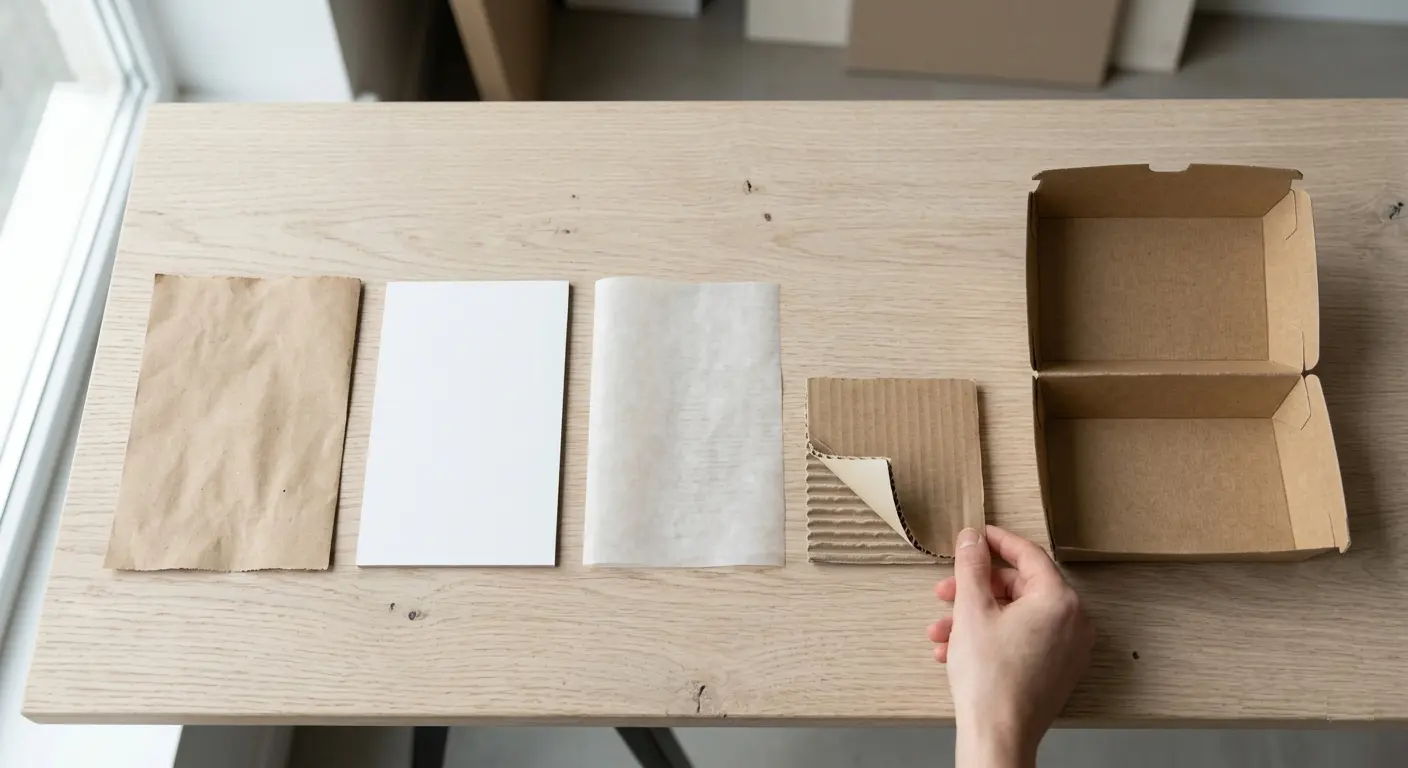
Paper, Grammage and Barriers: Which Material for Which Food
The same box holds a burger perfectly and fails under a curry. The difference is not the board, it is the layer on it. What grammage actually changes, which barrier suits which dish, and how to test material with your own food before you commit.
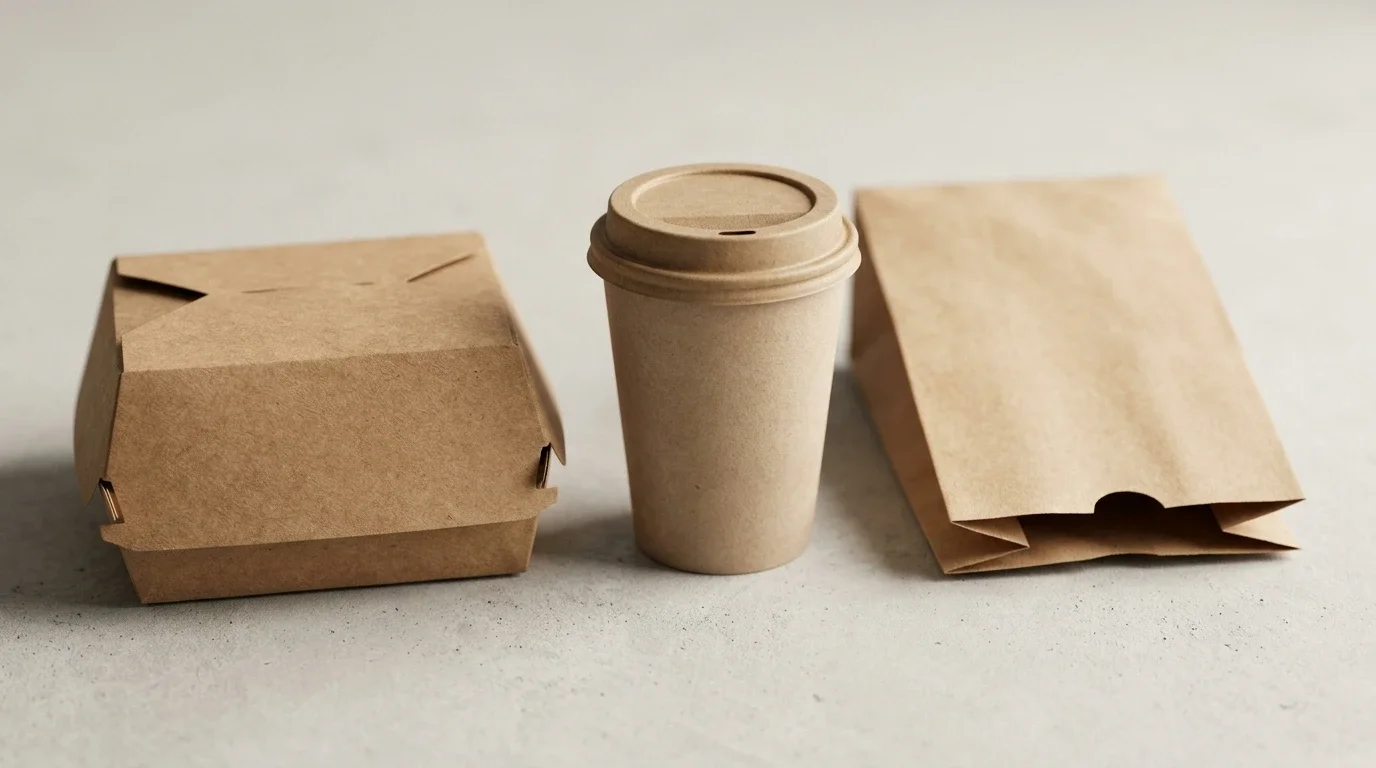
Recyclable, Compostable or Biodegradable Packaging: What the Labels Actually Mean
Recyclable, compostable and biodegradable are not the same promise. Here is what each really means — and how to match the right one to how your packaging is actually used and binned.
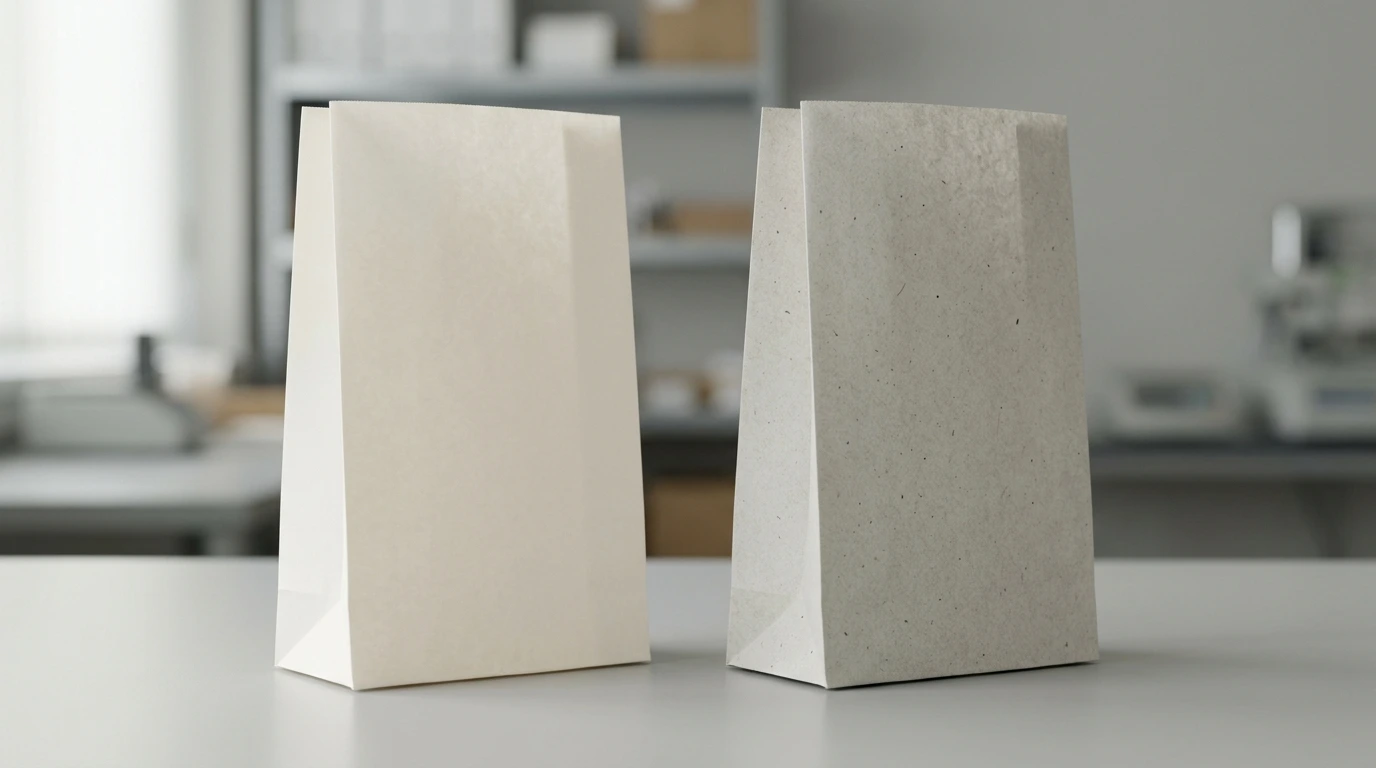
Which Fibre Touches Your Food
Recycled paper carries mineral oil from the printing ink of its former life. From January 2027 there are binding limits for those substances in food for the first time, and the limits do not care where the contamination came from.