Deutsch
 Français
 Türkçe
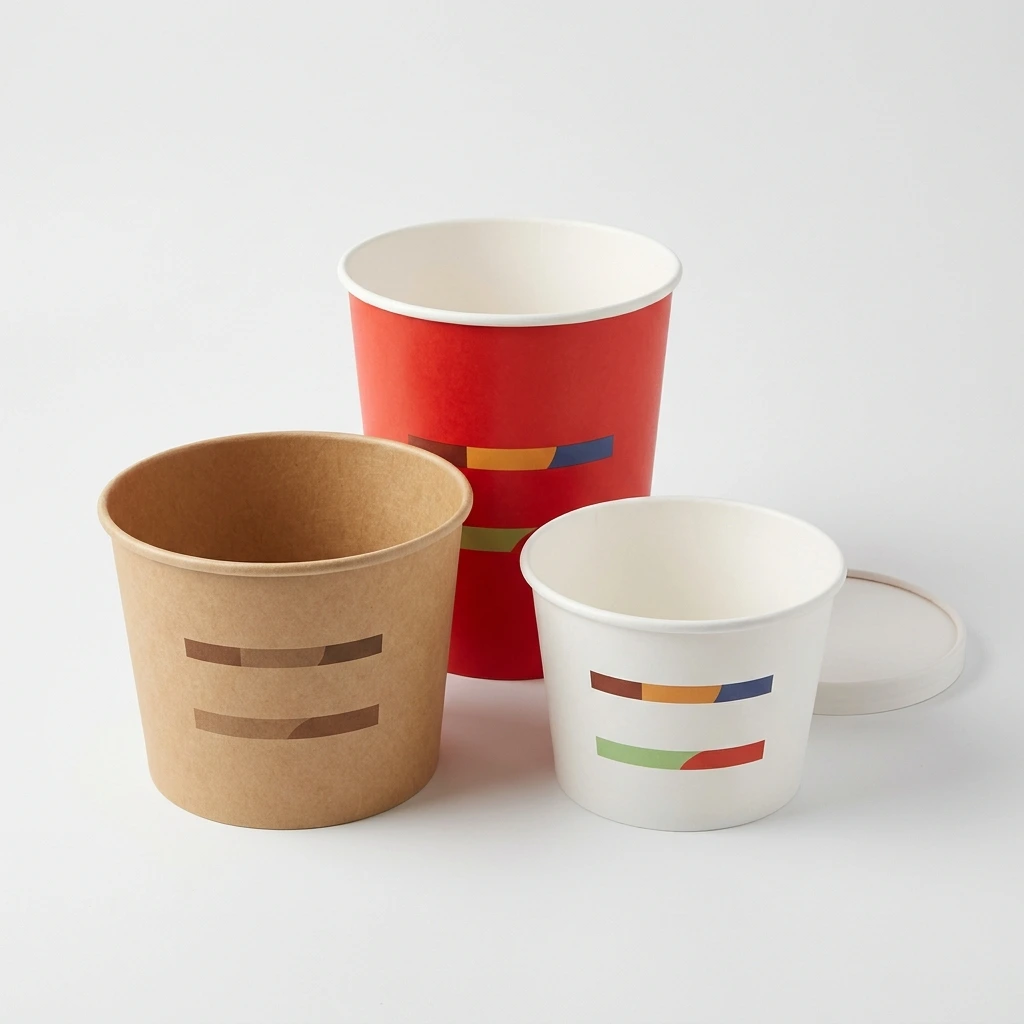
A German café that buys its cups from a domestic wholesaler never has to think about Germany’s single-use plastic fund. The moment cups travel straight from a supplier abroad to a German business, somebody becomes the producer under that law. The levy is then charged on the weight of the whole product, board included.
A cup manufacturer outside Germany wins a chain of six coffee shops in Hamburg. The first pallets leave on time, the artwork is right, the reorder arrives. Nine months later the chain’s finance lead sends an email with one question in it: who was supposed to register these cups with the fund?
Most of what gets written about the fund is aimed at German producers and online sellers. Very little is written for the supplier on the other side of the border, who is often the only party able to answer what the German buyer will eventually ask. This piece is for that supplier, and for the German buyer trying to work out what changed when the wholesaler dropped out.
What the wholesaler was quietly handling
Germany’s Single-Use Plastics Fund Act has applied since 1 January 2024. A producer of certain single-use plastic products registers with the Federal Environment Agency on its DIVID platform, reports every year by 15 May the mass placed on the German market in the previous year, and pays a levy into the fund on that mass.
The word everything turns on is first. On the agency’s own reading, a snack bar that buys its cups from a German wholesaler is not the producer of those cups, because they were placed on the market one level earlier. Passing on goods that are already on the market does not turn anyone into a producer.
For buying, that is the sentence that matters.
That is why most hospitality businesses in Germany have never had to deal with the law. Registration, reporting and levy sit somewhere inside the wholesaler’s costs, invisible, with no line of their own on the invoice. Comfortable, as long as the buying route stays the same.
A direct supply relationship removes that level, and the role does not disappear with it. It moves, either to the German buyer or to the supplier abroad. Which of the two is settled by a question that hardly ever appears in a quotation.
Who becomes the producer when goods cross the border?
Whoever imports the goods and takes responsibility for them at the border. For a German business that buys abroad and brings the goods in itself, that is the buyer. The law names importers as producers explicitly, and an importer carries the same duties as a manufacturer: registration, reporting, levy. Size exempts nobody, and a single café can fall under it.
The other arrangement pushes the role the opposite way. A supplier without a seat in Germany that sells its products at a distance directly to users in Germany is itself treated as the producer. For suppliers in that position the law provides for an authorised representative: a person or company based in Germany that takes on certain producer duties in its own name on the supplier’s behalf.
There is a practical reason that route matters to anyone outside Germany. Registration on DIVID runs through an ELSTER organisation certificate, and that certificate requires a German tax number. A German buyer has one. A supplier abroad usually does not.
Ordinary trade sits between those two arrangements, and that is where the misunderstandings live. The supplier assumes the customer is importing. The customer assumes the price covered everything. Neither has written it down, and the first person to notice is often an accountant, months later, once the reporting date for the previous year has already gone.
Many buyers end up sourcing a mix anyway: cups still from the wholesaler, food containers direct, or the other way round. The producer role then covers only the items the buyer itself places on the German market first, and the annual report covers only that share. In practice the purchase list needs two columns, one for wholesale and one for direct supply, with a piece weight beside every direct line. A supplier who hands over that second column ready-made takes most of the work off the buyer. Without it, the May report becomes a reconstruction from old invoices.
For a German buyer that imported during 2025, the report for that year was due by 15 May 2026. A business that becomes a producer for the first time has to register straight away rather than waiting for the next report. So the question belongs before the first shipment, not after it.
Why the levy weighs the whole cup
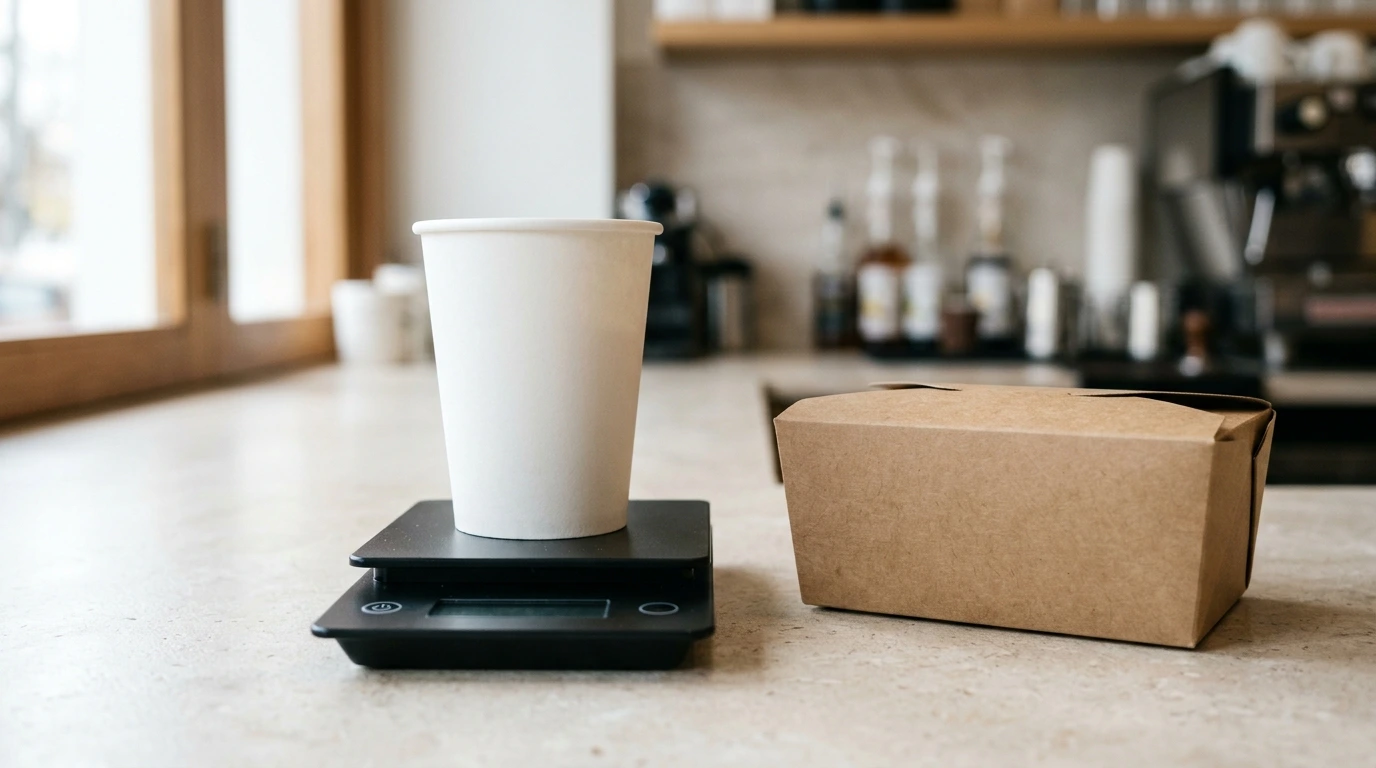
The levy is calculated on mass, and the mass that counts is the total weight of the product rather than its plastic content. On a paper cup with a plastic lining the board is weighed along with the lining, even though the plastic is only a thin layer.
That is where most back-of-envelope sums go wrong. People hear plastic levy and calculate the plastic. The layer weighs almost nothing, while the cup it turns into a single-use plastic product weighs many times more.
What gets weighed is what arrives in the carton.
Then there is the rate. Per kilogram, the rate for drinks cups sits at almost seven times the rate for food containers. The same amount of board therefore counts very differently depending on whether it reaches the market as a cup or as a box.
For anyone quoting into Germany, that turns a line most buyers skim into a cost line: piece weight. On custom printed paper cups in double wall construction, the extra outer layer improves insulation and, depending on drink temperature, can make a separate sleeve unnecessary. It also adds weight, and on a lined cup that weight is counted.
A loose paper sleeve with no plastic in it is not a single-use plastic product at all. That turns an insulation choice into arithmetic: a double wall cup, or a single wall cup plus a sleeve. Which works out better can only be said once both piece weights are on the table, and only the supplier holds those numbers.
What turns a paper product into a single-use plastic product?
A plastic layer that protects it against water or grease. Single-use products made of paper or board without a plastic lining or coating are not single-use plastic products and sit outside the fund.
Three groups matter for food service, and each is treated separately. Food containers whose contents are eaten directly, without further preparation, on the spot or on the move. Drinks cups. And bags and film wrappers, which form a group of their own rather than counting as food containers.
The layer does not need to be visible to count. How to spot it on a sample, and what else depends on it besides the fund, is covered in our piece on plastic content in paper packaging. For the question here the direction is enough: where there is no plastic in the product, the fund’s producer question never arises, whichever way the goods enter Germany.
Where fibre settles the question, and where it does not
This is the real lever for any supplier selling into Germany, and for any German buyer thinking about going direct. A plastic-free product takes the whole arrangement off the table. No registration with the fund, no report, no levy, even when the buyer does the importing.
On sauce and dip cups that option is stated on the data sheet: plastic-free cup constructions, depending on barrier and lid requirements. The qualifier is the honest part. A thin sauce sitting twenty minutes in a delivery bag asks more of a cup than a thick dip does, and not every pairing of contents and lid works without a polymer.
For food containers holding dry or lightly greasy food, the route to fibre is usually short. For hot drinks it is longest. A coffee cup has to stay sealed, stay hot and stay firm in the hand, and a plastic-free barrier that manages all three reliably is the hardest requirement in the range.
That produces an awkward pairing worth knowing before an order is placed. The cup, where the rate per kilogram is highest, is also the product where plastic is hardest to replace. A German buyer testing a direct relationship with a single line is usually better off not starting with cups.
When the wholesaler is still the better route
Any honest piece about buying direct needs this section, and here it carries extra weight. The levy per piece is small. What a buyer actually feels is registration, the annual report and keeping clean records of quantities and weights through the year.
For a business with one site and a single lined item, that effort often outweighs the saving. For a chain with a stable range and high volumes the balance shifts, because the effort stays roughly the same while the saving grows with every pallet.
There is a mixed route that rarely gets suggested. Plastic-free lines go direct, lined items stay with the wholesaler. The buyer takes the benefit of direct supply where no producer role arises and leaves the role where it already sat. A supplier who proposes that split openly tends to be trusted with the rest of the range later on.
One word on boundaries, because two topics get mixed up constantly. Germany’s LUCID packaging register and participation in a take-back scheme under packaging law are a separate obligation with separate rules. Settling the fund question does not settle the LUCID question, and the reverse holds just as well.
What to put in the quote before the first shipment
A German buyer will eventually ask five things. A supplier who answers them in the quote, before anyone asks, removes the main reason to hesitate:
- Who imports the goods, and at what point responsibility passes to the buyer.
- Whether there is an authorised representative in Germany for the fund, or whether the buyer is expected to carry the producer duties.
- What one piece weighs, counted as the whole product.
- Whether the same line exists plastic-free, and what changes in barrier, lid and handling.
- How the items are handled for the packaging register, and whether that appears on the invoice.
The answers belong in writing, attached to the order confirmation. A verbal assurance helps nobody the following May, when the report is due and no one quite remembers who agreed to what.
On framing: this describes practice from a manufacturer’s perspective and is not legal advice. Which role applies in a given case depends on the contract, the delivery terms and the product. That is why the five questions belong in the first enquiry, not in the complaint after the first levy notice.
In short
- A business that buys single-use plastic products from a German wholesaler and passes them on is not their producer under Germany’s Single-Use Plastics Fund Act, on the Federal Environment Agency’s reading.
- When goods are imported directly, the importing business can become the producer; a supplier without a seat in Germany that sells at a distance directly to users there is also treated as the producer and can appoint an authorised representative.
- Producers register on the Federal Environment Agency’s DIVID platform and report the previous year’s mass every year by 15 May.
- The levy is calculated on the total weight of the product, so on a lined paper cup the board is weighed too.
- Per kilogram, the rate for drinks cups is almost seven times the rate for food containers.
- Single-use products made of paper or board without a plastic lining or coating fall outside Germany’s single-use plastic fund.
Frequently Asked Questions
- Does a German café that buys cups from a wholesaler need to register with the single-use plastic fund?
- On the Federal Environment Agency’s reading, no. The producer under the law is whoever first places a single-use plastic product on the German market, and with goods bought from a German wholesaler that happened one level earlier. Passing on goods already on the market does not make a business the producer.
- When does a supplier outside Germany become the producer?
- When it sells its products at a distance directly to users in Germany. Such a supplier is treated as the producer and can appoint an authorised representative based in Germany to take on certain duties in its own name. If instead the German buyer imports the goods itself and takes responsibility at the border, the buyer becomes the producer.
- Why does the board in a lined paper cup count towards the levy?
- Because the levy is calculated on the total weight of the product rather than its plastic content. The thin lining is what makes the cup a single-use plastic product, and the whole cup is then weighed. Piece weight on the data sheet becomes a cost figure as a result.
- When is the annual report for Germany’s single-use plastic fund due?
- Producers report the type and mass of products first placed on the German market in the previous year by 15 May each year, on the Federal Environment Agency’s DIVID platform. A business that becomes a producer for the first time has to register straight away. Registration uses an ELSTER organisation certificate, which requires a German tax number.
- Are unlined paper products covered by the fund?
- No. Single-use products made of paper or board without a plastic lining or coating are not single-use plastic products. A paper product becomes one as soon as a plastic layer protects it against water or grease, even when that layer is barely visible.
- What should a supplier include when quoting cups into Germany?
- Who imports the goods and where responsibility passes, whether there is an authorised representative in Germany, what one piece weighs as a whole product, whether a plastic-free version of the same line exists, and how the items are handled for the packaging register. Answers belong in writing with the order confirmation.
Related Articles
Branded service packaging in Germany: you are now the producer
Since 12 August 2026 it is not the cup but your logo on it that makes you the producer in Germany. Which service packaging is caught, when pre-licensing still works, why the micro-enterprise exemption only applies with a German supplier, and how the honest sum for logo or no logo works out for businesses selling into Germany.
EUDR from 30 December 2026: your paper packaging needs an origin
From 30 December 2026 the EU Deforestation Regulation covers pizza boxes, bakery bags and paper cups the moment they enter the EU as goods. Buy them from outside the EU, and since Brexit that includes a supplier in Leeds, and you are the operator who has to prove where the fibre grew. Which datasheet line decides whether a bag is in scope, what your supplier has to hand over, and where the EUDR stops and LUCID starts.

Germany's LUCID Packaging Register, Explained for Food Businesses
Selling food or running a site in Germany? Even businesses buying pre-licensed cups and boxes must register in LUCID, and since 12 August 2026 anyone ordering service packaging with their own logo is the producer. Who is affected, which checkbox counts, and which supplier paperwork you need.
Packaging: Buy Direct From the Manufacturer or Through a Wholesaler?
The cash and carry is convenient and the manufacturer is cheaper per unit, which makes them look comparable. They are not. When going direct genuinely pays, why minimum quantities exist, and the split most operators never think to ask for.
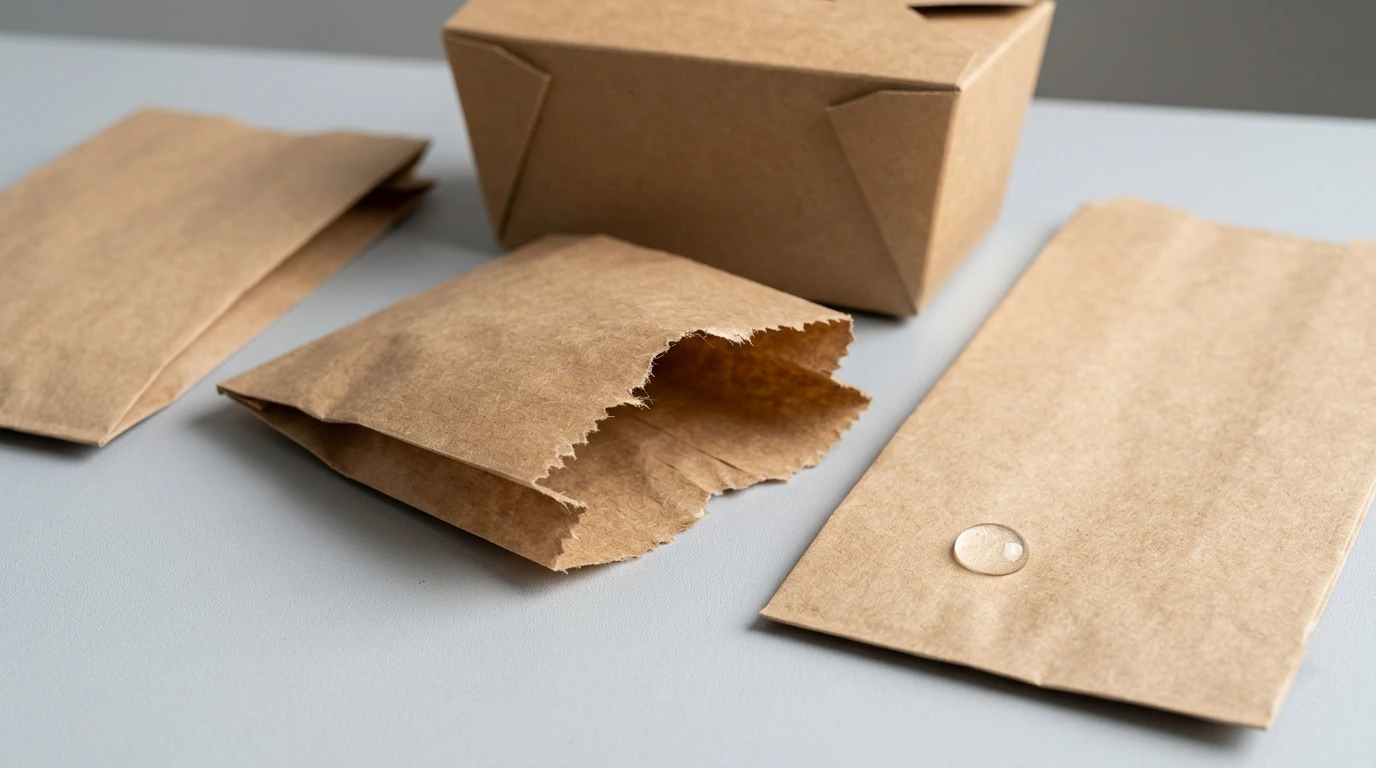
Does Your Paper Packaging Contain Plastic?
A coating you cannot see can move paper packaging out of the paper category altogether. For anyone shipping into Germany it has become the first technical question a buyer asks, and the answer belongs in the specification.