Deutsch
 Français
 Türkçe
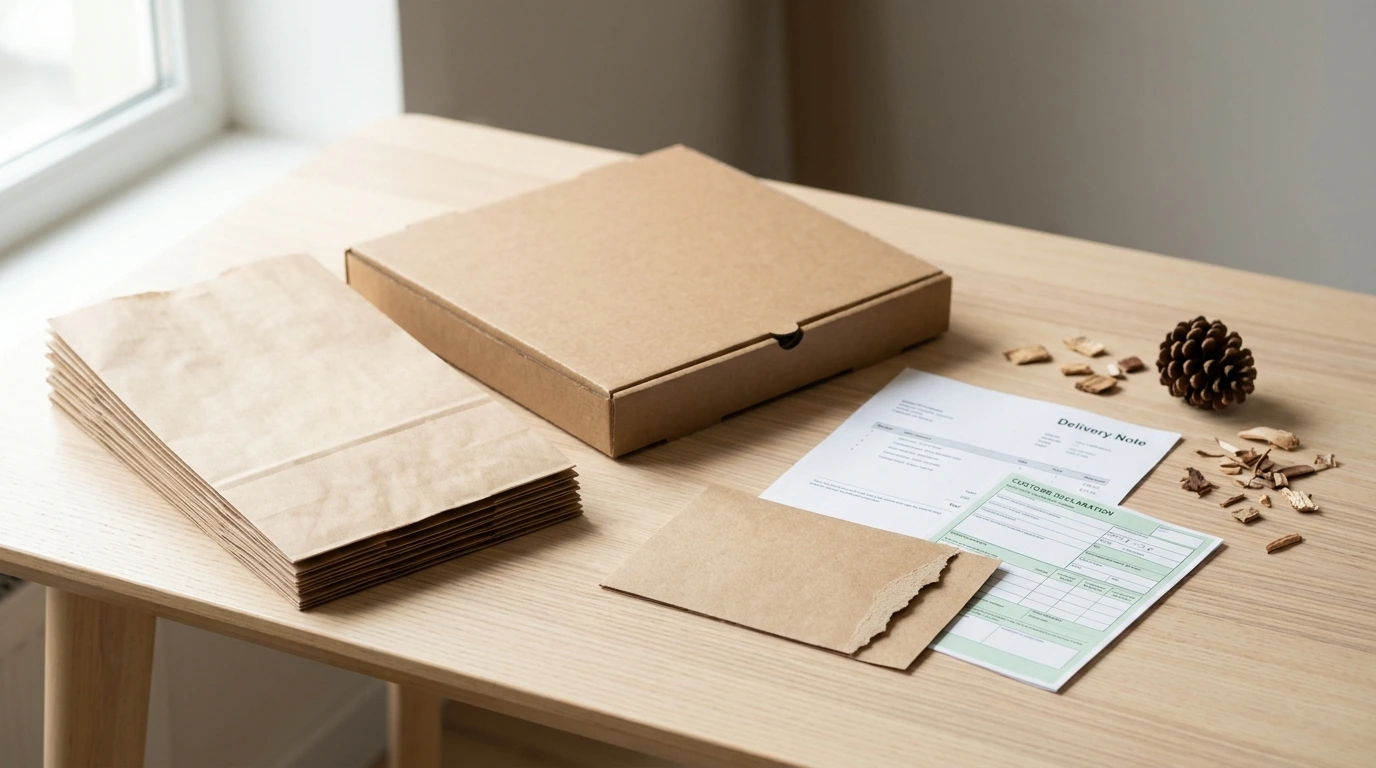
A Tuesday morning in January 2027. The forwarder has notified a pallet of 10,000 pizza boxes from Izmir, and the customs declaration has a line the EUDR put there: reference number of the due diligence statement. The owner of the delivery kitchen in Rotterdam reads it twice. She does not have one.
That line has a name: EUDR, the EU regulation on deforestation-free products. It has applied since 30 December 2026 to large and medium companies and applies from 30 June 2027 to micro and small ones, and it treats paper packaging exactly like timber and coffee. This guide sets out what that means if you buy packaging for a site in the EU, which origin the regulation actually means, which datasheet line decides whether a bag is in scope, and what to ask your supplier. It is written by a manufacturer in Turkey that now has to hand over this data, for the buyer on the other end of the invoice.
Who is affected from 30 December 2026?
Anyone who brings paper packaging into the EU for the first time: the importer, even one who buys only for their own kitchen. The regulation calls that company the operator. Anyone who buys from a wholesaler inside the EU is downstream and has one main job: keep the reference number of the statement the wholesaler filed.
The dates have been fixed since the amendment of December 2025. Large and medium companies have had to apply the regulation since 30 December 2026. Micro and small companies as defined by the EU accounting directive, meaning businesses below two of three limits (50 employees, 15 million euros turnover, 7.5 million euros balance sheet total), have until 30 June 2027. In May 2026 the Commission confirmed that the text would not be reopened and the date would stand. The draft revision of the product list removes books and newspapers and keeps paper and packaging.
What matters is how the packaging crosses the border. A carton that merely protects the coffee you import is packaging for other goods and is out of scope. A carton you buy empty, to fill yourself, is the goods. That is exactly how pizza boxes, bakery bags and paper cups arrive: as products of Chapter 48 of the customs nomenclature, folding cartons and carrier bags under 4819, paper cups and plates under 4823. For those, the EUDR applies.
One case catches out more UK businesses than any other. Since Brexit the United Kingdom is a third country, so a bag made in Leeds enters the EU on the same footing as a bag made in Izmir. A German or Irish site that buys from a British supplier is an operator, however long the two have traded.
Which origin the EUDR means: the forest, not the factory
The origin the regulation asks about is the forest where the wood for the pulp grew, not the plant where the bag was folded. This is where most conversations with buyers have gone wrong over the past months. We are based in Turkey, and Turkey has been on the low-risk list since 22 May 2025. That sounds reassuring. It only helps if the tree stood there.
Paper mills buy pulp where pulp is made, and that is rarely the country where the packaging is later converted. In our case, virgin fibre comes from Scandinavia and from South America, depending on grade and year. For each lot, the regulation looks at the country where that wood was produced, and that country’s rating decides how much diligence the importer owes. Low risk means collecting the information; standard risk adds a risk assessment and, where needed, risk mitigation.
At the core of that information are geolocation data: the coordinates of the plots where the wood was harvested. Only the company that first brings the goods into the EU has to obtain them. Everyone after that works with the reference number the statement generated. For a takeaway that buys from a Dutch wholesaler, geolocation is somebody else’s problem. For the same takeaway ordering directly from Izmir, it is the problem.
What turns your order into your own due diligence?
Where your supplier sits: buy directly from outside the EU and you are the operator; buy from an EU wholesaler and the wholesaler is. There is nothing in between. Whether you resell the cups or fill them yourself changes nothing, because importing for your own use is placing on the market too.
As the operator you collect, before import, the information for each consignment: description and customs code of the goods, quantity, supplier, country where the wood was produced, and the geolocation of the plots. For wood from a standard-risk country you assess the risk and mitigate it where necessary. Then you file the due diligence statement in the EU information system before the goods are released for free circulation, and you quote the reference number in the customs declaration. You keep the records for five years.
You may hand the filing to a third party established in the EU, a customs agent for instance. The responsibility stays with you. And here is the honest limit of what a manufacturer outside the EU can do: we cannot file that statement for you, because a company without an establishment in the EU cannot be an operator. We can supply the data you build it from.
The datasheet line that decides the scope
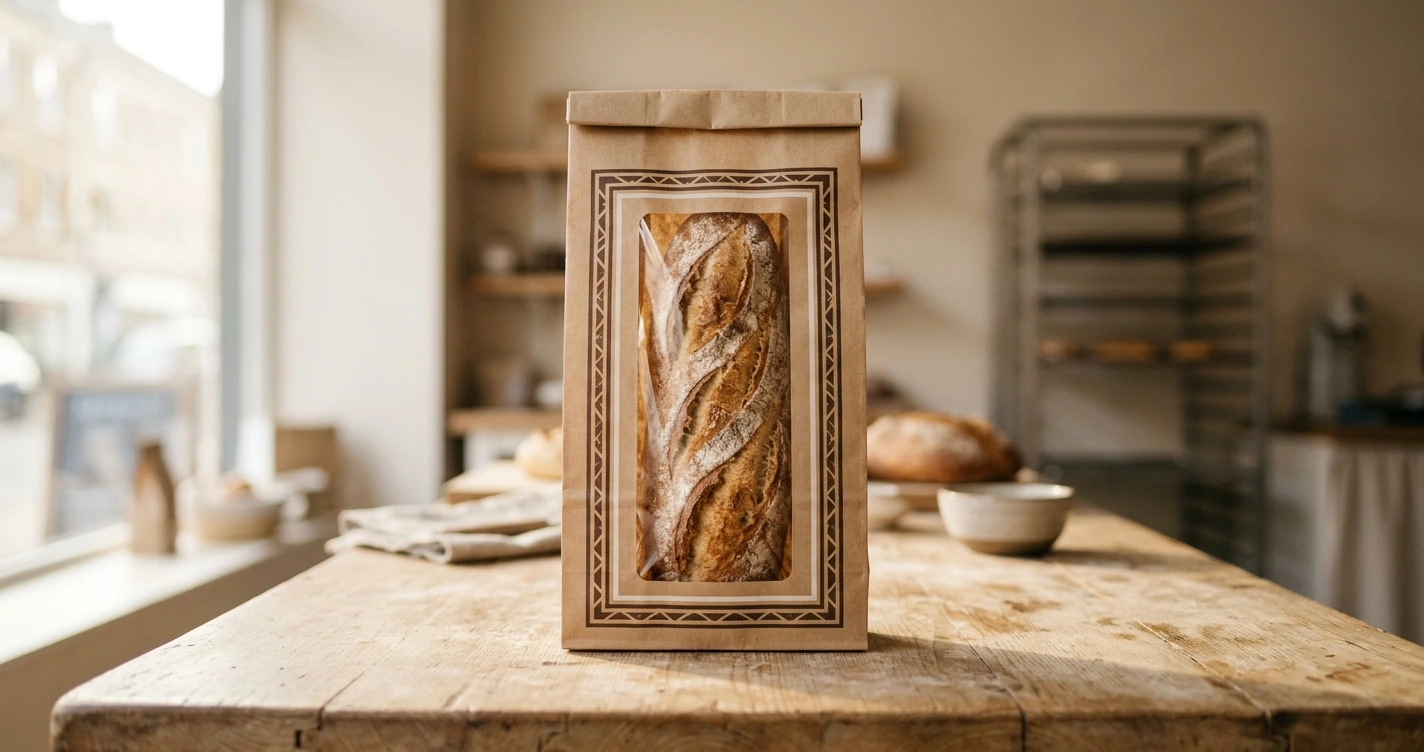
Whether a bag falls under the EUDR is written in the datasheet line called paper options, not in the product name. On our page for natural kraft bakery bags that line reads: “Natural kraft and recycled natural kraft paper options”. Two grades, one product, two different answers to the question about the regulation.
The regulation exempts products made entirely from material that has completed its life cycle and would otherwise have been discarded as waste. A bag made from pure recovered paper is out. Natural kraft from virgin fibre is in. And mixed fibre is in for its virgin share, which in practice means you still need an origin for the bag, only for part of the fibre. So the question to your supplier is not “is this recycled paper?” but “what percentage, and where does the rest come from?”.
For the corrugated pizza box the datasheet says “Brown kraft corrugated board, white kraft corrugated board” and “Recycled fibre board options available depending on selected material specification”. Corrugated board is almost always a mix: a fluting from recovered paper and a liner from virgin fibre, or the other way round. A box made entirely from recovered fibre is possible, but with hot, greasy food in direct contact it is not always the choice we would recommend. Anyone who wants to step around the regulation via recycled content is trading a paperwork duty for a material question. Both are legitimate. You should just know which deal you are making.
What to require from your supplier from now on
Before your first order after 30 December 2026, require four things in writing: the fibre origin per paper grade, the country where the wood grew, the recycled content, and a commitment to supply geolocation data. A supplier who dodges the last question cannot answer the other three reliably.
In enquiries from Germany and the Netherlands we have seen the fibre question since the summer, usually as one sentence at the end of the email. The answer is not a line but a table per paper grade, and it is only as good as what our pulp supplier tells us. That is exactly why it pays to ask early: order in January and receive the data with the goods, and you stand at customs without a reference number.
The buying checklist looks like this:
- Customs code of the goods on invoice and delivery note, so the consignment clearly belongs to Chapter 48.
- Paper grade per product, marked virgin, recycled or mixed, with the percentage.
- Country where the wood was produced, per grade, stated separately from the location of the converting plant.
- Geolocation of the production plots, passed down from the pulp mill, or a written commitment to provide them per consignment.
- If you buy through a trader in the EU: reference number and verification number of its statement on the delivery note.
- Records kept for five years, separate from your packaging EPR or LUCID files.
- One line in the contract saying who files the statement: you, an authorised representative in the EU, or the trader.
Where the EUDR stops and LUCID, packaging EPR and the PPWR begin
The EUDR asks where the fibre came from; the PPWR asks what the packaging is made of; LUCID asks who licenses it. Three duties, three pieces of evidence, and this autumn all three arrive on the same pallet. Since 12 August 2026 the PPWR has applied together with the German VerpackDG, and a business that orders service packaging with its own logo is the producer there. From 30 December 2026 the EUDR makes the same business an operator on top, if it imports directly.
In the UK the picture is different again. Great Britain has no EUDR, and the UK’s own forest risk commodity rules under the Environment Act do not cover wood or paper. Packaging EPR asks who the brand owner is, not where the forest was. So a British brand can be fully compliant at home and still owe a due diligence statement for the cups it ships to its Dublin or Berlin site.
If you already know the direct-import logic from Germany’s single-use plastic levy, you will recognise it here: whoever first brings the goods into the country carries the duty that used to sit with the wholesaler. We described that for paper cups in the guide to buying food packaging from Turkey; the EUDR adds another line to the same decision. What does not change: an EUDR reference number does not replace a LUCID registration, and a declaration of conformity under the PPWR says nothing about the forest.
For a small business that leaves a sober sum. Direct import brings price and control over the specification, and with them three duties the wholesaler otherwise handles quietly. If you lack the time for registration, statement and filing, keep buying through the trader and require the reference number from them. If you have it, order directly and require the data from us. Both work. Only the mixture fails: ordering directly and hoping someone else declares.
What to ask your supplier
Five questions that should be answered before the first order after the deadline:
- Which country does the wood come from for each paper grade you offer me, and how is that country rated under the EUDR?
- Can you provide the geolocation of the production plots per consignment, and in what format?
- Which of your grades are made entirely from recovered paper, and for which of my products are they suitable?
- What is the recycled content of your mixed grades, and where does the virgin share come from?
- If I buy through a trader in the EU: will the reference number of the due diligence statement appear on the delivery note?
The delivery kitchen in Rotterdam got its pallet in the end. She instructed her customs agent to file the statement, requested the origin table from the manufacturer and has kept one rule since: no order without the fibre line. This guide describes how we see the regulation from the production floor and is not legal advice for your business.
In short
- The EUDR has applied since 30 December 2026 to large and medium companies and applies from 30 June 2027 to micro and small ones; paper packaging traded as goods (Chapter 48) is in scope.
- The operator who files the due diligence statement is whoever first brings the packaging into the EU, including for own use; buyers from an EU trader only keep its reference number for five years.
- What counts is the country where the wood for the pulp grew, not the location of the converting plant; Turkey’s low-risk rating applies only to wood from Turkey.
- Products made entirely from recovered paper are exempt, mixed fibre is in scope for its virgin share; the paper options line on the datasheet decides.
- A supplier outside the EU cannot file the statement, only supply the data; the EUDR replaces neither LUCID nor packaging EPR nor the PPWR declaration of conformity.
Frequently Asked Questions
- Does the EUDR apply if I only import packaging for my own use?
- Yes. Importing for your own use counts as placing on the market, because the goods reach the EU market for the first time. A café in Munich that buys its cups directly from Turkey, or from the UK, is an operator with due diligence duties: from 30 December 2026 for large and medium companies, from 30 June 2027 for micro and small ones.
- What is the reference number and where do I get it?
- Every due diligence statement filed in the EU information system receives a reference number and a verification number. If you buy through a trader established in the EU, the trader gives you the numbers, usually on the invoice or delivery note, and you keep them for five years. If you import yourself, your own statement generates them and you quote them in the customs declaration.
- Is packaging made from recycled paper exempt from the EUDR?
- Only if the product is made entirely from material that has completed its life cycle, in other words one hundred per cent recovered paper. Mixed fibre falls under the regulation for its virgin share. So ask for the recycled content per paper grade, not a yes or no per product.
- My supplier is in Turkey, and Turkey is rated low risk. Is that enough?
- No. The regulation looks at the country where the wood for the pulp grew, not at the country where the bag was converted. The low-risk rating Turkey received on 22 May 2025 only helps when the fibre comes from Turkish forest; for imported pulp, the rating of the wood’s country of origin applies.
- Can my supplier outside the EU file the due diligence statement for me?
- No. A company established outside the EU cannot be an operator; the first company established in the EU takes that role. You may delegate the filing to a third party established in the EU, but the responsibility stays with you. What the supplier can do is hand over the data: paper grade, country where the wood grew, geolocation, quantity.
- How does the EUDR relate to LUCID and the PPWR?
- They are three separate duties that can hit the same box. LUCID and the German VerpackDG deal with scheme participation, the PPWR deals with composition and labelling, the EUDR asks where the fibre came from. An EUDR reference number does not replace a LUCID registration, and a PPWR declaration of conformity says nothing about the forest.
Related Articles
Branded service packaging in Germany: you are now the producer
Since 12 August 2026 it is not the cup but your logo on it that makes you the producer in Germany. Which service packaging is caught, when pre-licensing still works, why the micro-enterprise exemption only applies with a German supplier, and how the honest sum for logo or no logo works out for businesses selling into Germany.
Buying Food Packaging from Turkey: An Honest Guide
A quote from a Turkish packaging manufacturer can look very attractive, and it can be exactly as good as it looks, if the paperwork holds up. The documents to demand, how sampling and customs work, and the red flags that separate a partner from a problem.

Selling Cups into Germany: Who Pays the Single-Use Plastic Levy
A German café buying cups from a domestic wholesaler never meets Germany’s single-use plastic fund. Once cups travel straight from a supplier abroad to a German business, someone becomes the producer, and the levy is charged on the weight of the whole cup.